The story of Belarusian Railway’s attempts to obtain new electric multiple units and diesel multiple units from JSC Stadler Minsk continues. We have obtained two more documents. The first is a list of key components “for BCh trains”: the Fanipol plant drew it up in March 2025 to assess whether these units could be made in Belarus. The second is a 2024 agreement on the Azerbaijani contract, along with its annexes. The train built under that contract was taken as the basis for the FLIRT for BCh.
Stadler Minsk was preparing for localization as early as spring 2025 — months before Stadler publicly stated that sanctions made it impossible to produce trains in Belarus. And it was preparing for both commuter trains and diesel multiple units at once.
In brief
- In March 2025, Stadler Minsk drew up a list of components “for BCh trains” — 41 slides marked “© Stadler.” It includes both 25 kV electric multiple units and diesel multiple units with a diesel generator set of around 650 kW.
- The parameters of many units in the list match the Azerbaijani FLIRT. The supplier of those trains under the 2019 contract — 10 trains for €119.9 million — was Stadler Minsk. In November 2024, delivery of the tenth train and most of the spare parts was transferred to Poland’s Stadler Polska.
- The Azerbaijani FLIRT is assembled from components supplied by European manufacturers — Stadler, ABB, TSA, Deutz, Knorr-Bremse, Voith, Selectron, Teleste and others. There are no known Russian or Chinese companies among them.
- According to our information, Belarusian contractors are being sought mainly for mechanical parts and auxiliary equipment. There are none for traction electronics, motors, the control system, doors or couplings.
- A rough estimate based on Azerbaijani contract prices: 30 four-car electric multiple units would cost €250–310 million excluding VAT, and 35 diesel multiple units around €420 million.
What came before
Before the sanctions, the plant in Fanipol, opened in 2014, was one of the production sites of the Swiss concern Stadler Rail and built multiple-unit rolling stock, including FLIRT electric multiple units. Like the concern’s other plants, it assembled trains largely from components supplied by foreign manufacturers.
After 2022, sanctions restricted supplies of both finished trains and certain types of equipment. Stadler moved a significant share of the work from the Belarusian site to plants in other countries. In the summer of 2023, there was talk of the concern leaving Belarus. In the autumn, Stadler stated that it would keep the plant and expected to return to full-scale production once sanctions were lifted. We covered this in the pieces “Conflicting information on Stadler’s withdrawal from Belarus” from June 23, 2023, and “Swiss company Stadler Rail intends to keep its production in Belarus” from September 19 of the same year.
Meanwhile, BCh’s need for new trains has not gone away. The fleet is aging, and the Stadler electric multiple units already in service are standing idle for lack of spare parts.
In late August 2025, BCh’s first deputy head, Alexander Khoroshevich, told reporters on the sidelines of the PRO//Dvizhenie.Expo trade show in St. Petersburg about a major contract with Stadler for 65 trains to be built in Fanipol. According to industry publications, this referred to 30 electric multiple units and 35 diesel multiple units. Khoroshevich acknowledged difficulties in sourcing certain components but noted that the world is not limited to Europe alone.
A few days later, Stadler issued a denial. The company confirmed talks with BCh, but not a contract. Peter Spuhler, chairman of the board and the concern’s main shareholder, assured that the company complies 100% with sanctions against Belarus. According to Stadler’s statement, under current conditions neither the supply of trains to Belarus nor their production on its territory is permitted. We examined this story in the piece “Another incident at TCh-9: this time, an electric multiple unit was left unprotected from vandals” from September 11, 2025.
This created a contradiction: the railway’s first deputy head was publicly talking about dozens of trains from Fanipol, while the concern that owns the plant was denying that such deliveries were even possible.
On March 20, 2026, BCh announced a tender for 30 four-car AC electric multiple units. The budget was 908 million Belarusian rubles, with deliveries due by the end of 2030. According to our information, the terms were tailored to the EP3D electric multiple unit made by the Demikhovo Machine-Building Plant, part of Transmashholding. DMZ indeed turned out to be the only bidder. It requested 33.7 billion Russian rubles — about 1.27 billion Belarusian rubles — nearly 359 million, or 40%, over budget. On April 24, the tender was declared void. The EP3D has a design speed of 120 km/h. The FLIRT for BCh, according to the documents, is designed for a maximum operating speed of 140 km/h.
On October 23, we published the documents for project L-4093 BZD, FLIRT EMU NG. The project calls for 30 new-generation four-car electric multiple units. All 120 railcars are to be assembled in Belarus, with the first trains delivered in mid-December 2027 and the last by the end of 2029. The plant sent general information about the project to prospective suppliers and provided detailed documentation only after a non-disclosure agreement was signed. Whether a contract has been signed, how production will be financed, and how deep the localization will go could not be determined from those documents. Nor did they mention diesel multiple units.
That same day, Lukashenka stated that the work of Stadler Minsk “is not delivering proper results.” The State Control Committee has been instructed to look into the plant and, by year’s end, assess BCh’s role as a customer of its products. Asked about the sanctions, he replied: “Whoever needs it finds a way to buy it.”
The Azerbaijani prototype
According to the L-4093 project documents, the FLIRT for BCh is based on a five-car FLIRT built for Azerbaijan Railways (ADY). For BCh, a four-car version is planned.
Contract No. hüq. 988 was signed by ADY on November 25, 2019 — not with the Swiss concern, but with JSC Stadler Minsk. Ten FLIRT trains were ordered: six electric multiple units and four diesel multiple units.
| Train type | Quantity | Unit price, euros excluding VAT and customs duties |
| Diesel multiple unit FLIRT DMU IR | 4 | 12,058,461.50 |
| Electric multiple unit FLIRT EMU IR | 3 | 10,608,461.00 |
| Electric multiple unit FLIRT EMU R | 3 | 10,358,461.00 |
| Spare parts and equipment | — | 8,750,000.00 (total) |
| Total | 10 | 119,884,612.00 |
Based on Annex 2.1 to the contract as amended on November 7, 2024. A figure of €115 million was publicly cited in 2019.
According to our information, the trains were initially being built partly in Fanipol, and after the sanctions were introduced, some of the work was moved to Stadler’s plant in Siedlce, Poland. The finished trains were to be shipped to Azerbaijan via Belarus and Russia. The Azerbaijani side assured that the supplied goods would not be resold or re-exported to Russia or Belarus. According to available information, the trains have been delivered to ADY.
At least part of this transfer is visible in the documents. On November 7, 2024, in Fanipol, ADY, Stadler Minsk and Stadler Polska Sp. z o.o. of Siedlce signed an agreement transferring part of the supplier’s rights and obligations. With ADY’s consent, the Belarusian plant ceded delivery of the tenth train, the FLIRT EMU R, along with its transportation, commissioning, warranty and insurance, to the Polish company. The latter also took over delivery of most of the spare parts and equipment — €7.7 million out of €8.75 million. In total, Stadler Polska received €18.0 million out of €119.9 million, about 15% of the order. Trains one through nine remained with Stadler Minsk on schedule.
Stadler Minsk nonetheless remains jointly liable: if Stadler Polska fails to meet its obligations, the Belarusian plant must fulfill them “at its own expense.” The €12.15 million that ADY had already paid Stadler Minsk for the transferred portion is credited to Stadler Polska — including payments for acceptance of the welded car bodies of the tenth train and its factory acceptance.
Within 15 days, the Fanipol plant was to hand over to the Polish side the contract, the acceptance certificate for the welded car bodies of the tenth train, and its technical documentation. By agreement, the delivery terms for this train could also be changed from DAP Baku to FCA Zbuczyn in Poland — meaning ADY could pick up the train itself, while still in Poland.
The agreement was signed by ADY chairman Rovshan Rustamov, Stadler Minsk director Philipp Brunner, and the management board of Stadler Polska. The document does not explain why the delivery was transferred. But it was signed a few months after the EU expanded sanctions against Belarus in the summer of 2024 and tightened the ban on directly or indirectly supplying goods capable of strengthening Belarusian industry, as well as providing technical assistance and transferring know-how.
What matters more for the BCh story is this: Stadler Minsk had the technical documentation for the Azerbaijani FLIRT trains — under the agreement, the plant itself handed over the documentation for the tenth train to the Polish side. And it is this FLIRT, shortened by one car, that formed the basis of the project for BCh.
What BCh needs
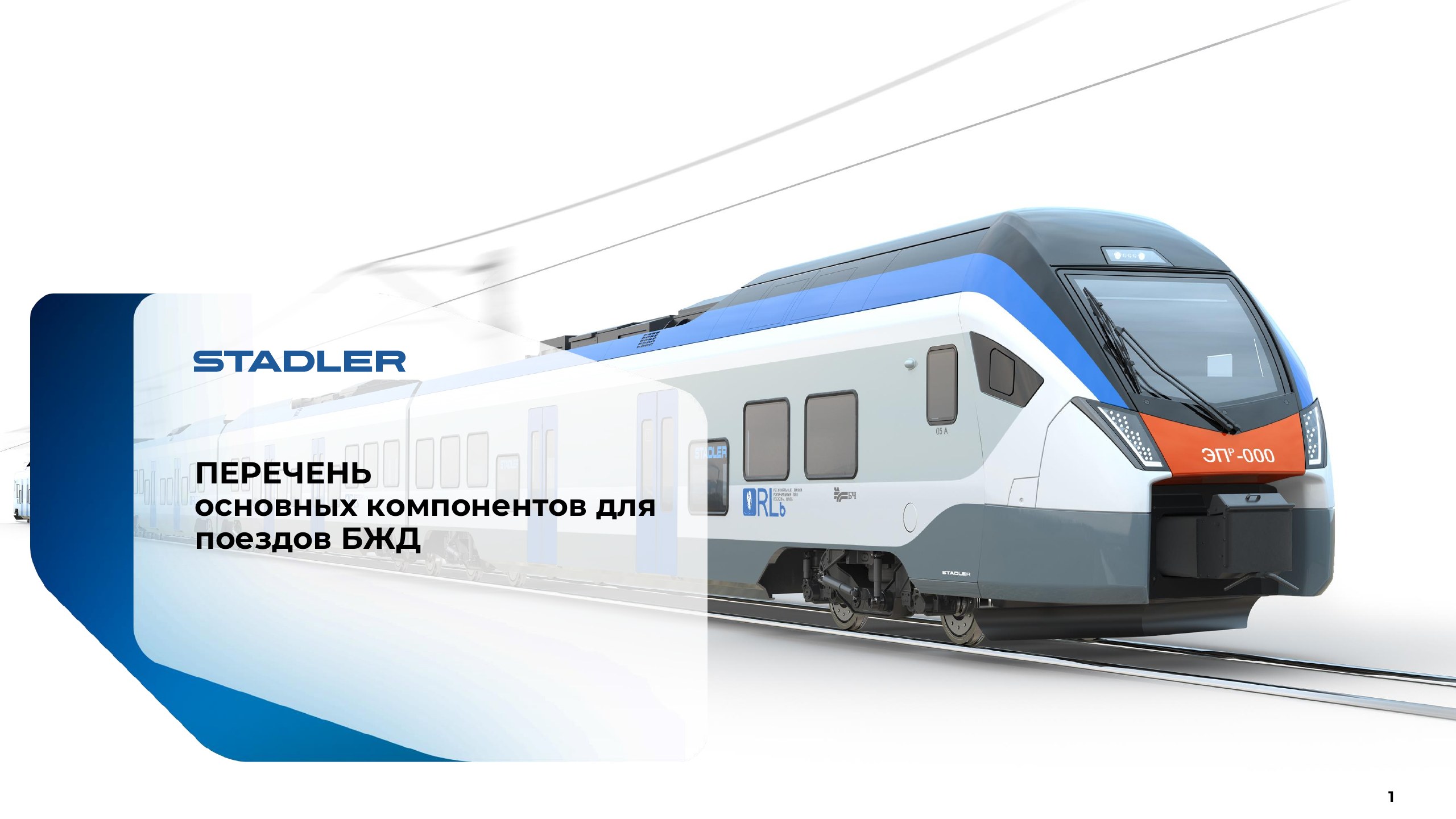
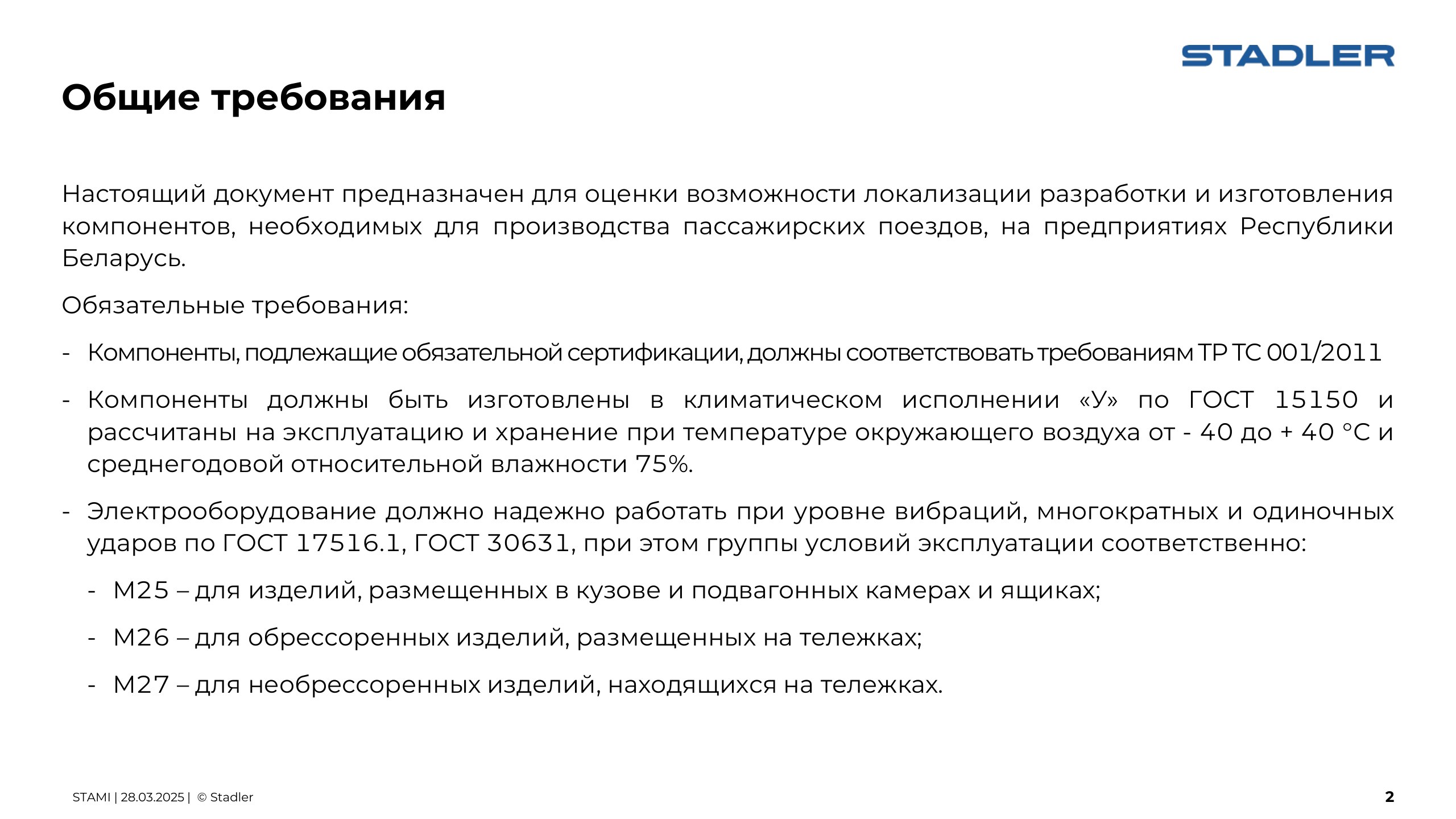
The “List of key components for BCh trains” is dated March 28, 2025, and the slides are marked “© Stadler.” The purpose is stated directly: to assess whether components for passenger trains can be developed and manufactured at enterprises in Belarus. Components must be rated for climate category “U” and operate at temperatures from −40 to +40°C, and those subject to mandatory certification must comply with TR CU 001/2011.

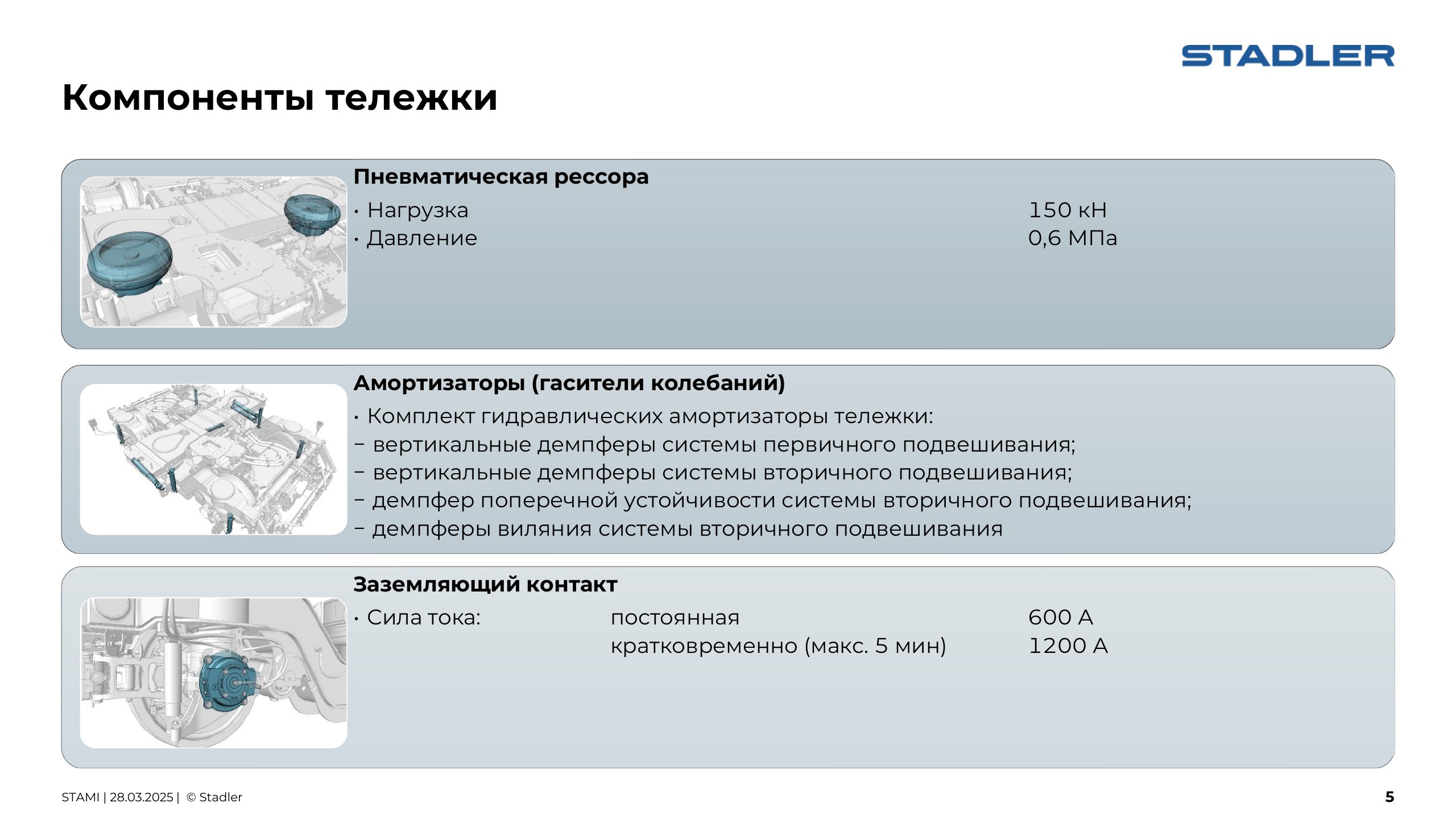
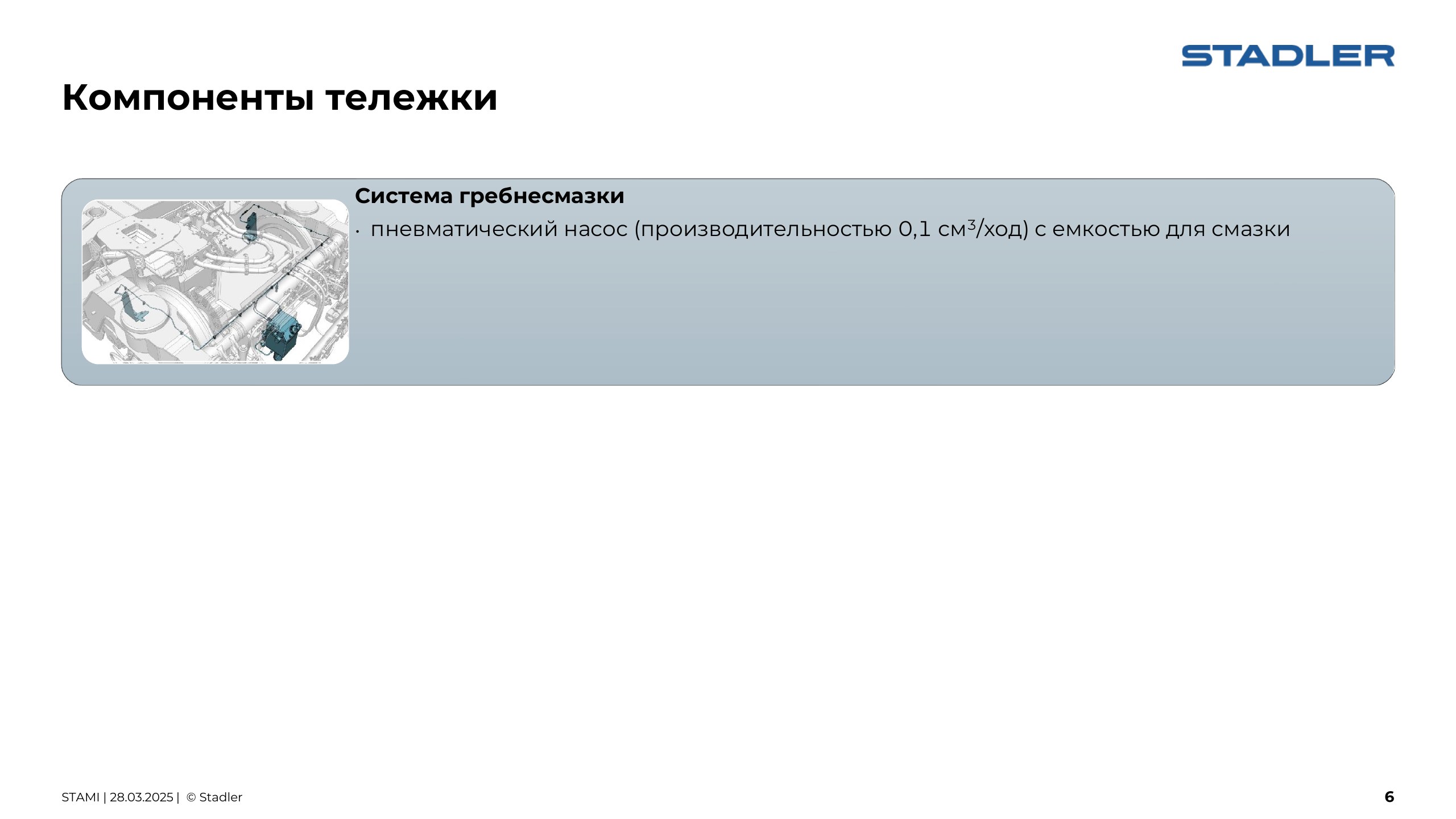
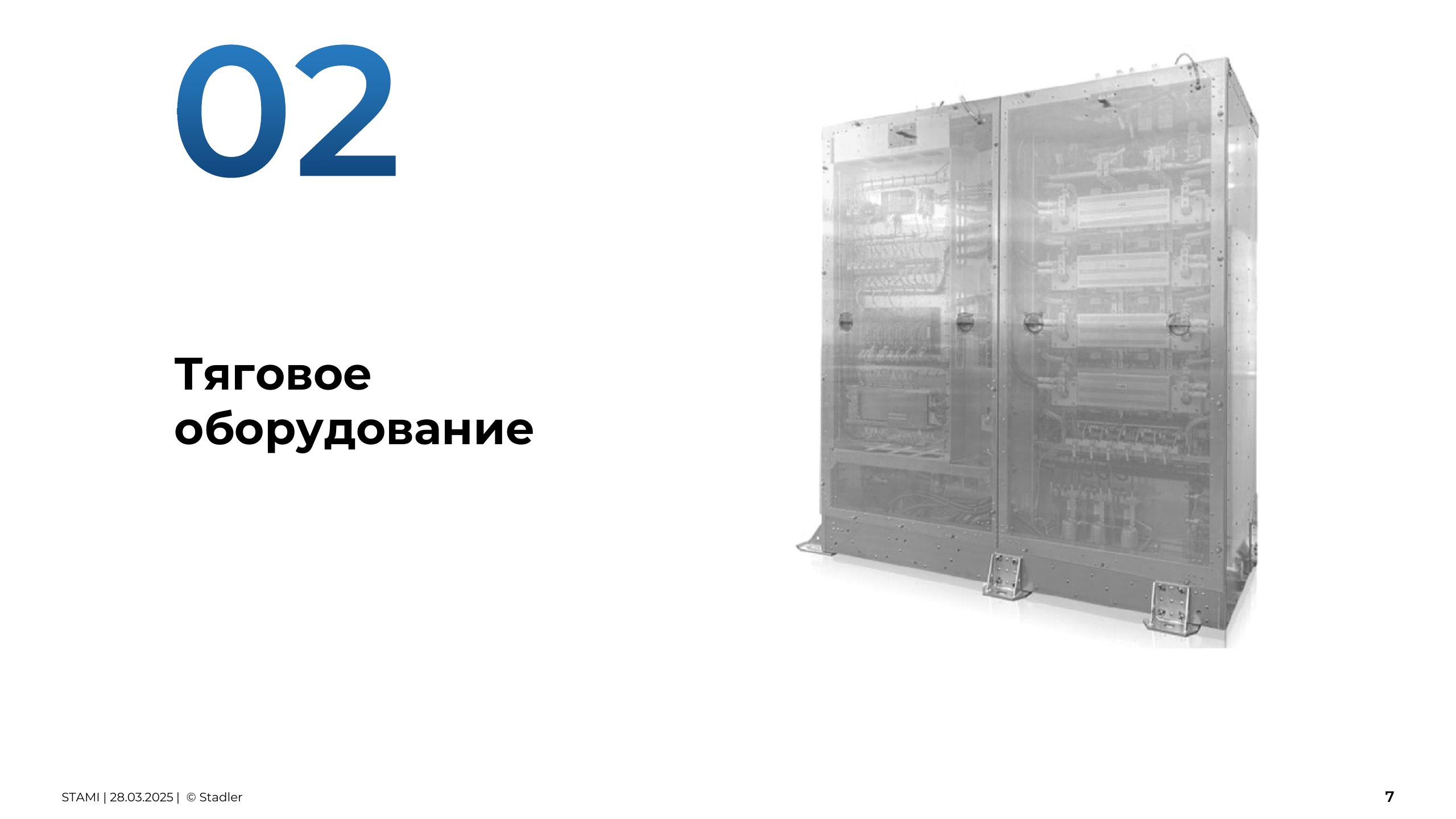
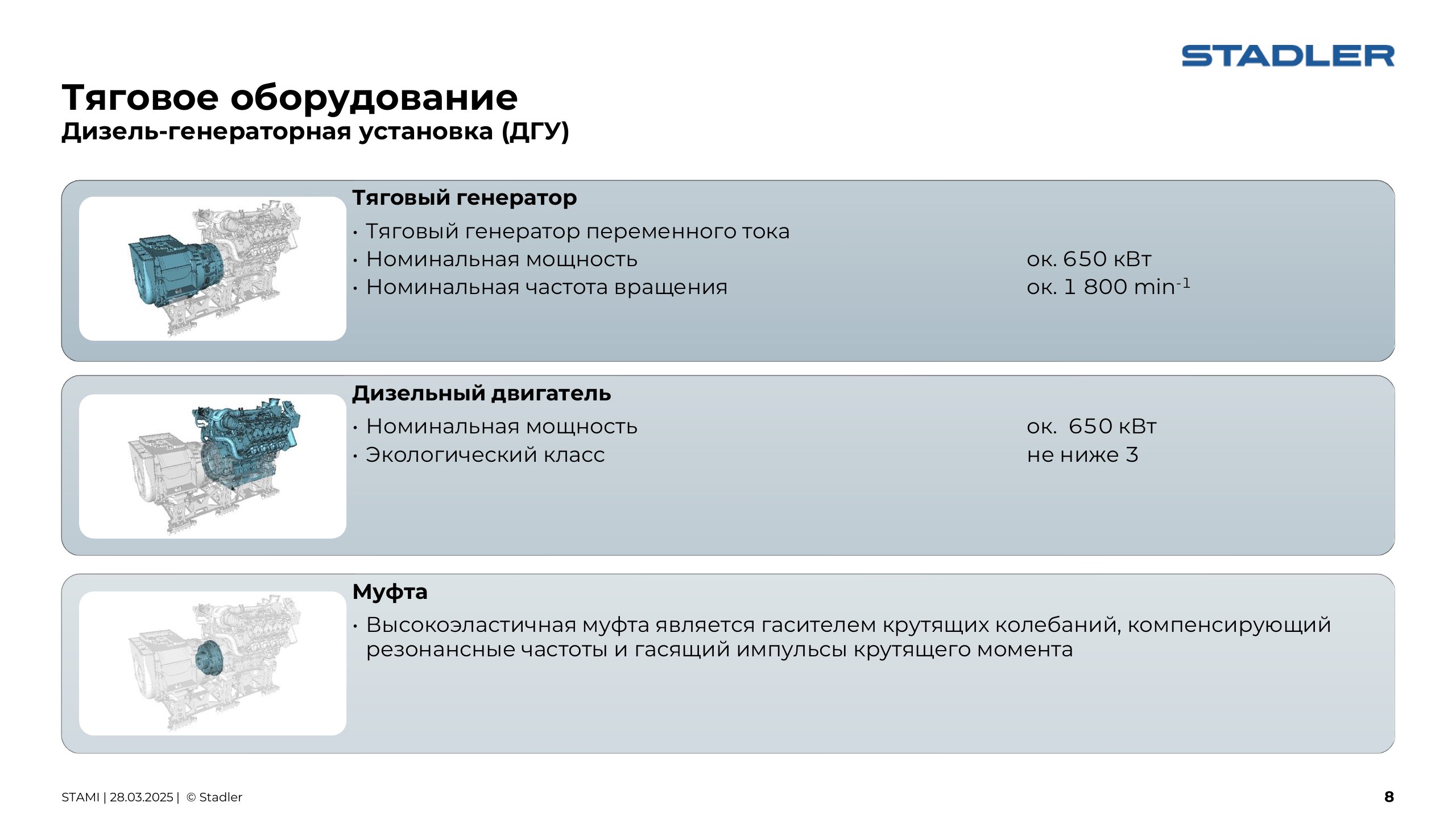
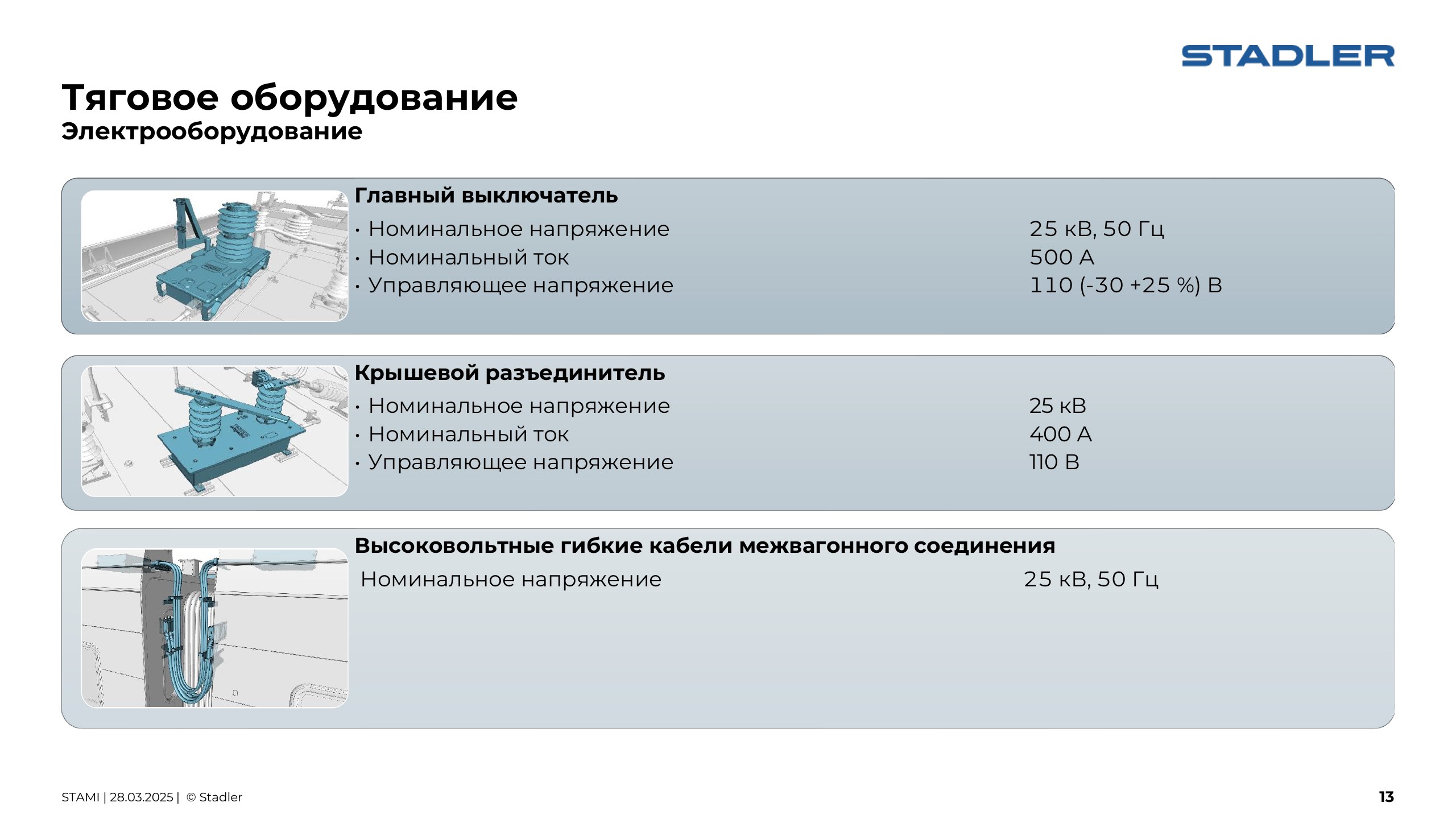
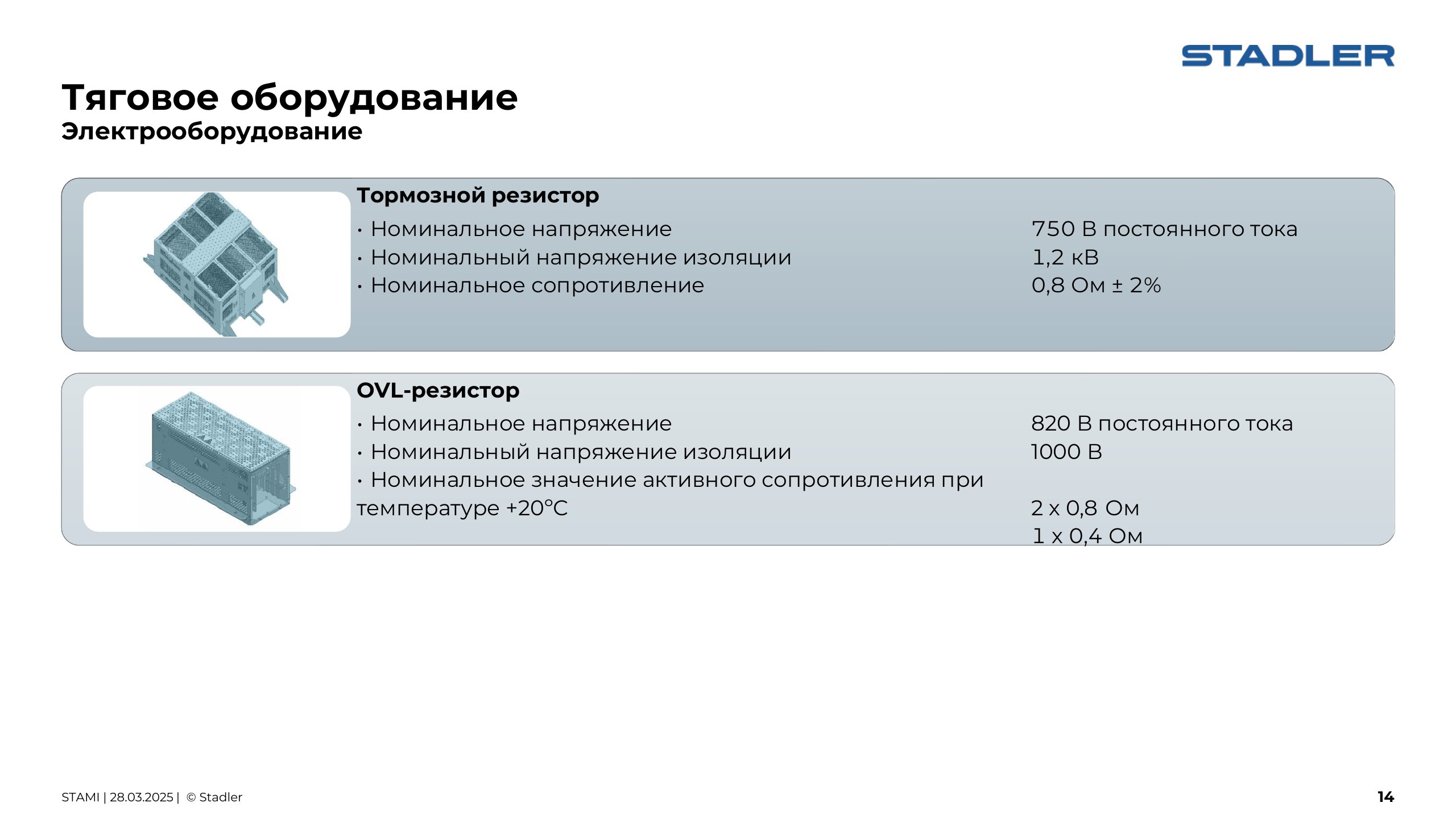
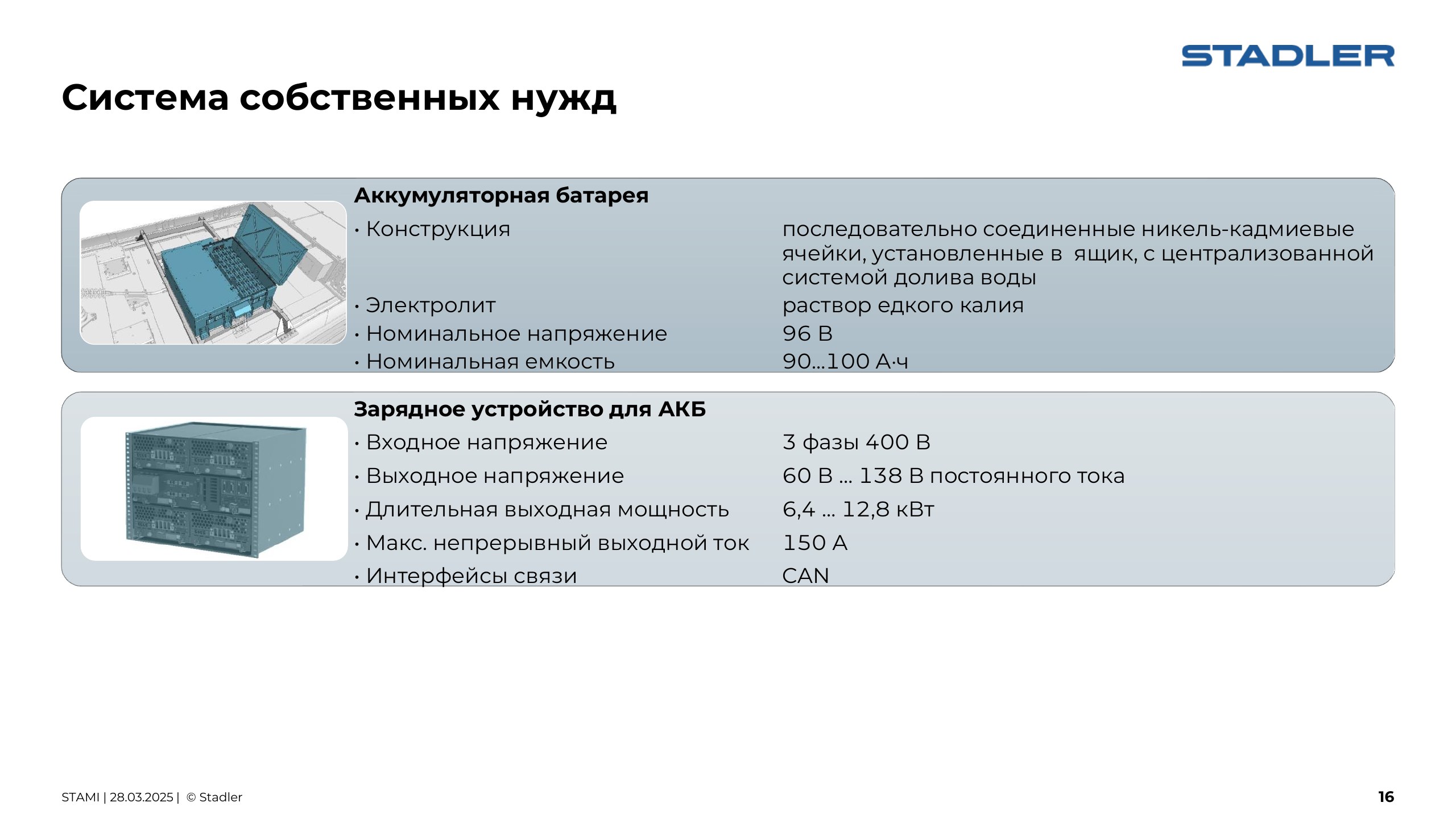
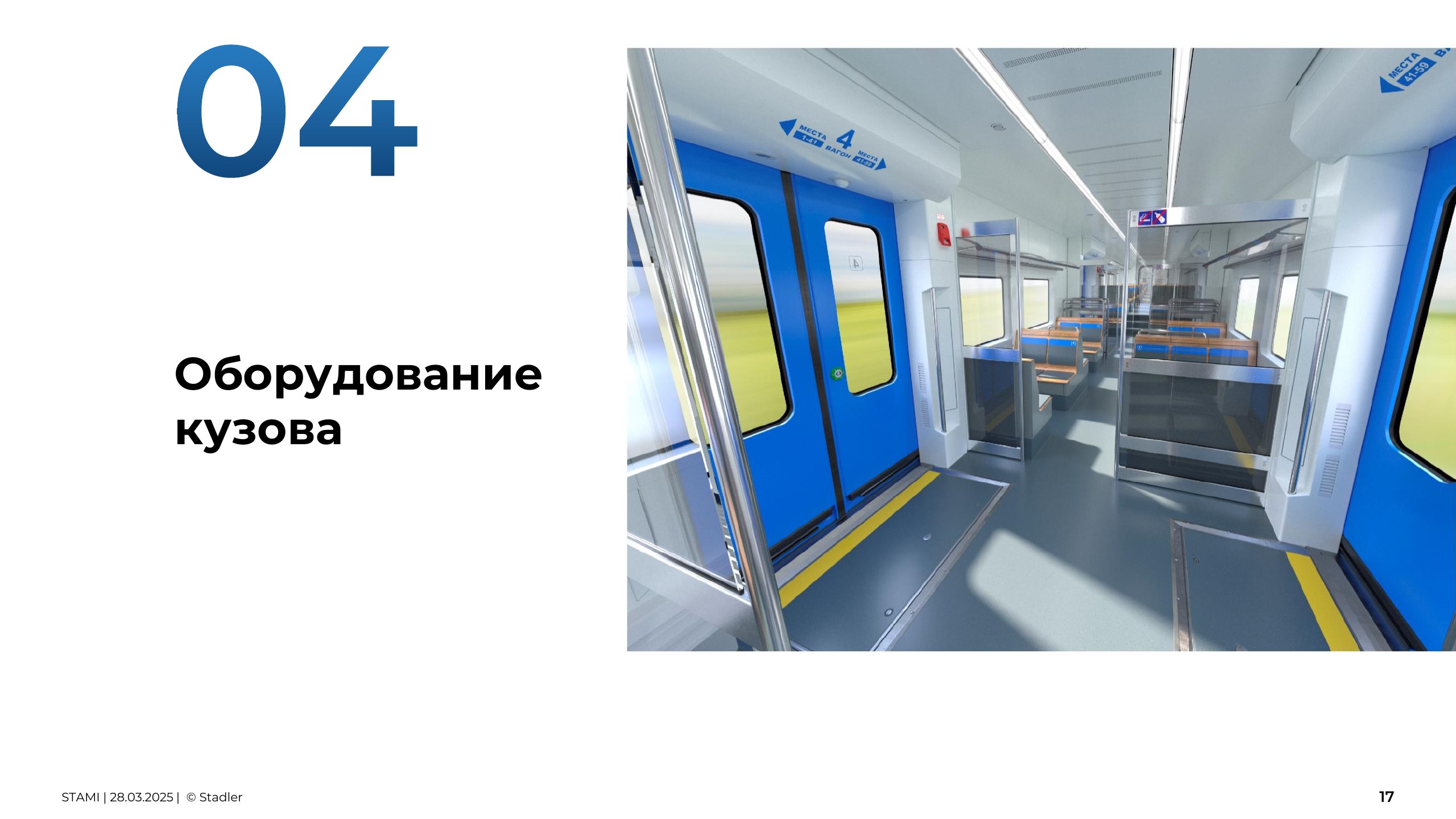
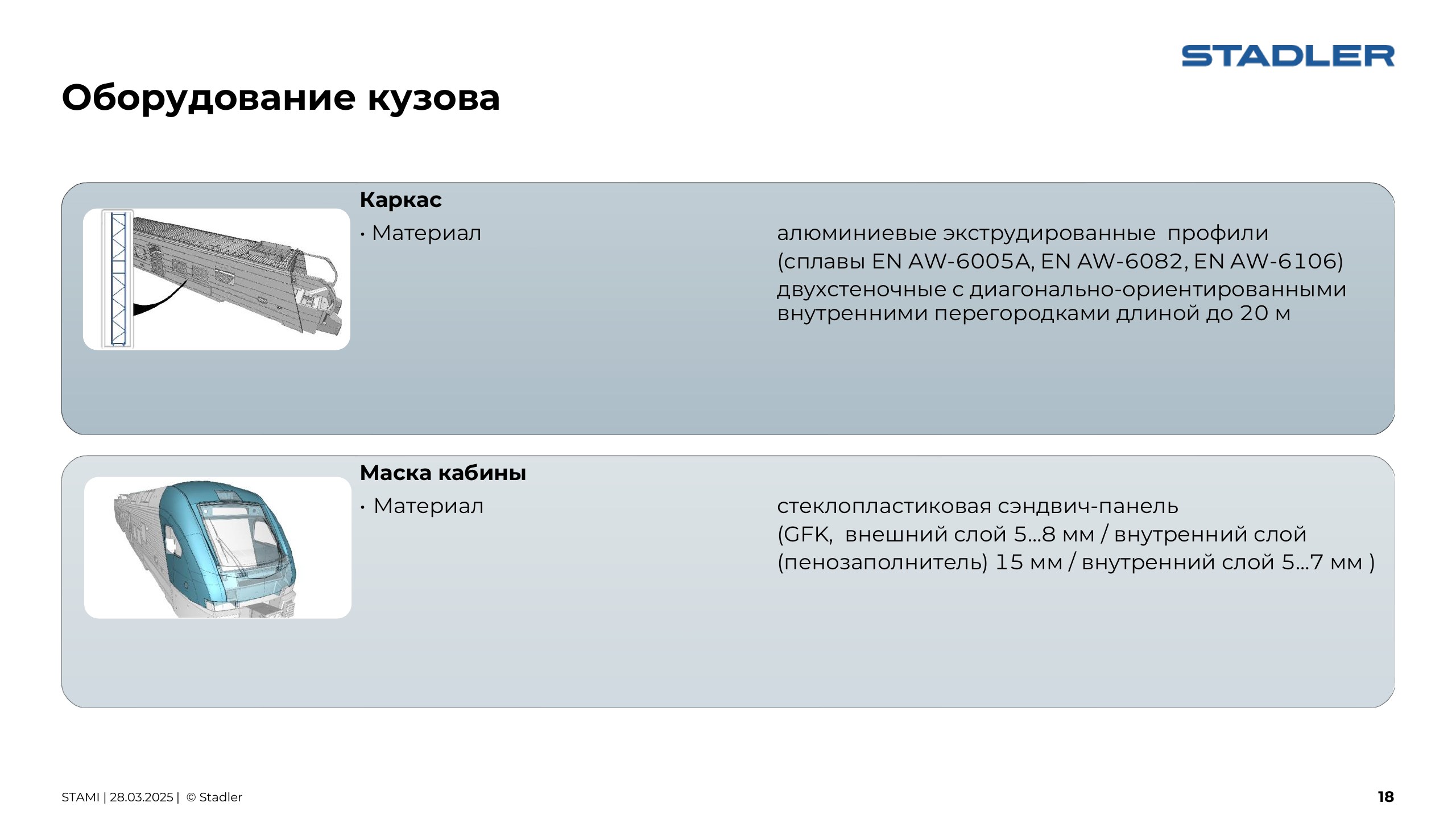
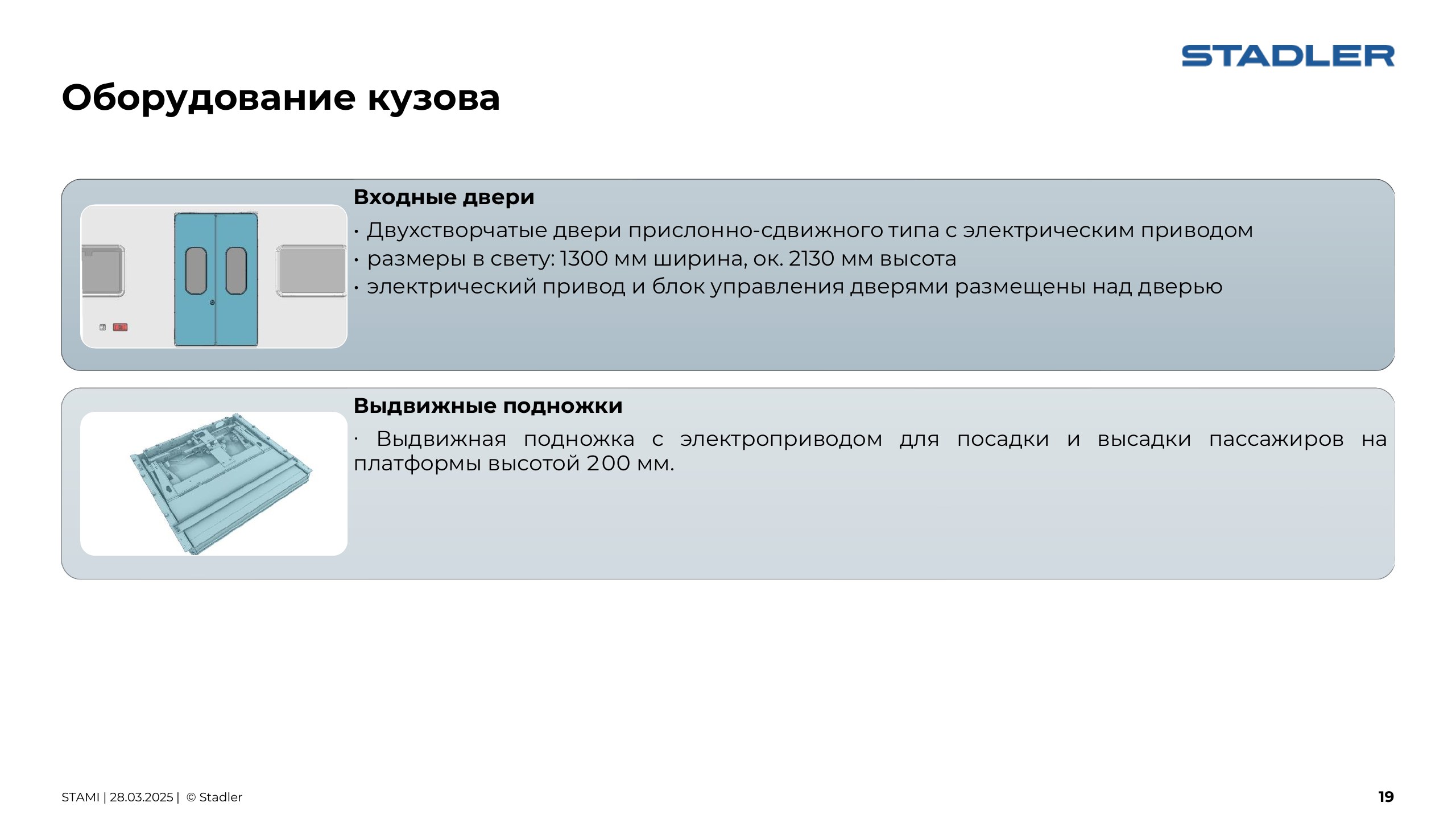
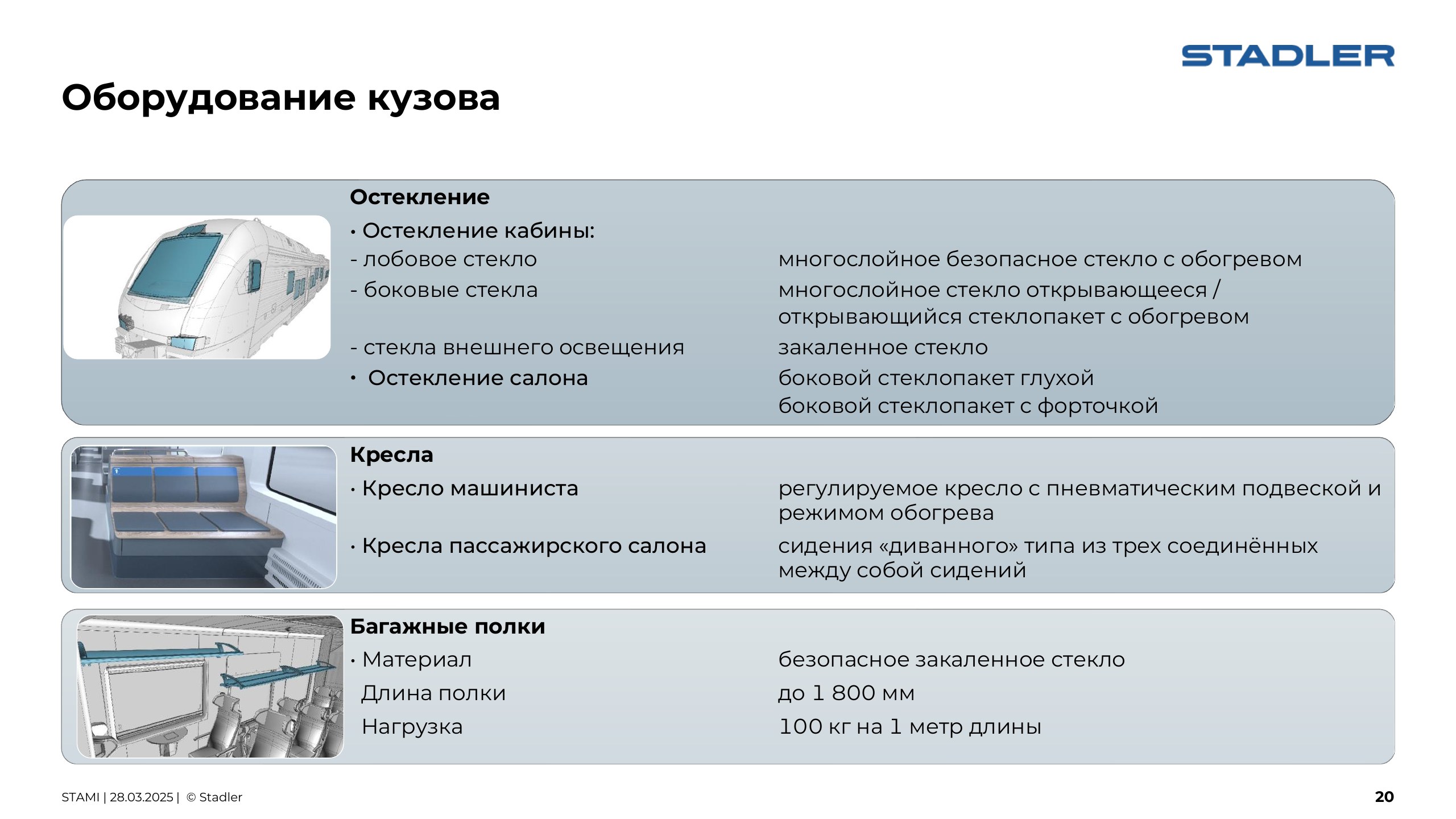
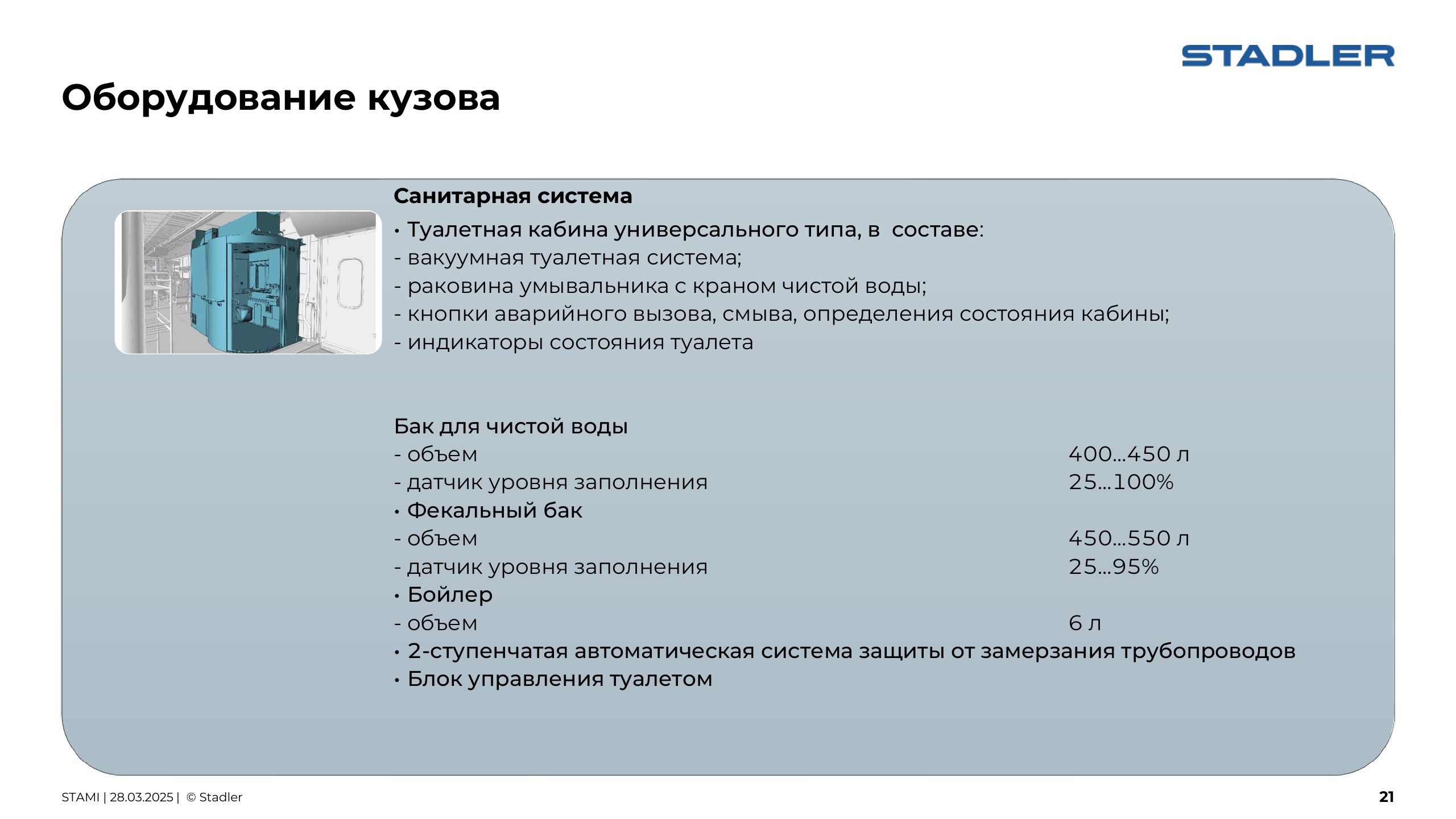
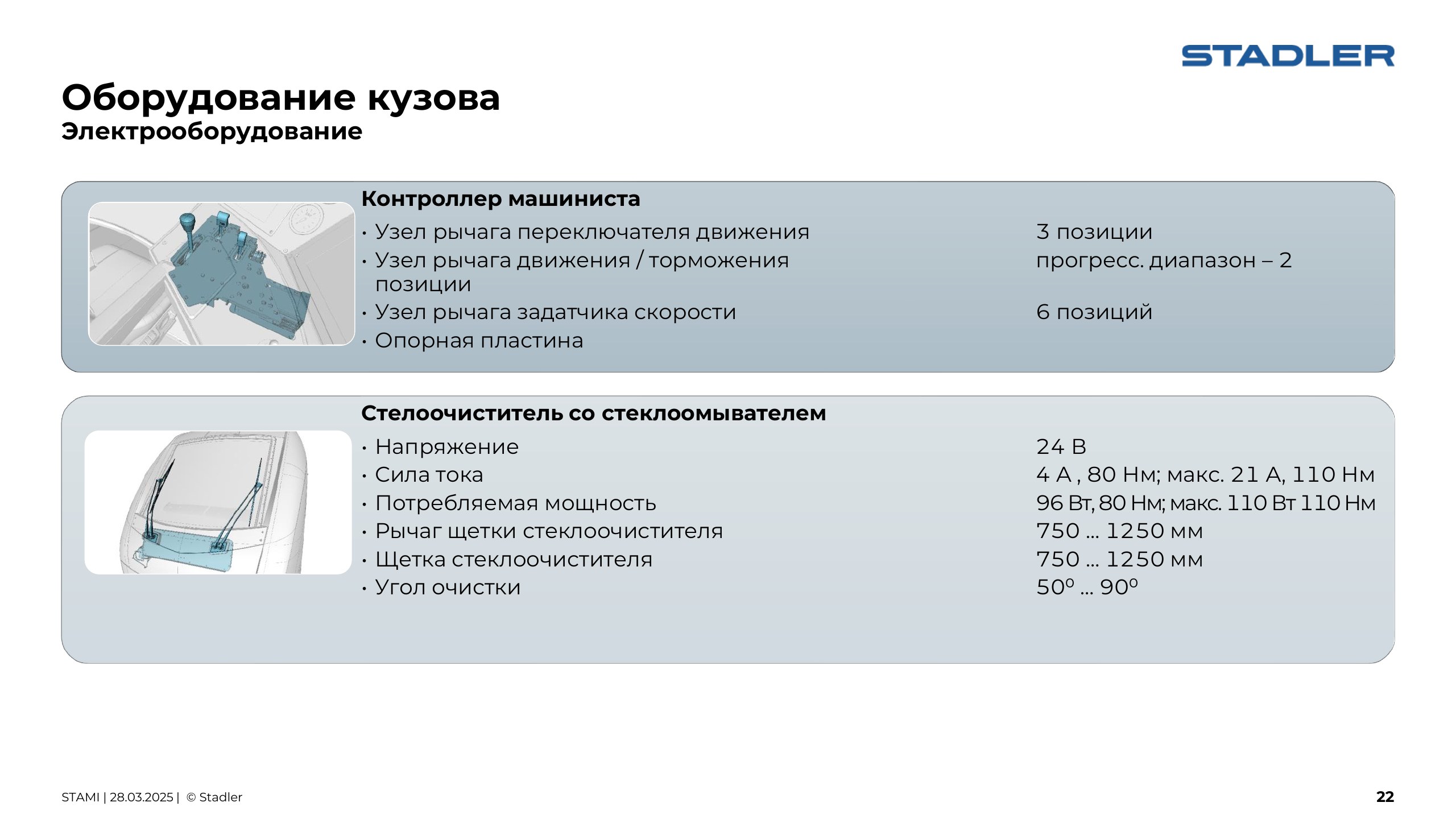
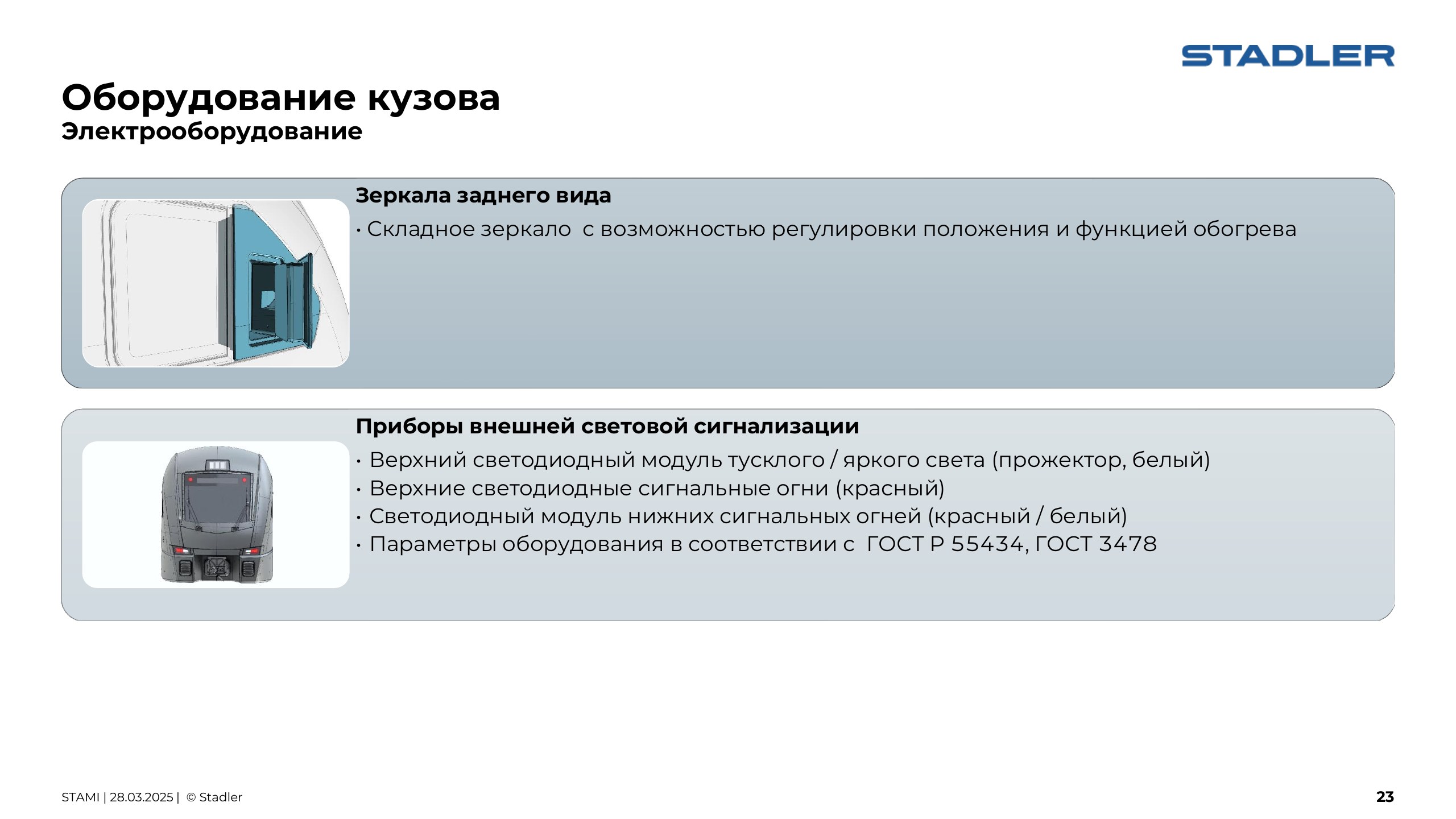
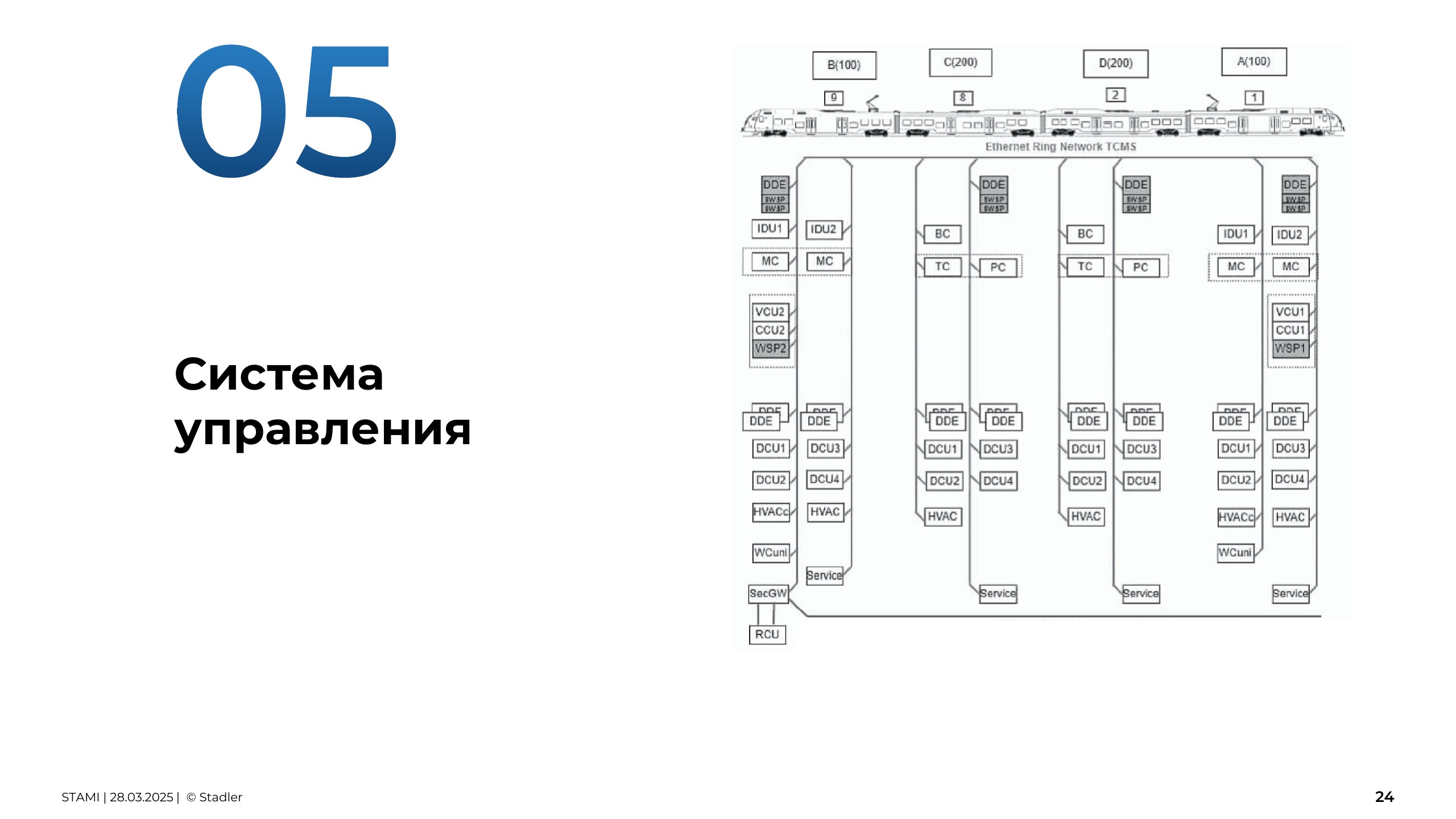
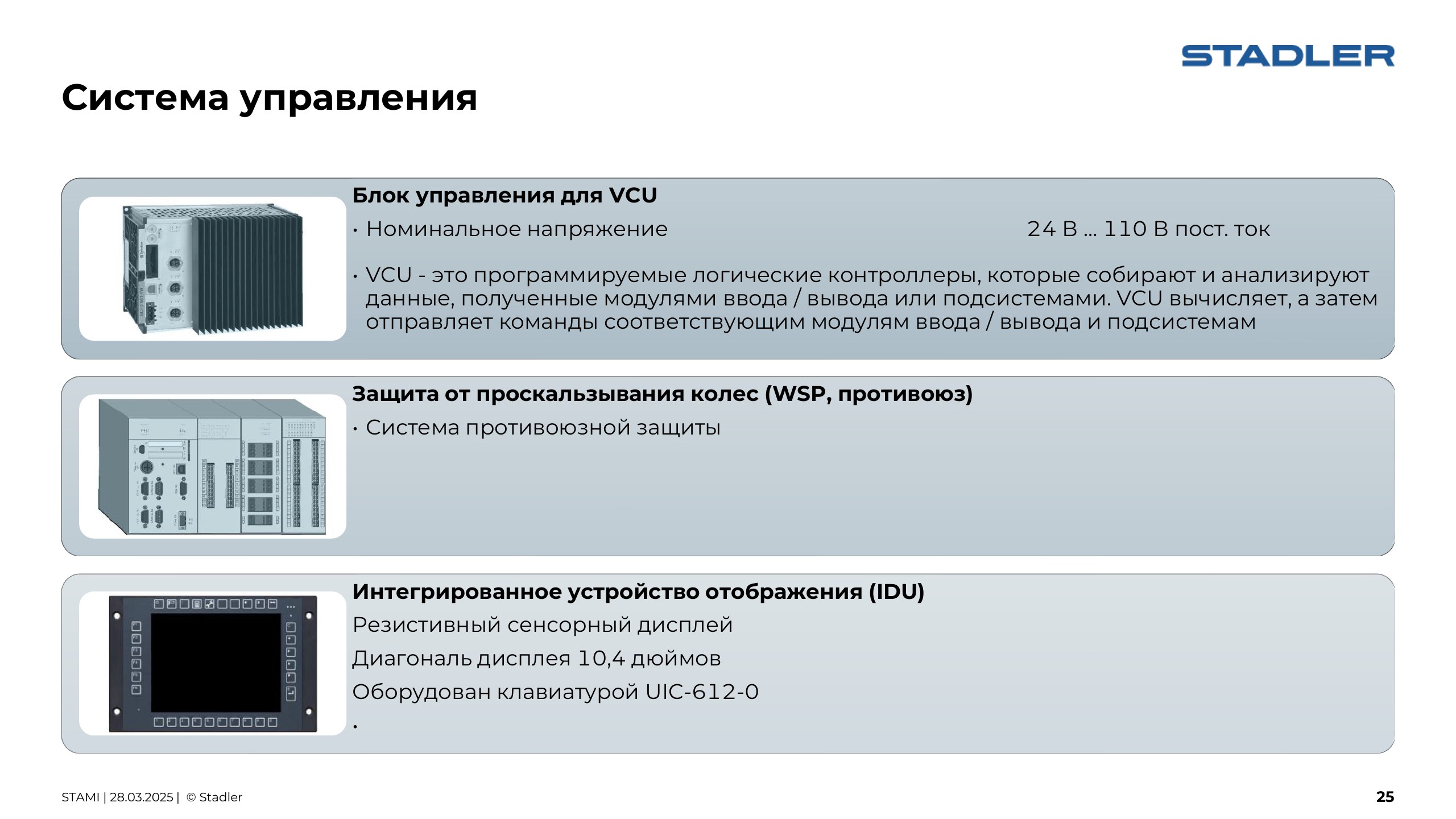
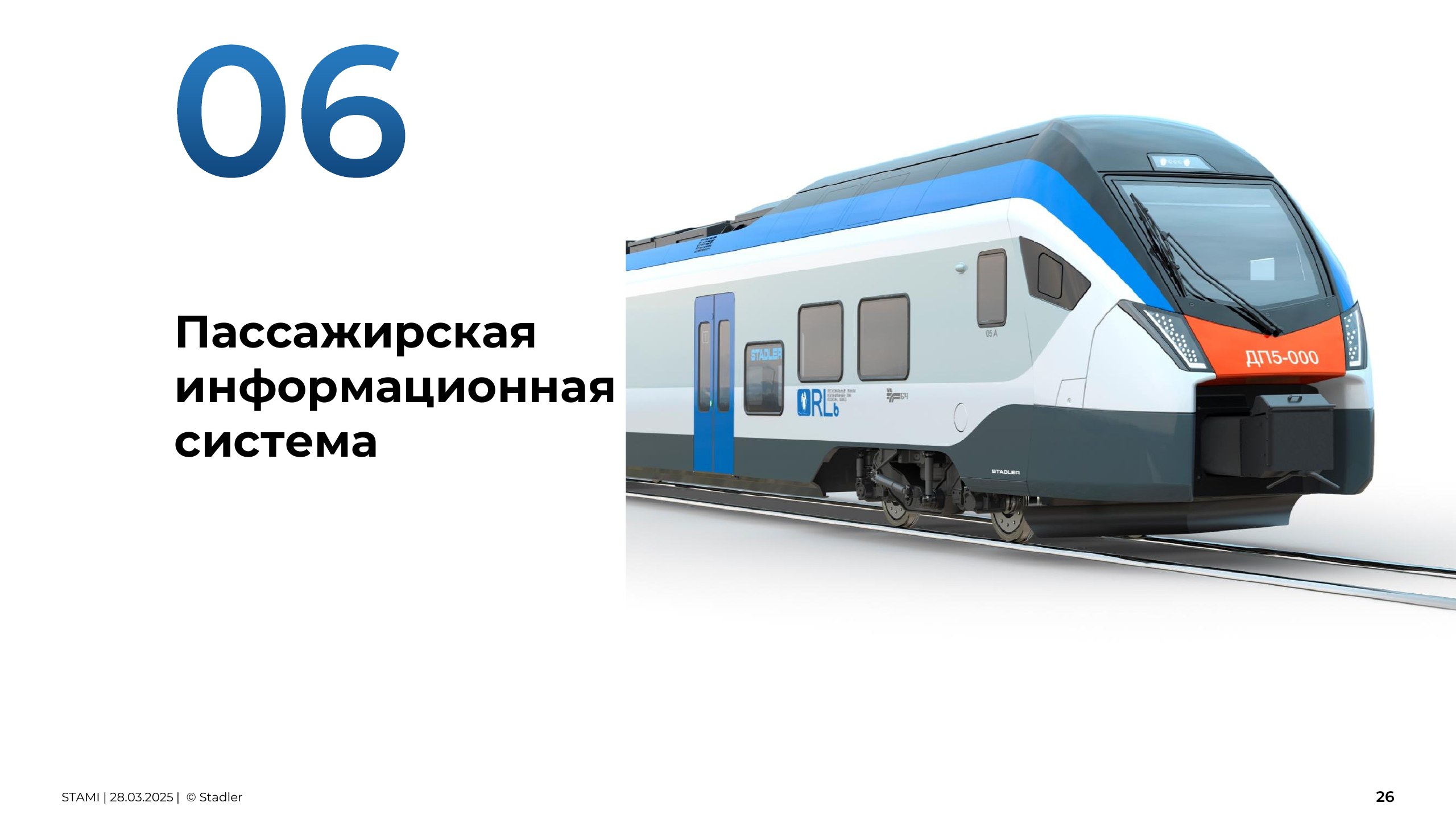
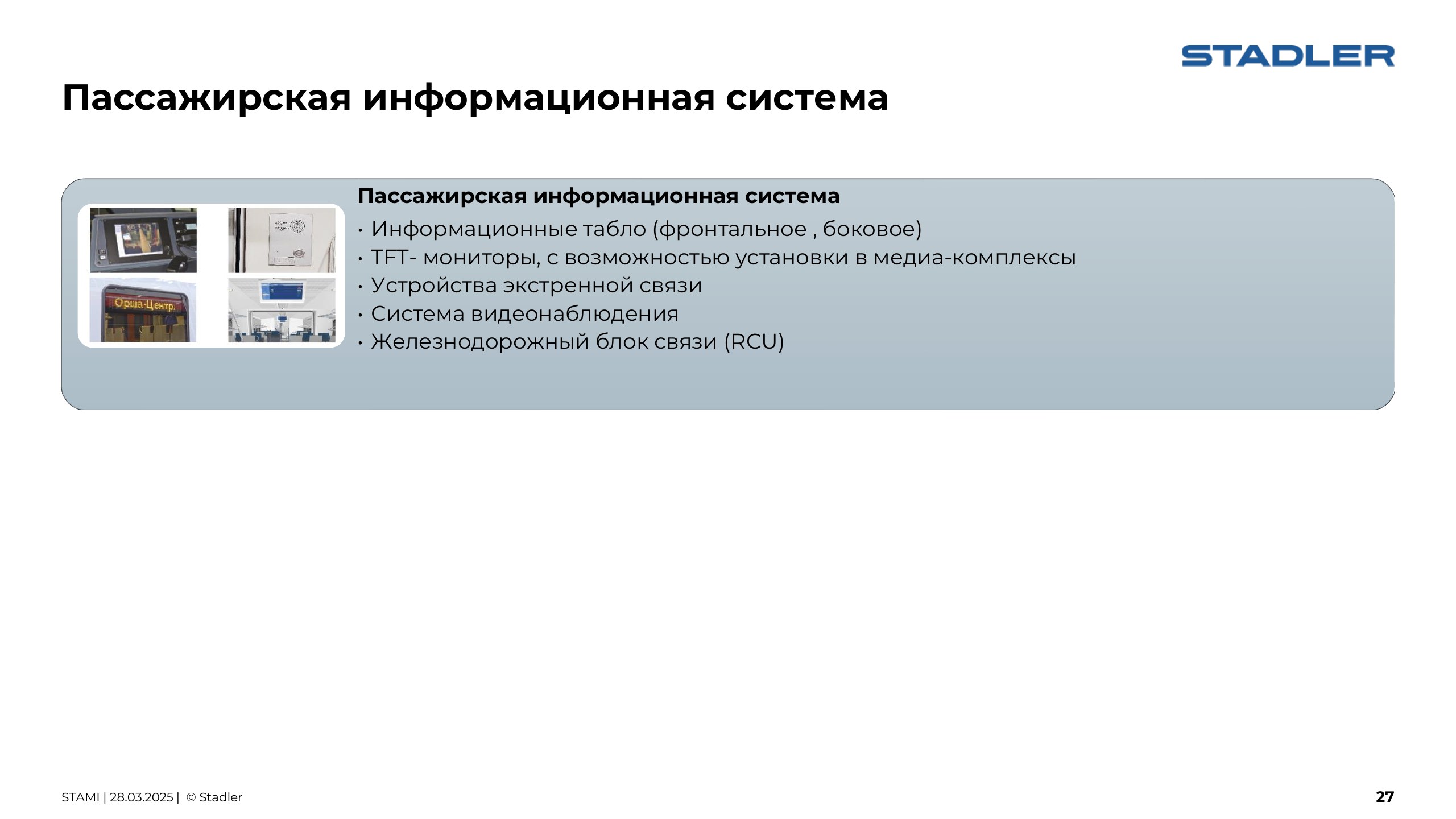
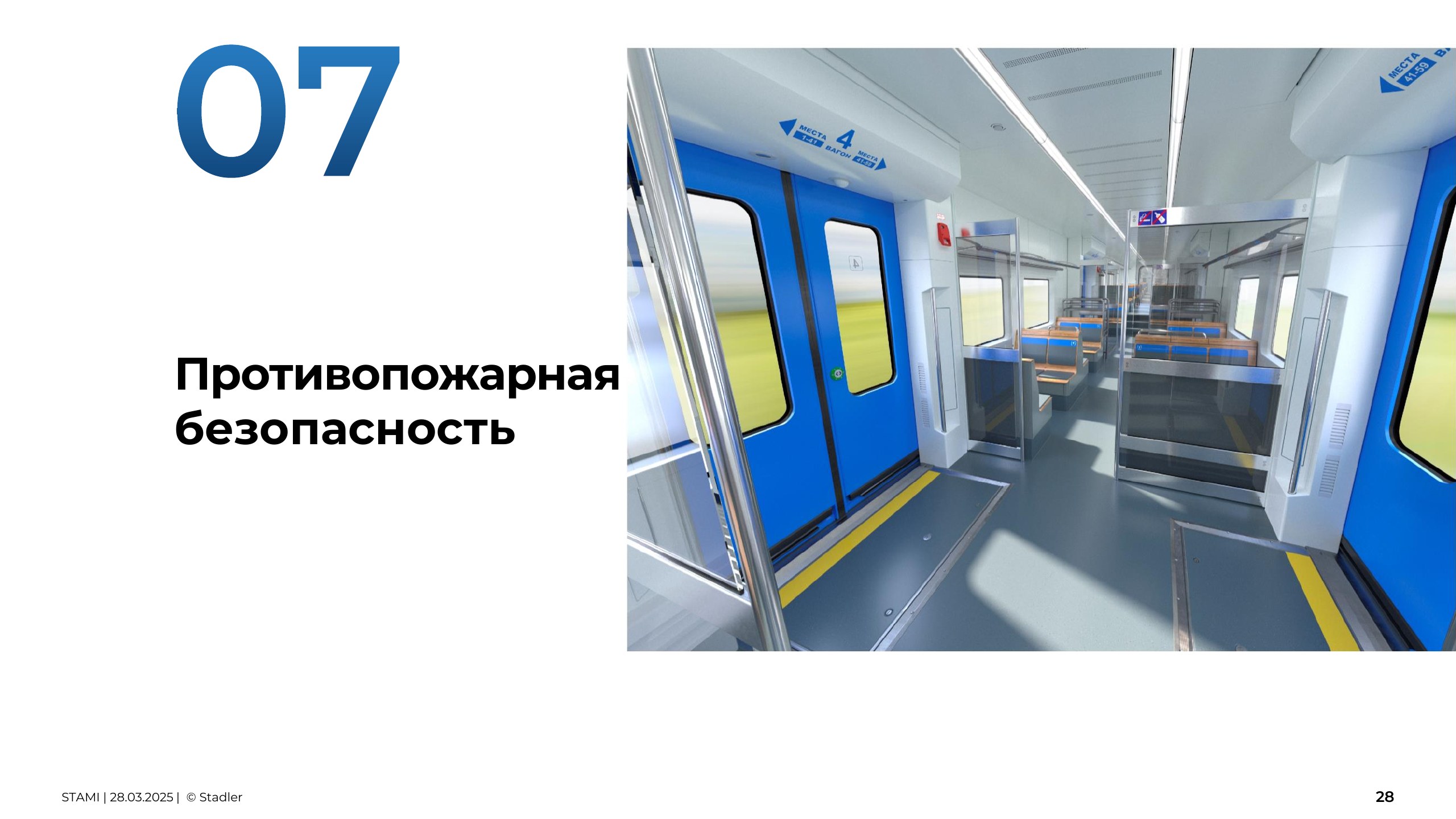
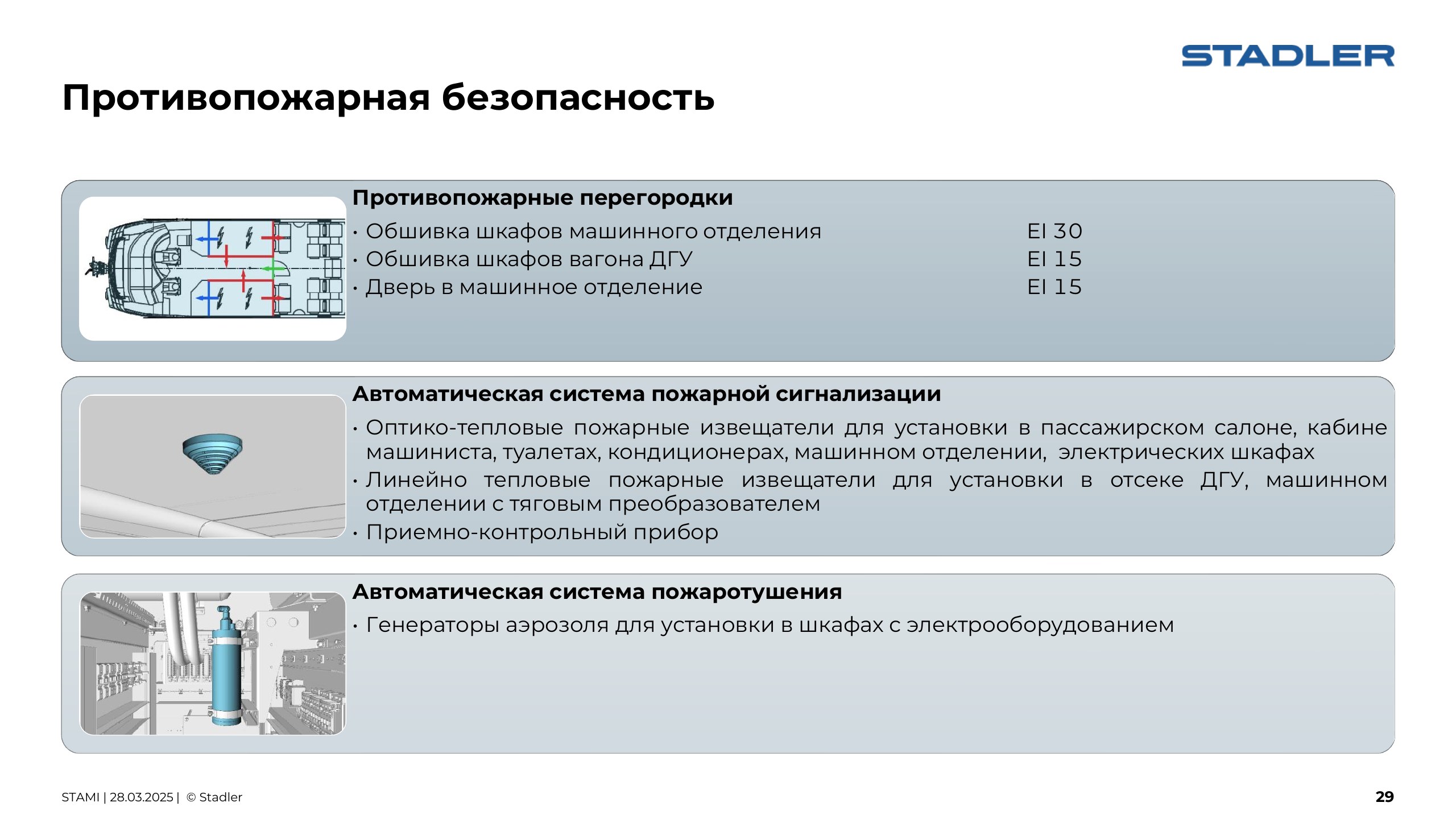
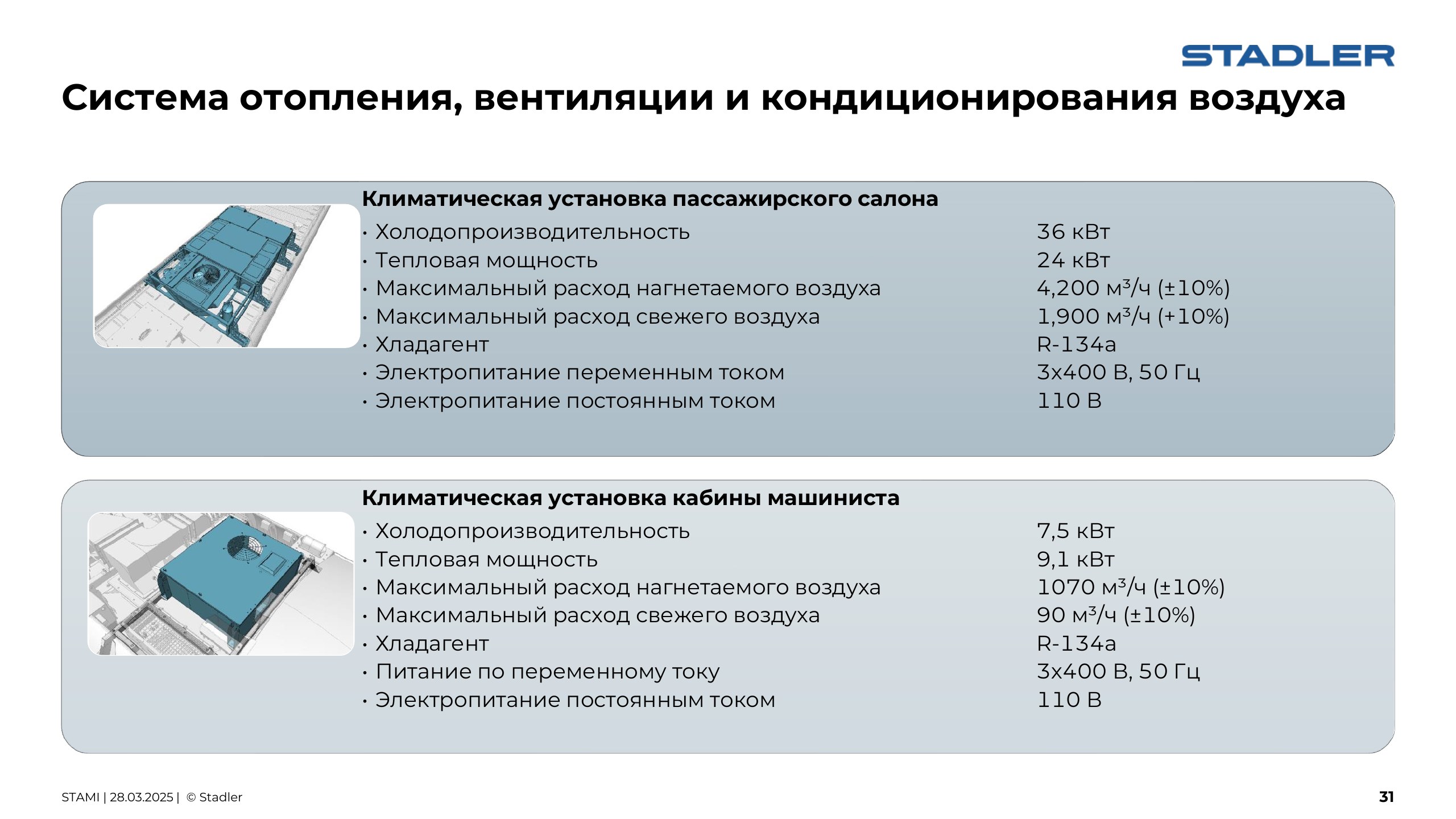
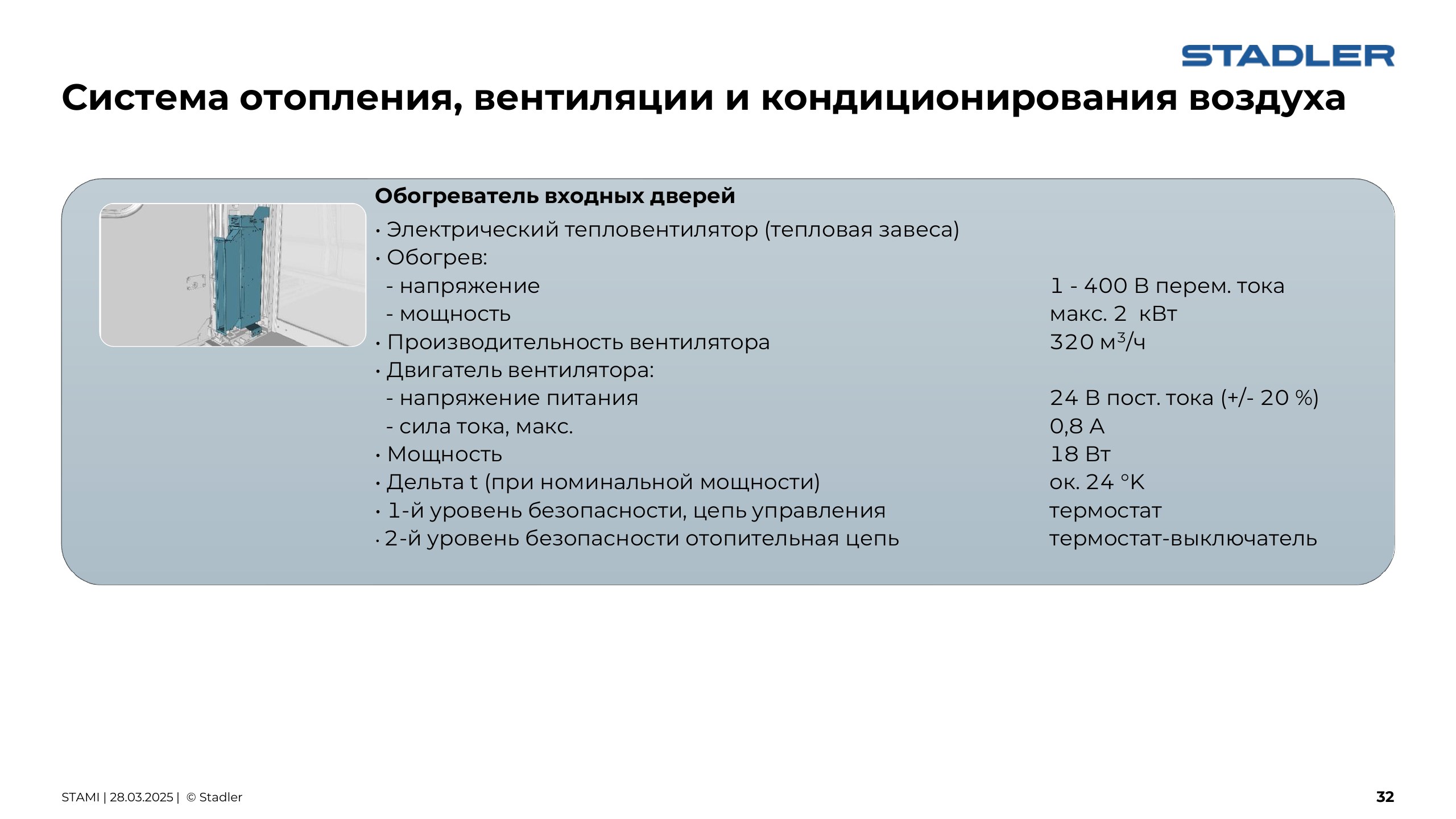
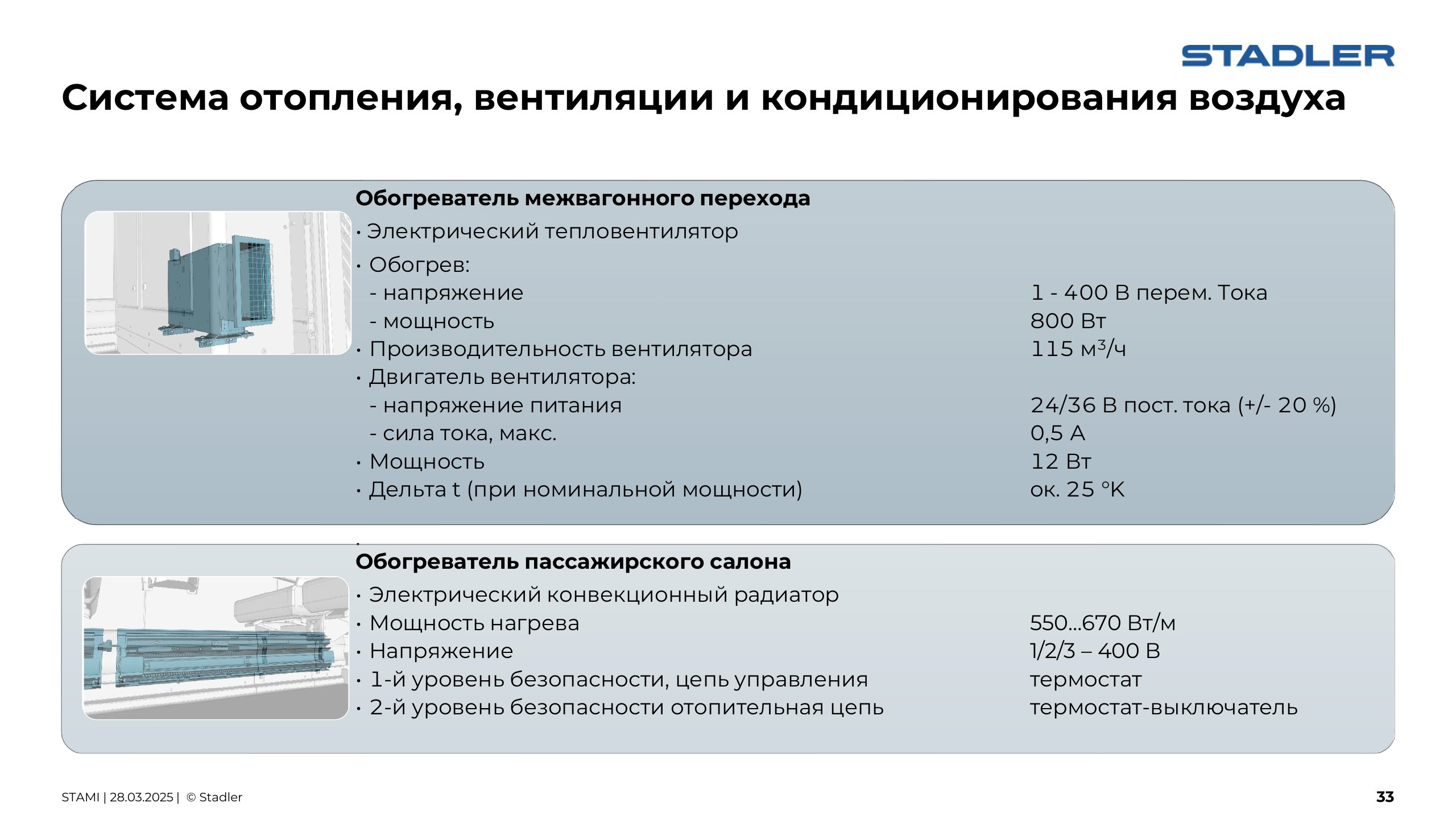
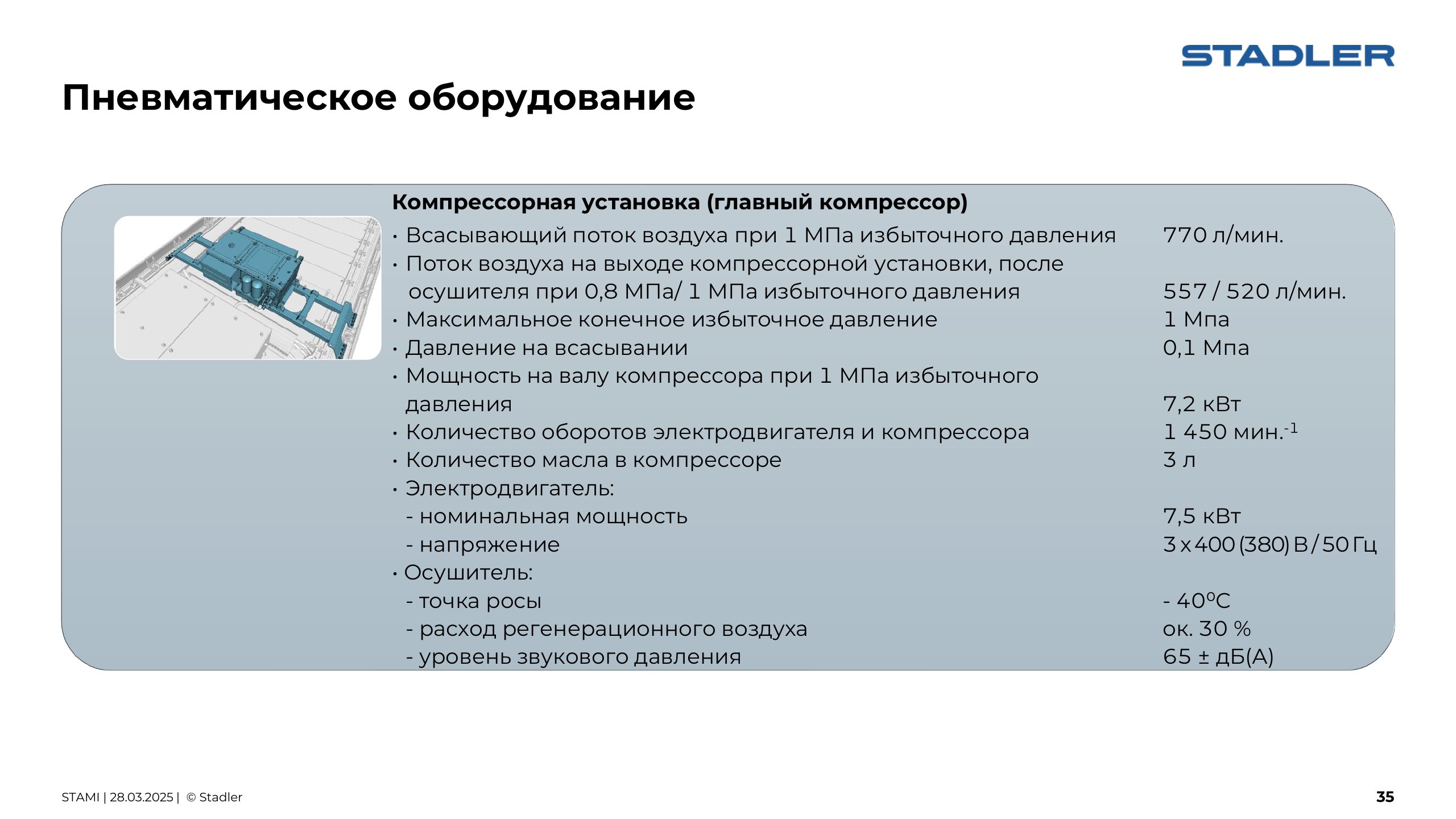
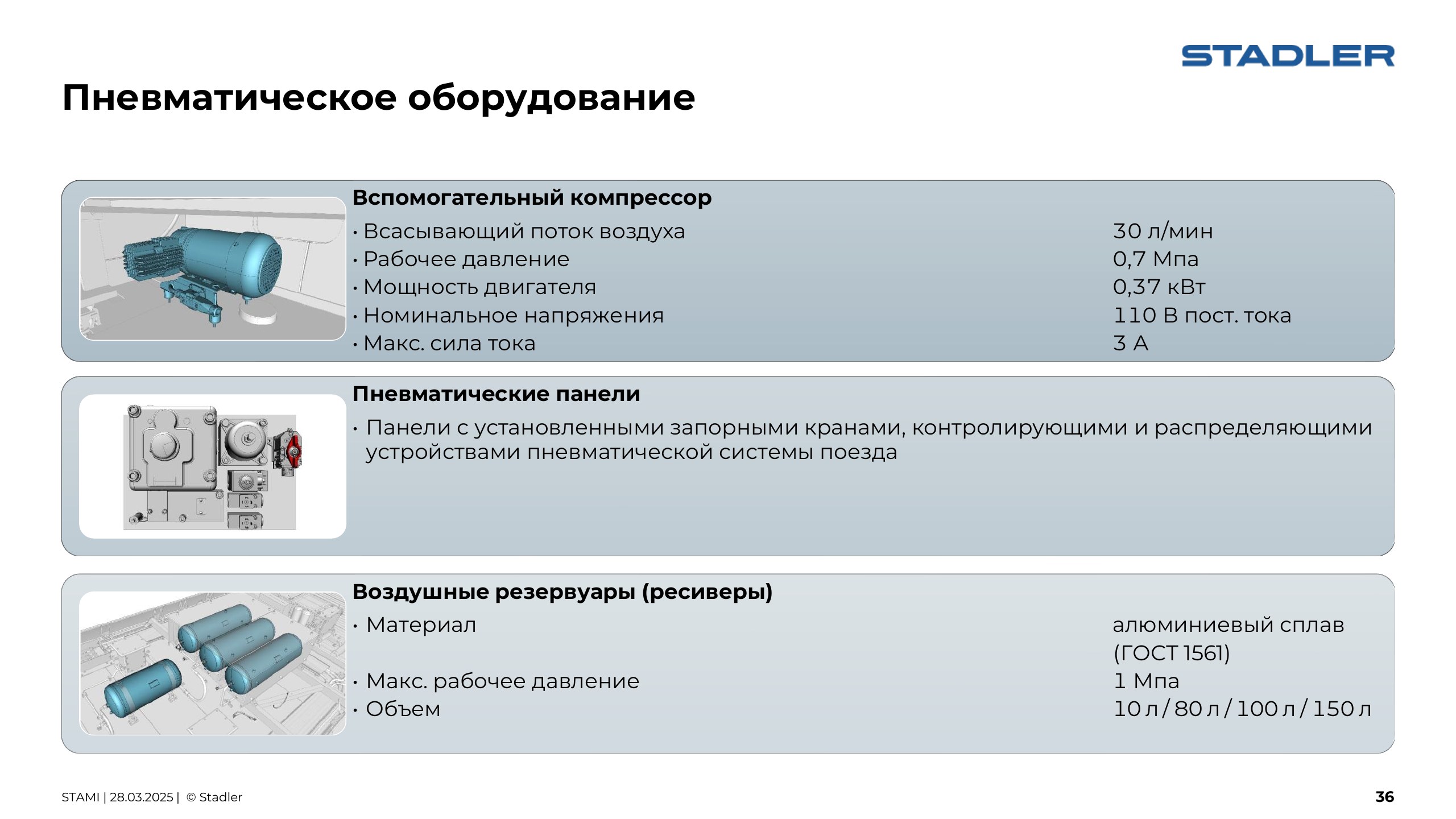
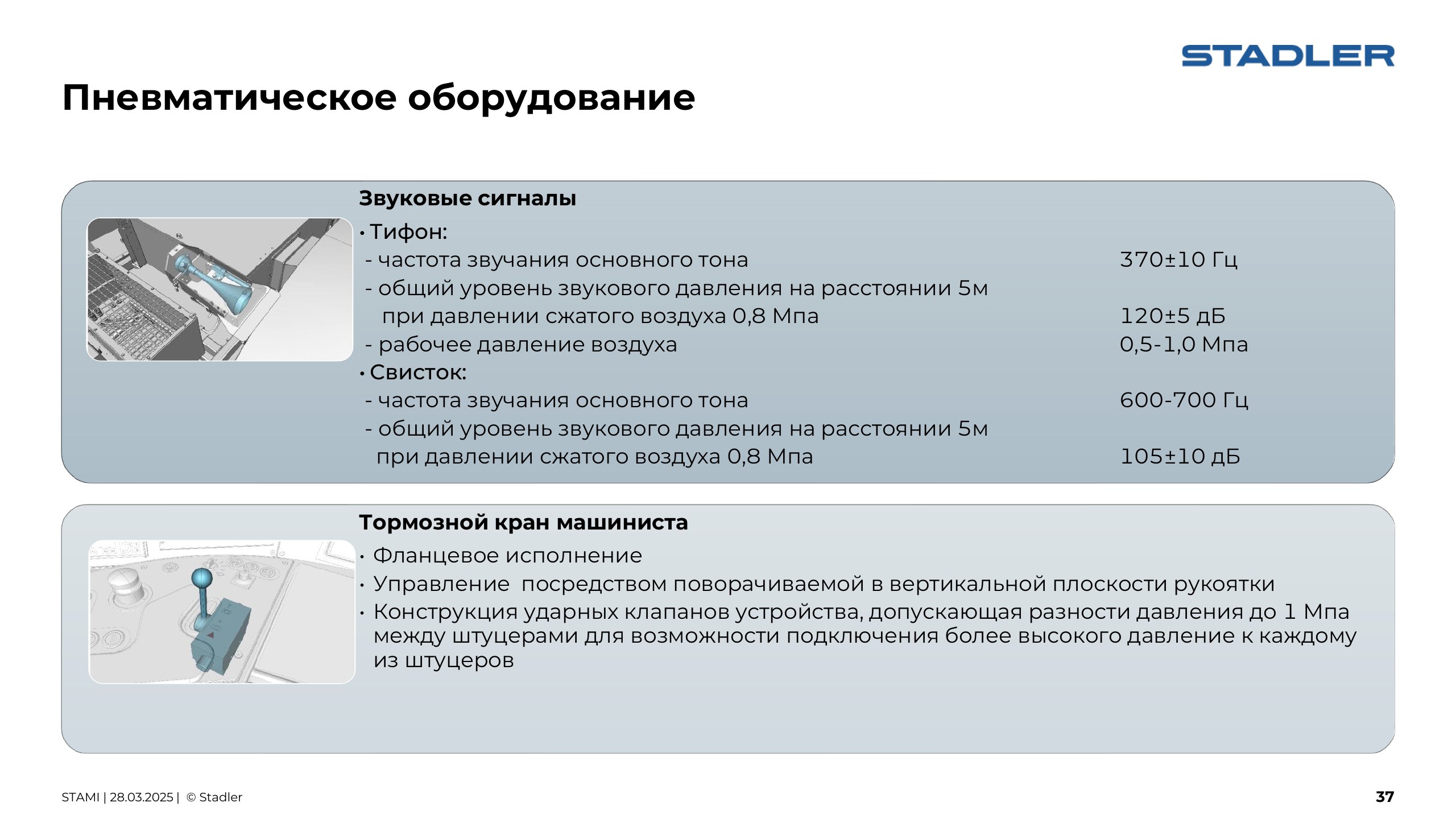
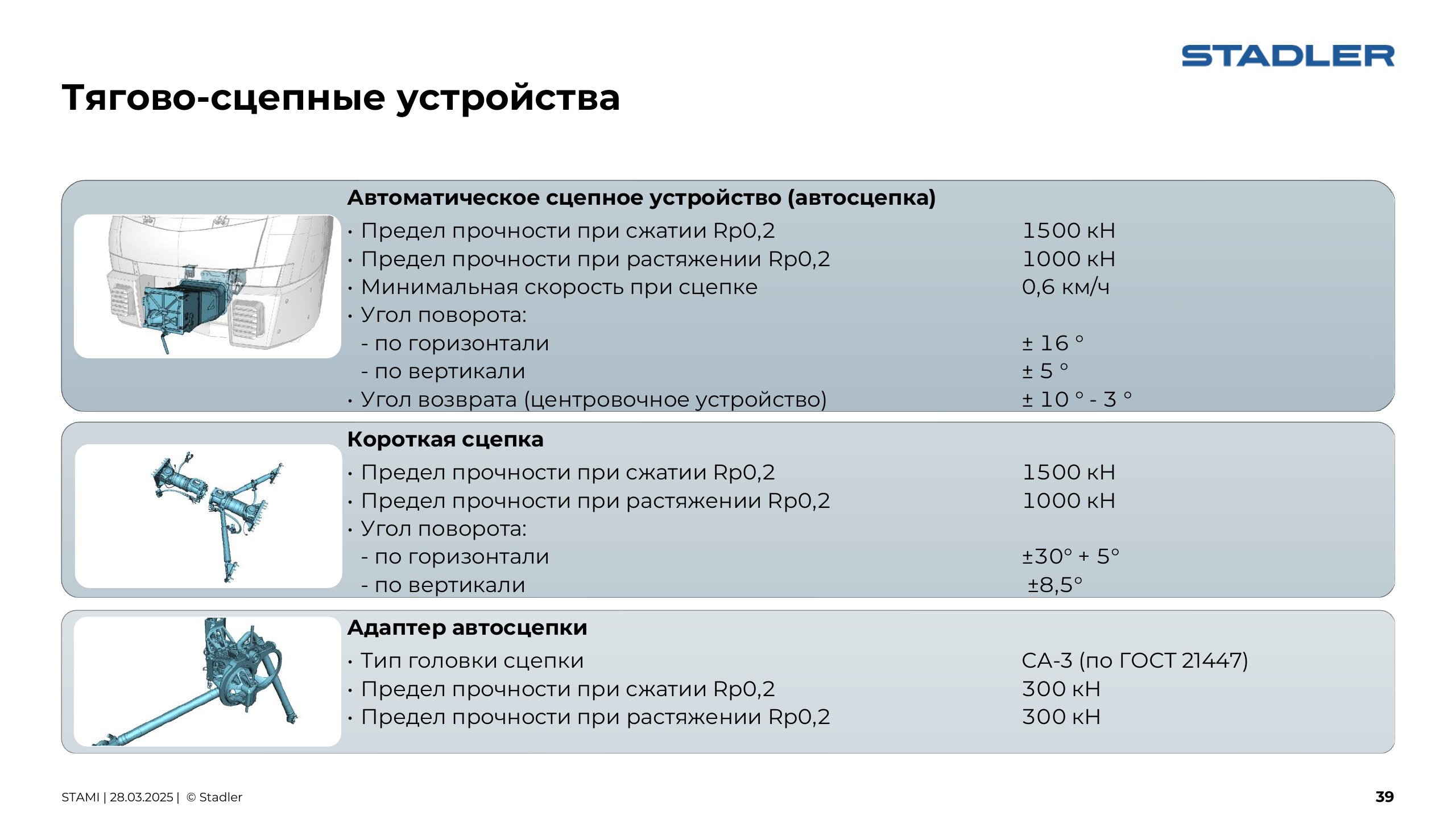
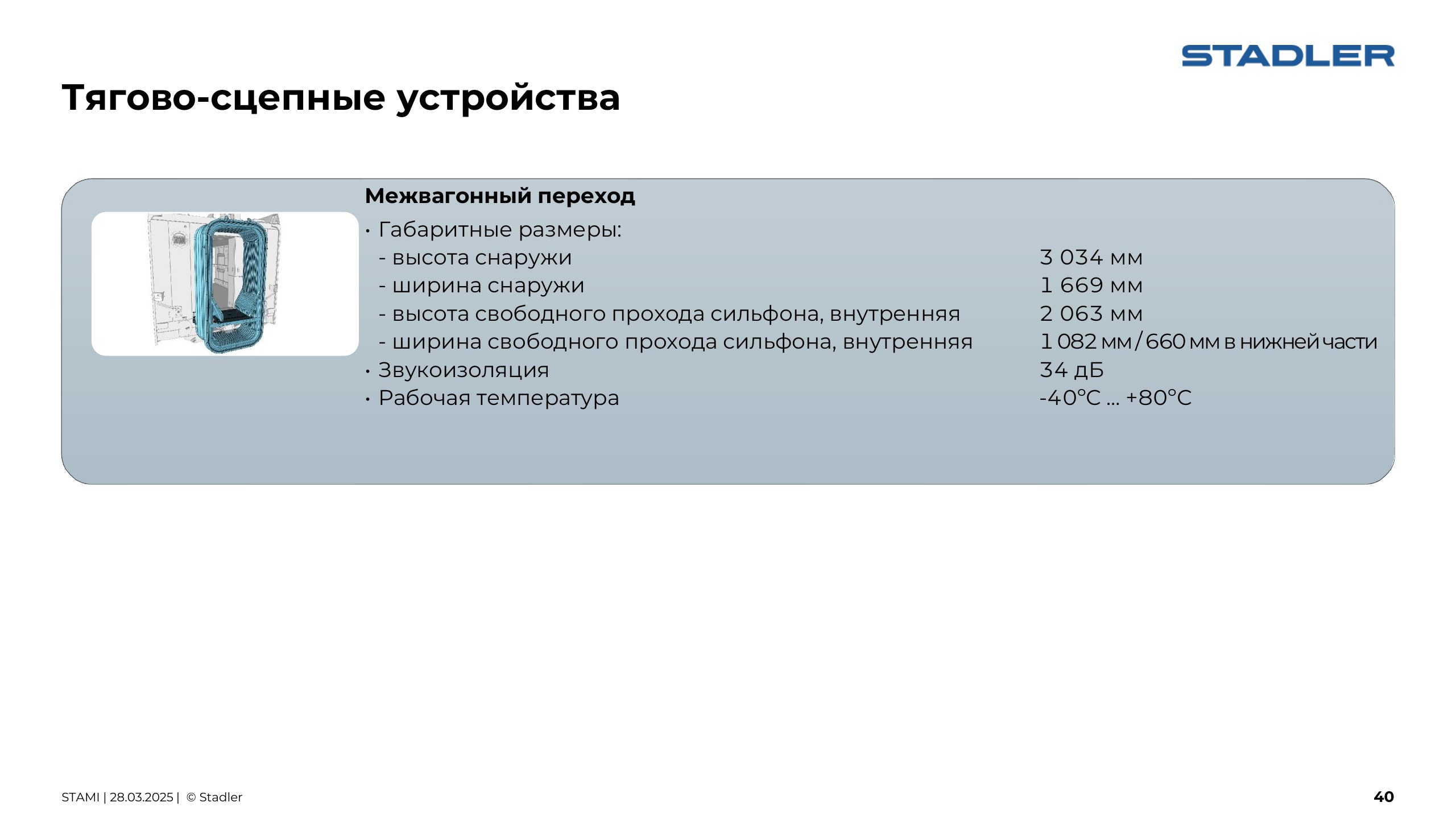
The word FLIRT does not appear anywhere in the list. But the parameters of many units match the Azerbaijani train:
- battery — nickel-cadmium, 96 V, 90–100 Ah; ADY uses HOPPECKE batteries at 96 V and 100 Ah;
- charger — 3×400 V input, up to 12.8 kW output; ADY uses Enedo at 3×400 V and 12.8 kW;
- brake and OVL resistor (overvoltage limiting) — ADY has the same two types of resistors, in roof-mounted design;
- heat curtains for entrance doors — ADY uses Faiveley air curtains;
- diesel generator set consisting of an engine and traction generator — ADY uses Deutz engines and TSA generators;
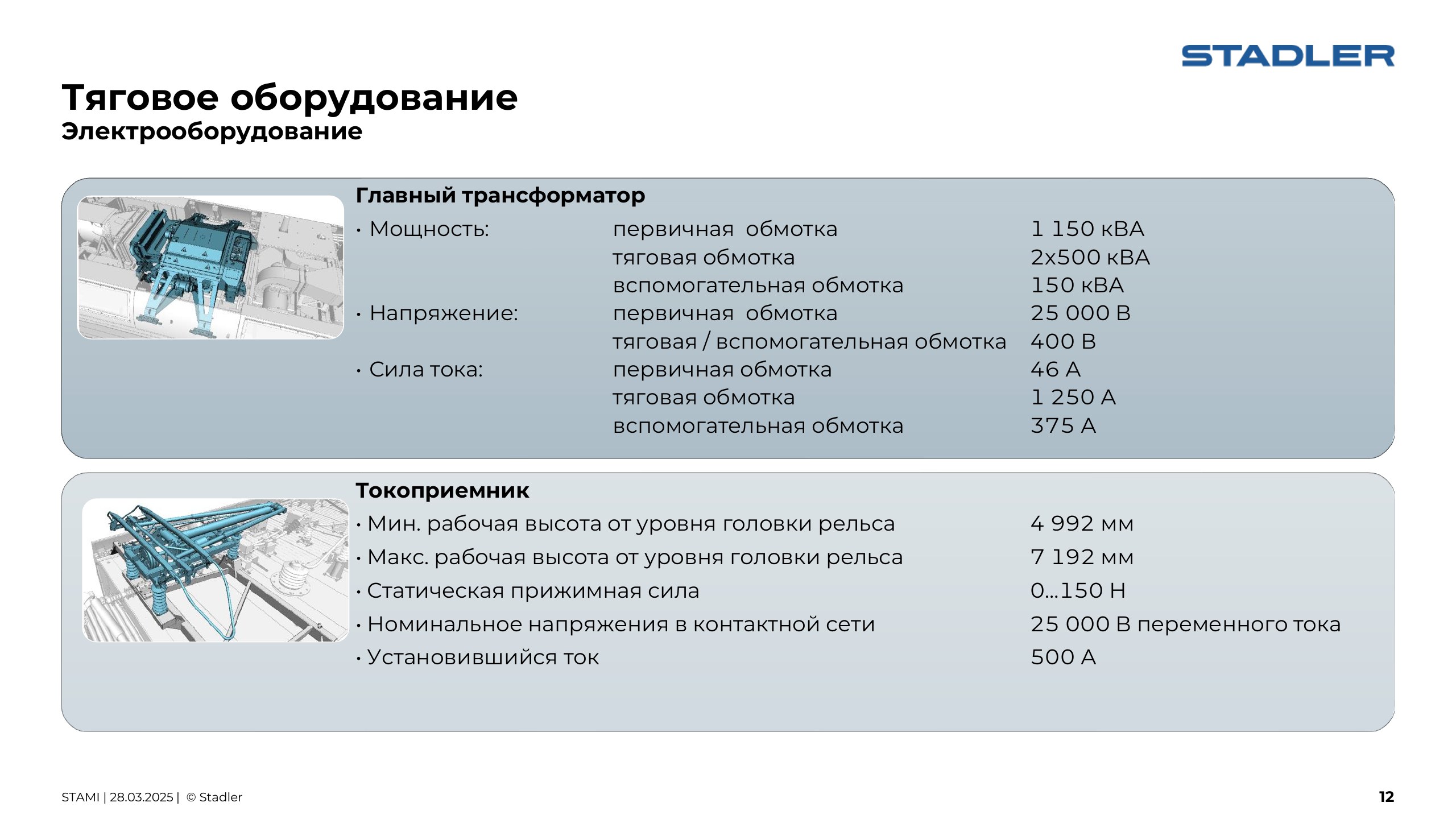
- 25 kV, 50 Hz high-voltage equipment — pantograph, main circuit breaker, roof disconnector, transformer; ADY has a pantograph, high-voltage disconnector and 25 kV measuring transformers.
The list includes both 25 kV traction electrical equipment and a diesel generator set. Stadler Minsk was working on both train types at once — commuter trains and diesel multiple units — the same ones Khoroshevich mentioned five months later.
Below are the specifications of the train for BCh, compiled from the L-4093 project documents and the component list.
FLIRT for BCh: technical specifications
| No. | Specification | Value |
| 1 | Train configuration | 4 cars on 5 bogies: 2 motor bogies at the ends, 3 Jacobs bogies |
| 2 | Length | about 75.5 m |
| 3 | Gauge | 1,520 mm (1,524 mm in the component list) |
| 4 | Maximum operating speed | 140 km/h |
| 5 | Axle load | up to 21 t (in the component list, the static wheelset load on the rail is 20 t) |
| 6 | Capacity | 204 seated and 218 standing places |
| 7 | Current type | AC, 25 kV, 50 Hz |
| 8 | Main transformer | 1,150 kVA |
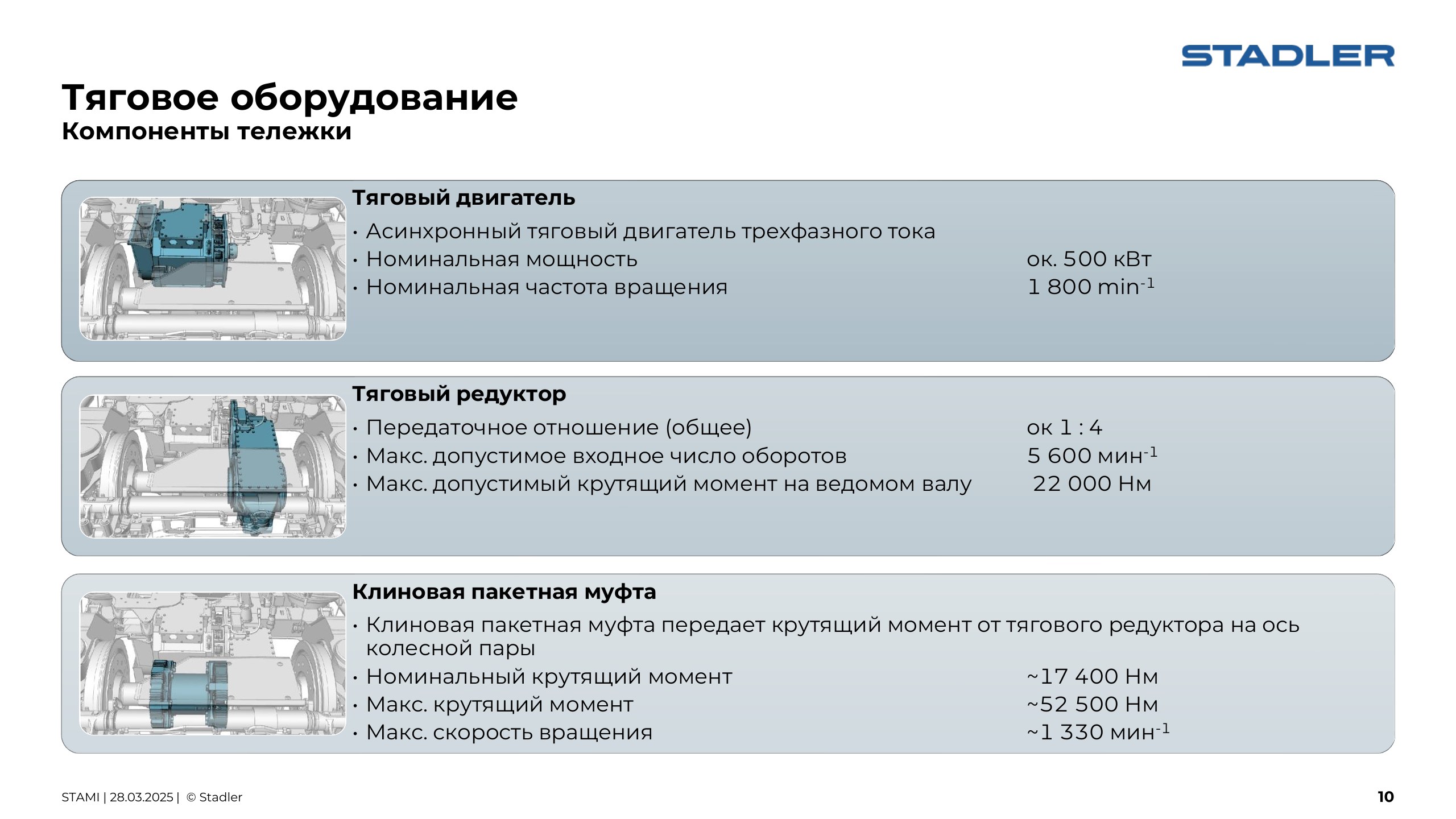
| 9 | Traction motors | asynchronous, about 500 kW |
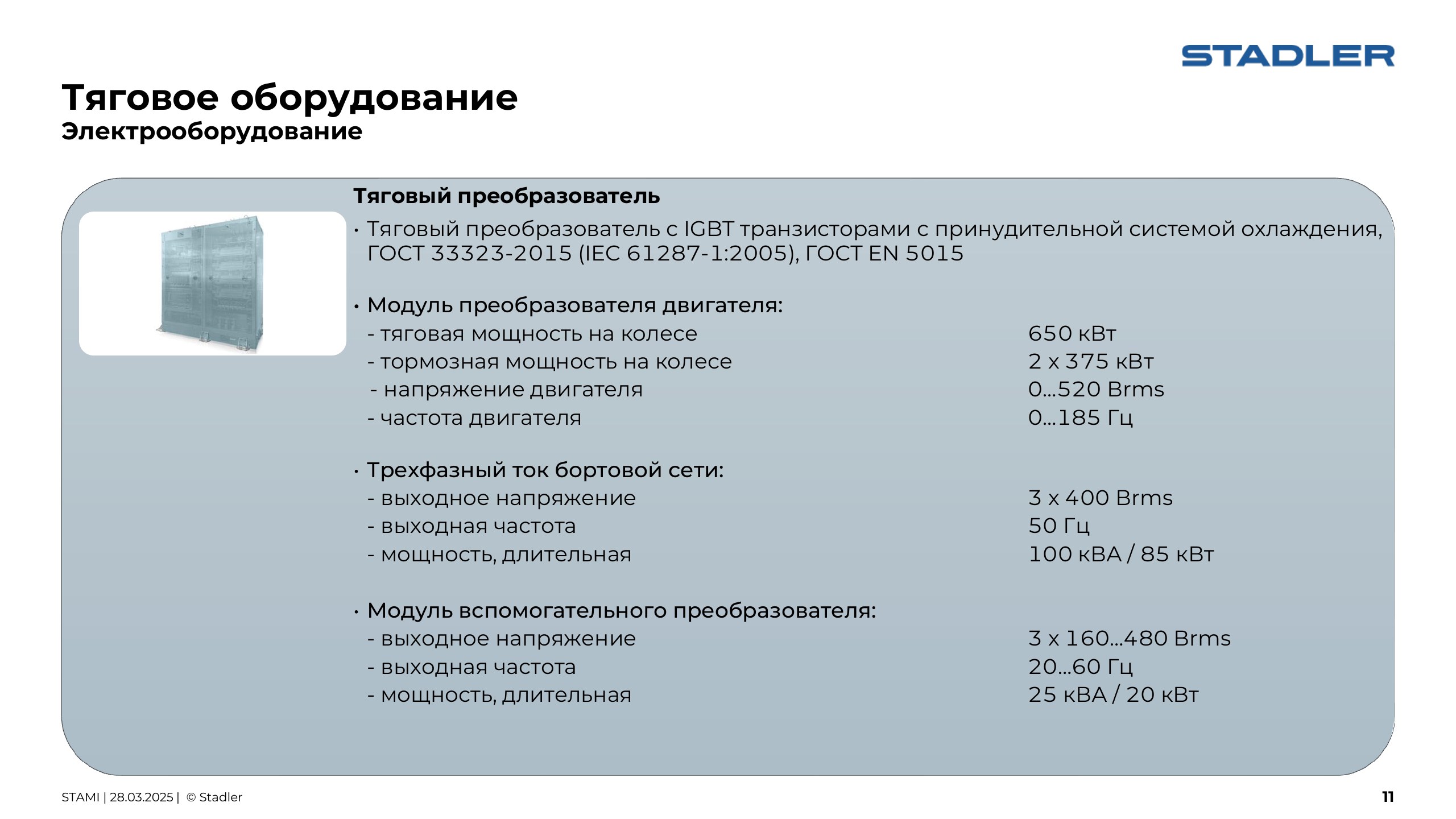
| 10 | Traction converter | IGBT-based, forced-air cooled; motor converter module — 650 kW in traction, 2×375 kW in braking |
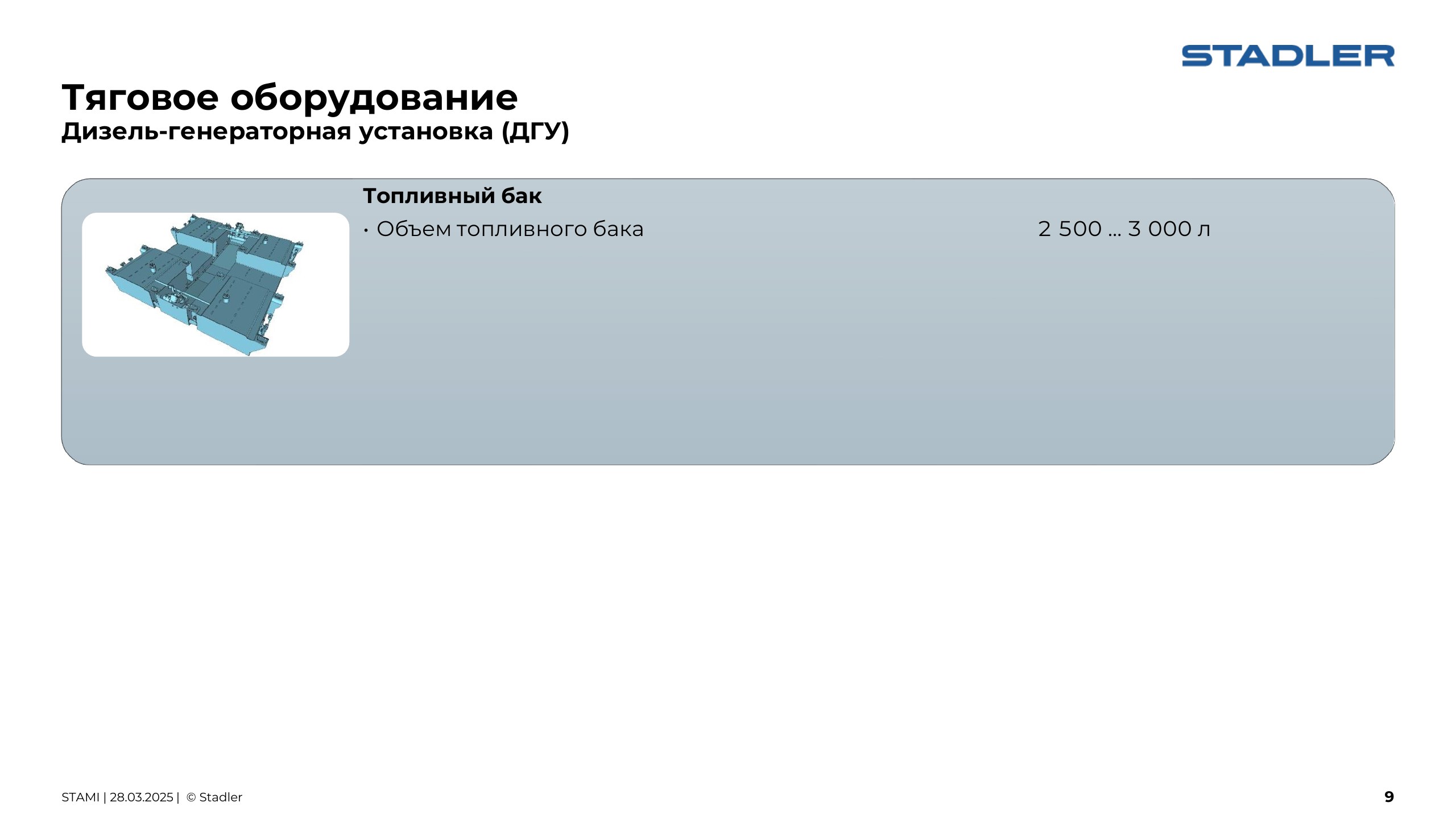
| 11 | Diesel generator set (diesel multiple unit) | diesel engine about 650 kW, environmental class no lower than 3; generator about 650 kW; fuel tank 2,500–3,000 l |
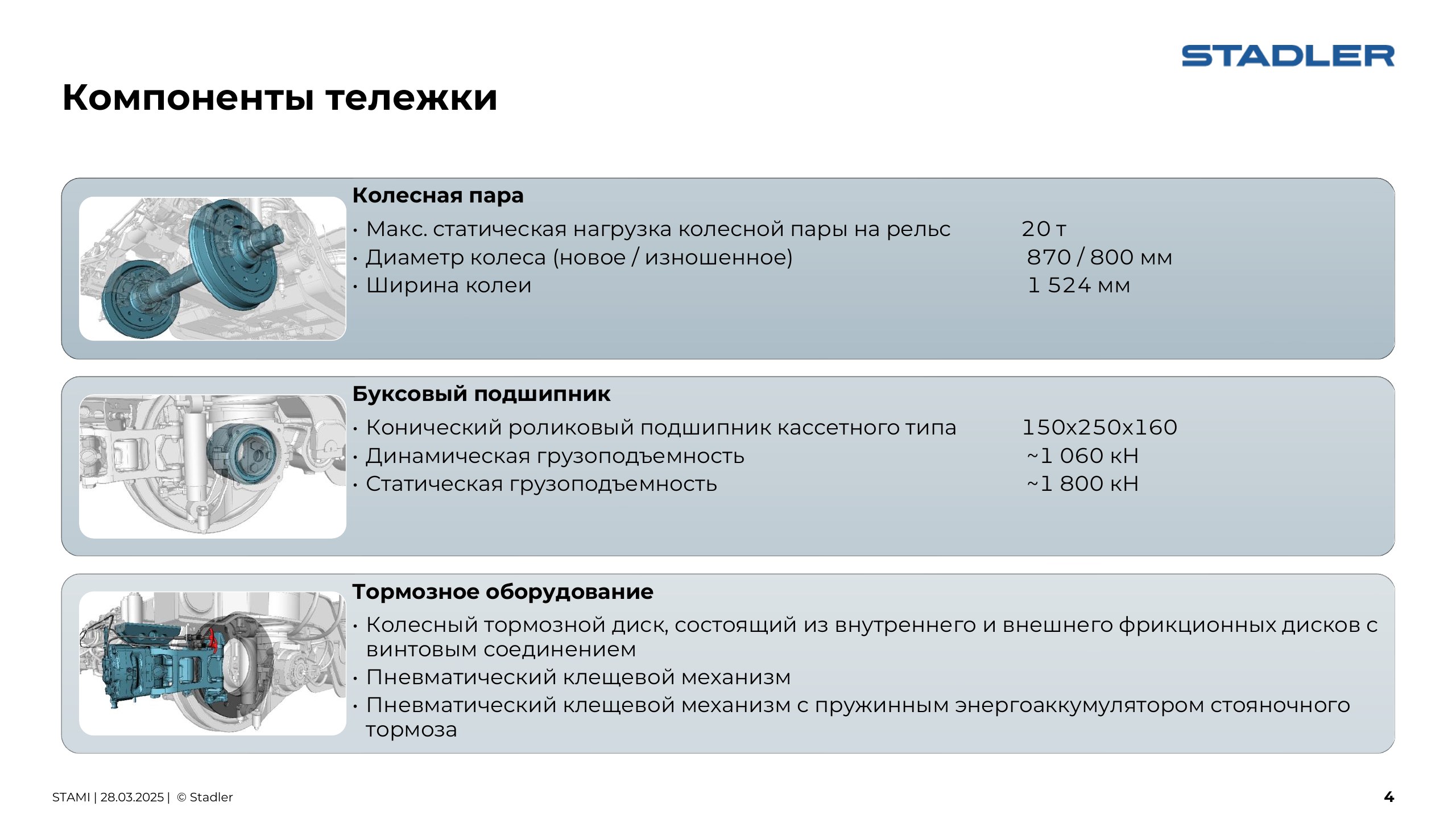
| 12 | Wheels | 870 mm new, 800 mm worn |
| 13 | Brakes | disc brakes, pneumatic caliper mechanisms, spring parking brake |
| 14 | Car body | double-walled aluminum profiles up to 20 m long; cab mask — fiberglass |
| 15 | Doors | double-leaf plug-sliding, 1,300 × ~2,130 mm; retractable steps for 200 mm platforms |
| 16 | Battery | nickel-cadmium, 96 V, 90–100 Ah |
| 17 | Saloon climate control unit | cooling 36 kW, heating 24 kW, refrigerant R-134a |
| 18 | Coupling devices | automatic coupling, short coupler, SA-3 adapter |
| 19 | Climate category | “U,” from −40 to +40°C |
| 20 | Certification | TR CU 001/2011 |
| 21 | Service life and warranty | 35 years and 36 months |
Unit by unit
We compared Stadler Minsk’s list with the annex to the agreement — a table titled “Initial spare parts package supplied by Stadler Polska.” It contains 271 line items for 10 trains with a total value of €3.82 million: the main and most wear-prone FLIRT components, with their suppliers and prices. The prices below are per unit within this package. STAWI appears to be Stadler’s site in Winterthur, Switzerland.
| Component | What BCh needs (Stadler Minsk list) | Azerbaijani FLIRT: supplier and unit price |
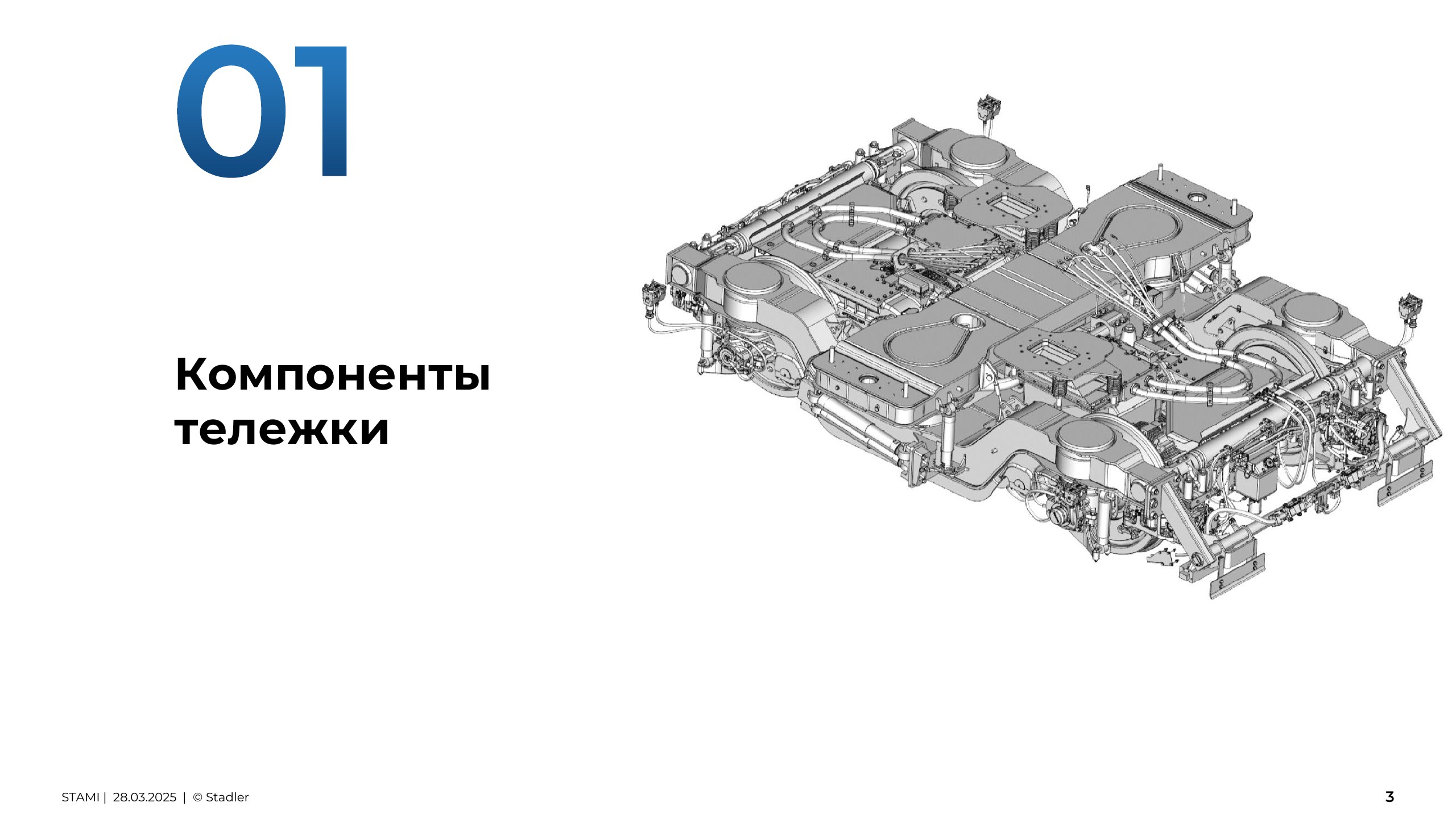
| Bogies | 5 bogies per train (per L-4093): 2 motor, 3 Jacobs; 150 kN air springs | STAWI: motor bogie with motors and gearboxes — €354,000, trailer bogie — €201,000, Jacobs bogie — €155,000 |
| Wheelsets | static rail load 20 t, wheel 870/800 mm | BVV (Germany): €17,400–72,800 |
| Axle box bearings | tapered cassette, 150×250×160 | included with BVV wheelsets |
| Brakes | disc brakes, caliper mechanisms, spring parking brake | STAWI calipers and brackets — €3,900–4,900; Knorr-Bremse (Germany) driver’s brake valve — €5,800 |
| Traction motors | asynchronous, about 500 kW | TSA (Austria): €31,100 |
| Traction converter | IGBT-based, 650 kW in traction per motor module | ABB: power module — €21,700, auxiliary converter module — €16,500, controller — €18,600 |
| Main transformer | 1,150 kVA, 25 kV | not included in the spare parts package |
| High-voltage equipment | 25 kV, 500 A pantograph; main circuit breaker; roof disconnector | Richard pantograph — €7,800; Richard AG disconnector — €5,000; Ritz (Germany) voltage transformer — €3,600 |
| Diesel generator set | engine and generator about 650 kW, tank 2,500–3,000 l | Deutz (Germany) engine — €60,000, TSA generator — €42,500 |
| Resistors | braking 750 V, OVL 820 V | SIMPAX: €10.1 thousand and €2.9 thousand |
| Storage battery | nickel-cadmium, 96 V, 90–100 Ah | HOPPECKE (Germany), 96 V, 100 Ah: €12.5–13.3 thousand |
| Battery charger | 3×400 V, up to 12.8 kW | Enedo (Finland), 12.8 kW: €11.3 thousand |
| Control system | VCU controllers, wheel slide protection, 10.4″ display | Selectron (Switzerland): modules — €0.6–2.6 thousand; HaslerRail (Switzerland) diagnostic display — €5.0 thousand |
| Passenger information and communication system | indicator boards, monitors, CCTV, communication unit | Teleste (Finland): railcar computer — €9.8 thousand, train computer — €1.4 thousand |
| Fire safety | signaling system, aerosol fire extinguishing | Wagner (Germany) signaling system — €4.2 thousand |
| HVAC | passenger cabin — 36 kW cooling and 24 kW heating; driver cab — 7.5 and 9.1 kW; air curtains | Merak (Spain): cabin — €53.8 thousand, driver cab — €19.2 thousand; Faiveley (France) air curtains — €1.0–1.8 thousand |
| Compressor unit | 770 l/min suction capacity, with air dryer | CVS: €28 thousand |
| Doors and footsteps | electrically operated double-leaf doors; footsteps for 200 mm platforms | IFE (Austria): door actuator — up to €6.4 thousand, footstep — €5.0–6.7 thousand |
| Couplers | automatic coupling, short inter-car coupling, SA-3 adapter | Voith (Germany): automatic coupling — €45.4 thousand, short coupler — €22.9 thousand |
| Inter-car gangways | 3,034 × 1,669 mm | Hübner (Germany): €9.8–25.4 thousand |
| Glazing | heated windscreen, cabin double-glazed units | Glas Trösch (Switzerland): windscreen — €3.5 thousand; cabin windows — Flachglas |
| Seats | triple bench-type seats; driver seat with pneumatic suspension | Borcad (Czech Republic); Latuschek driver seat — €3.2 thousand |
| Sanitary system | vacuum toilet, 400–450 l clean water tank | Dowaldwerke, Schneider |
| Wipers, mirrors, lights | 24 V wiper; heated folding mirrors; LED lights | Exalto wiper — €5.1 thousand; Quantos mirrors — €5.5 thousand; Helmholz + Pauli lights — €0.4–2.3 thousand |
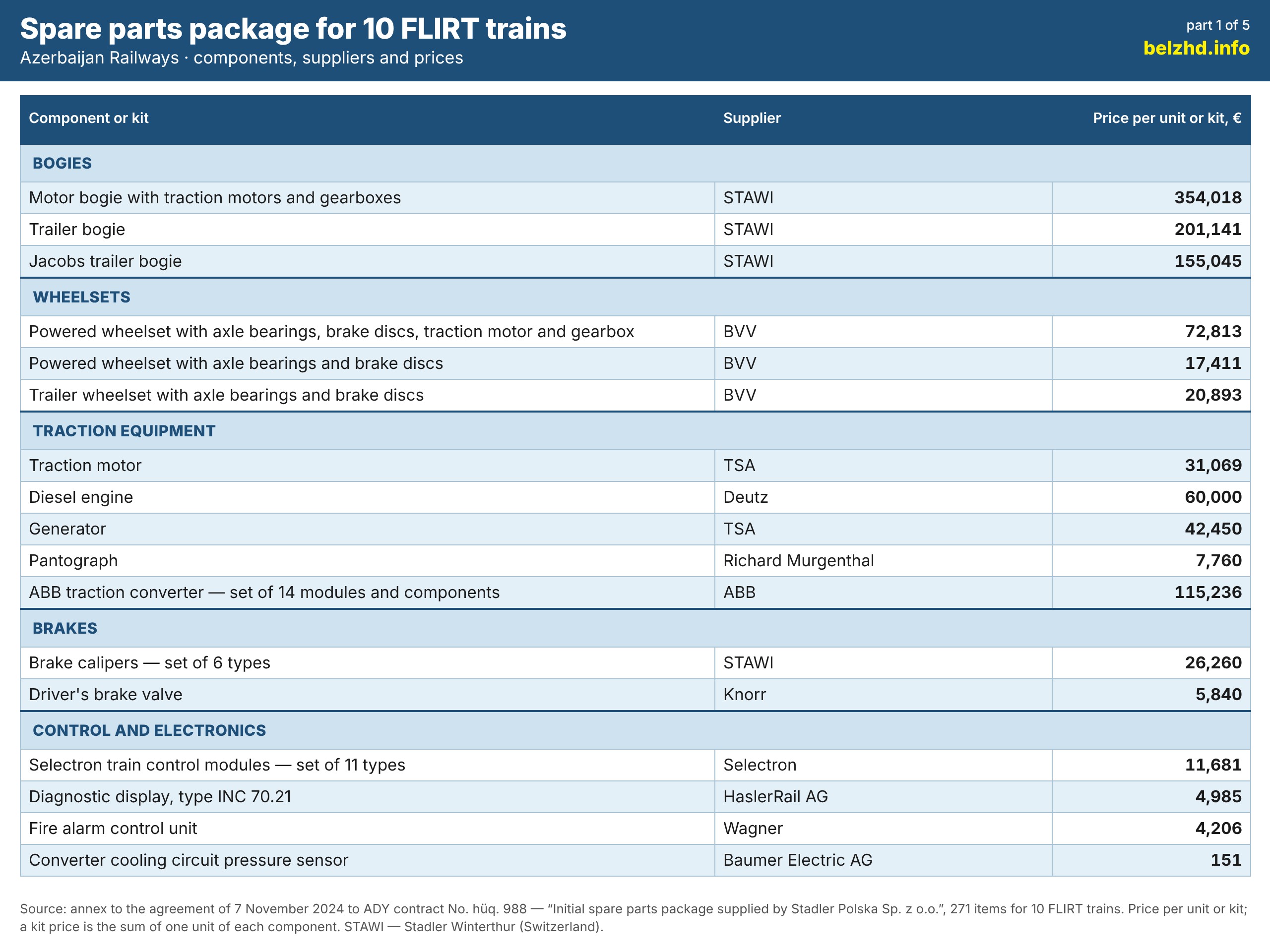
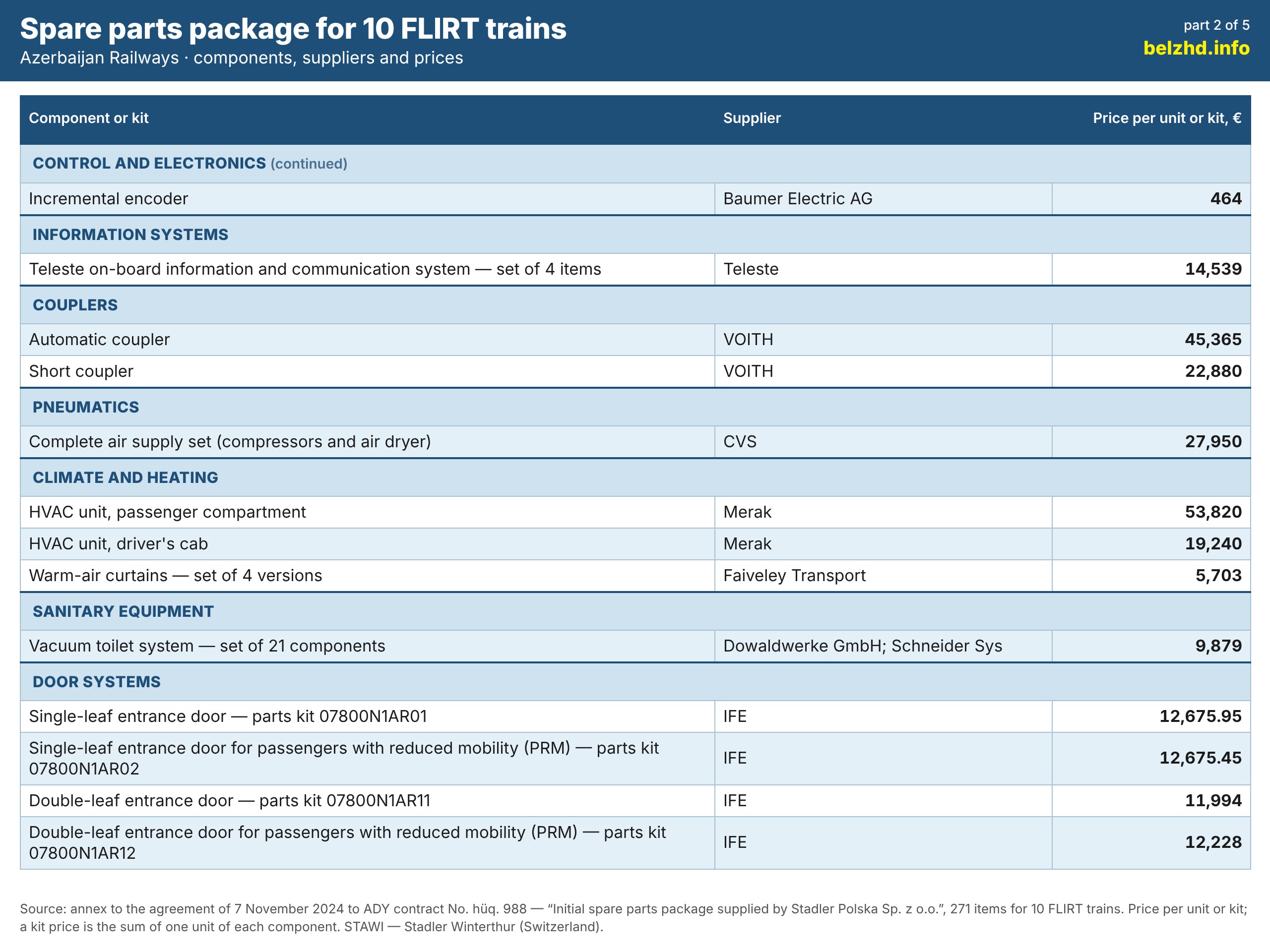
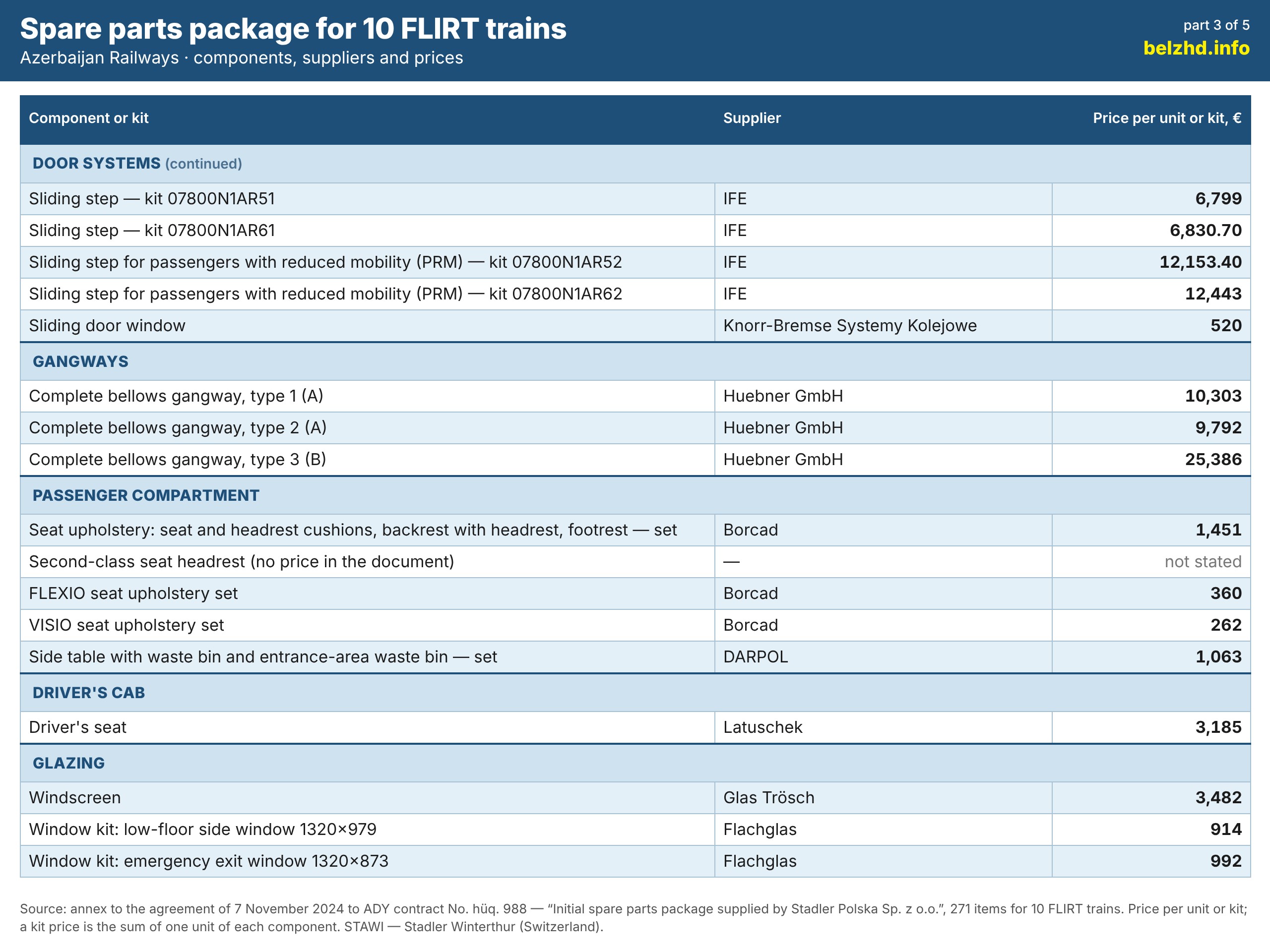
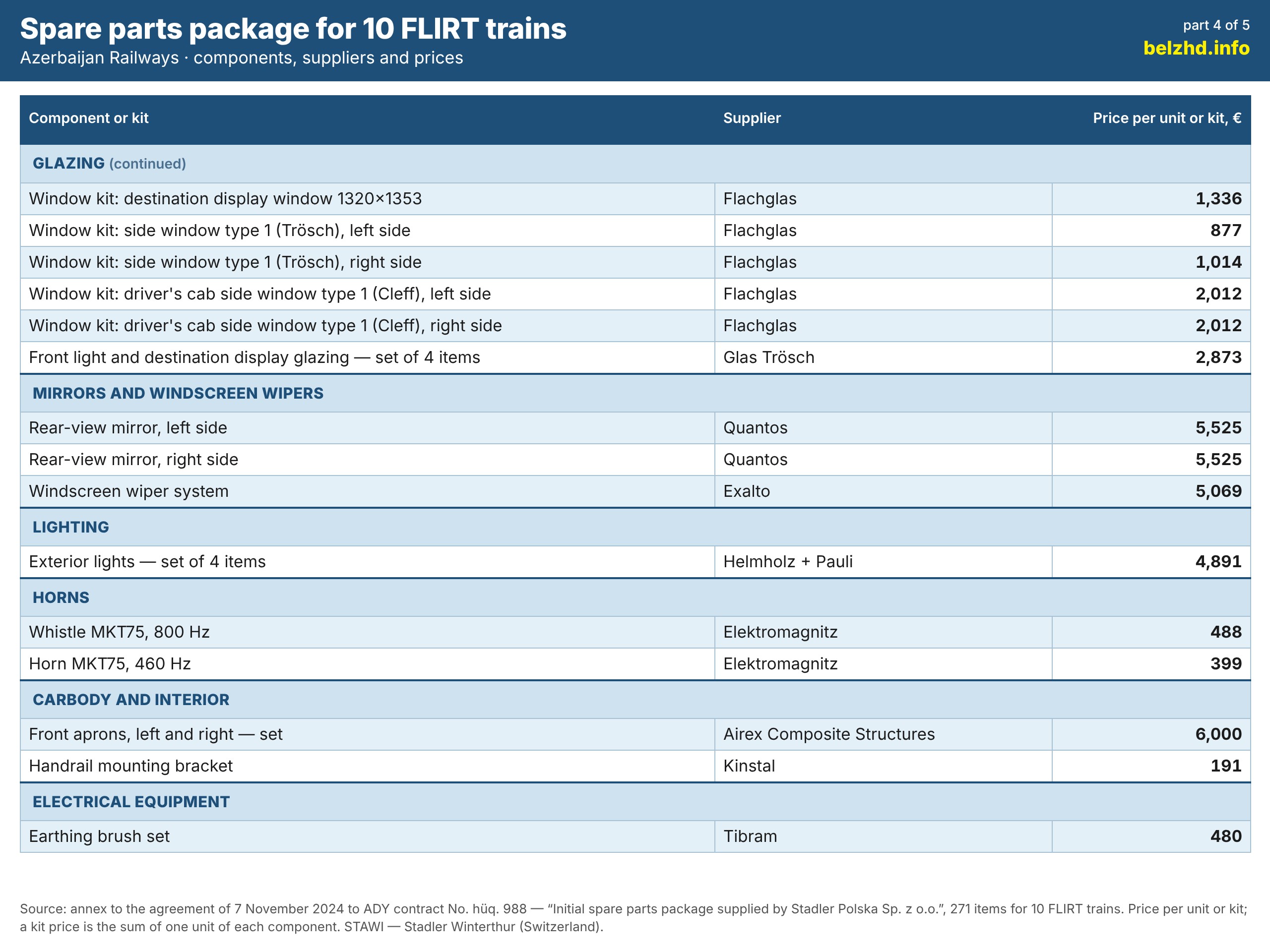
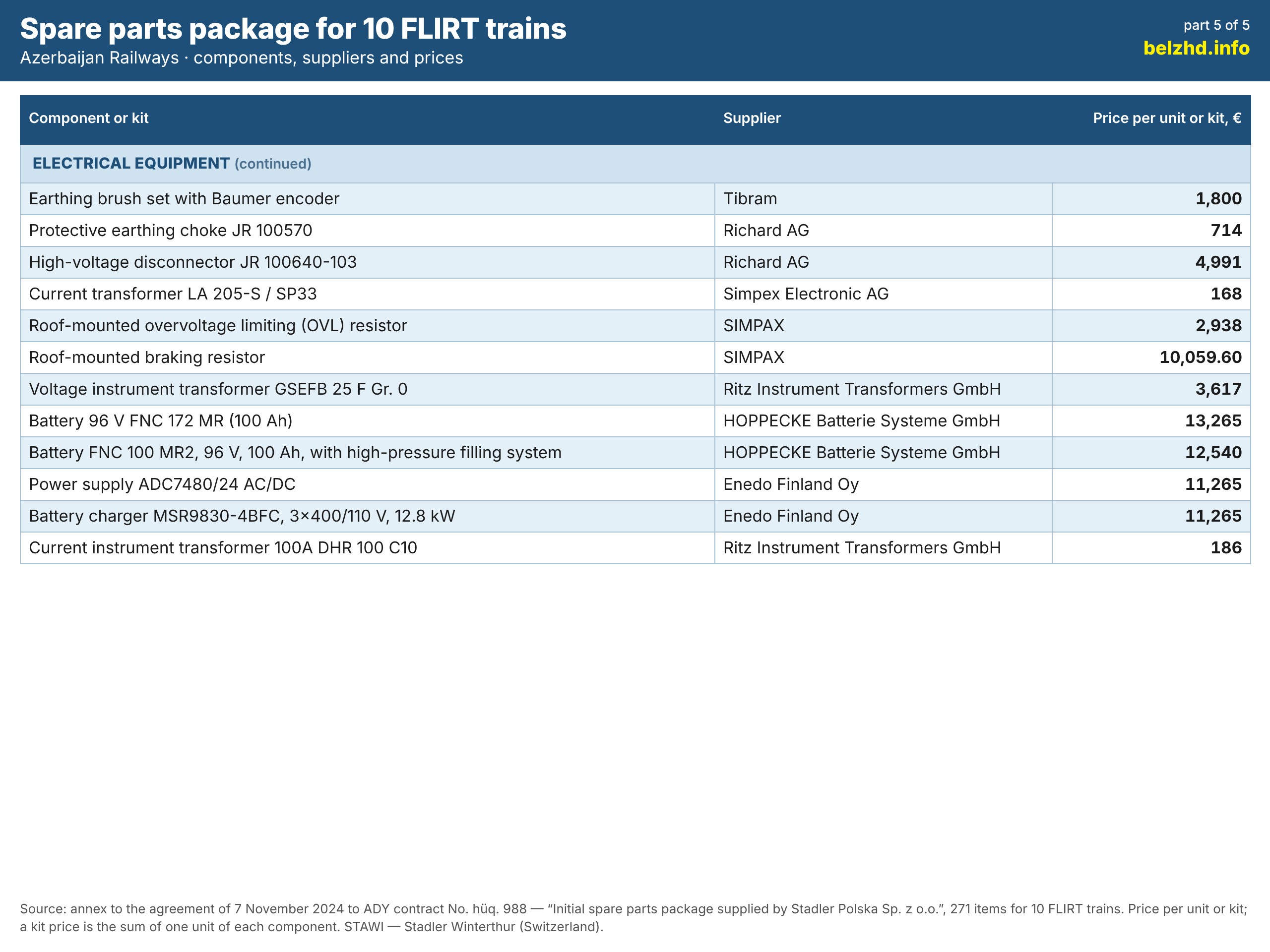
Nearly half the package cost—45%—is accounted for by STAWI bogies. The remainder is supplied mainly by European manufacturers from Germany, Austria, Switzerland, Finland, the Netherlands, Spain, France, the Czech Republic, and Poland. No well-known Russian or Chinese companies appear on the list.
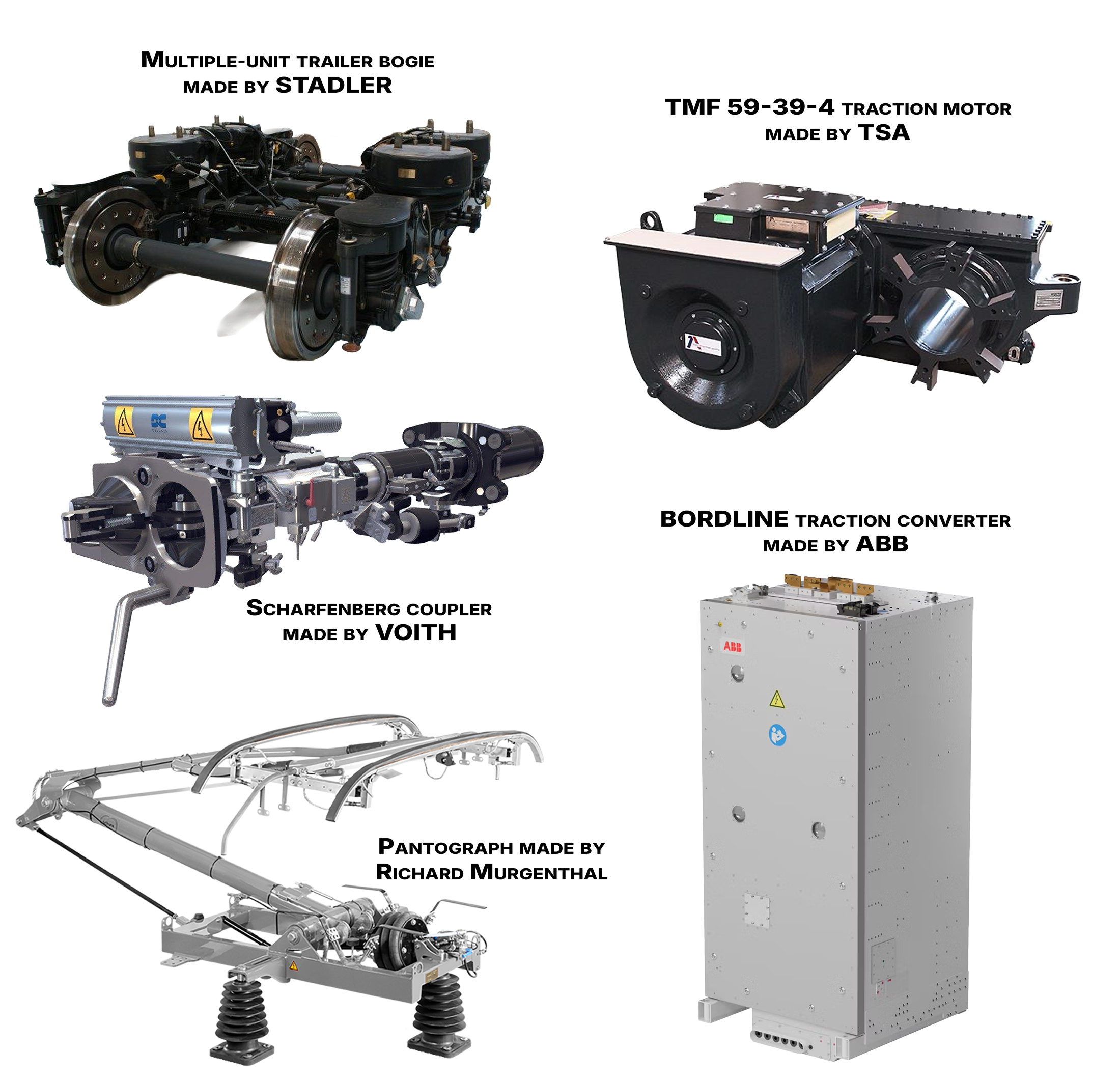
From this list, Stadler itself supplies mainly bogies and brake calipers. Traction electronics, motors, doors, couplers, HVAC, and control systems are built by specialized companies. For modern rolling stock manufacturing, this is routine: each complex unit demands its own proprietary tech, testing facilities, personnel, and certifications, making it typically more economical to buy off the shelf than build in-house.
Who will build it
The Stadler Minsk list was drawn up to assess localization, and it spans far more than seats, glazing, and wipers. It encompasses the train’s entire core: traction converter, traction motors, main transformer, high-voltage equipment, diesel generator set, control system, doors, and couplers.
The plant is seeking partners not just among major machine-building enterprises, but also smaller operations capable of mastering individual components. According to our information, potential suppliers even include factories far removed from the railway sector: makers of specialized machinery, automotive components, and even household appliances.
Belarusian suppliers are sought primarily for mechanical and auxiliary equipment—from wheelsets and brakes to seats, glazing, and HVAC systems. Candidates also exist for the diesel generator set and the main transformer. However, to our knowledge, no suitable Belarusian enterprises have been found for the traction converter, traction motors, control system, pantograph, doors, and couplers. For the Azerbaijani FLIRT trains, these units are supplied by ABB, TSA, Selectron, Teleste, Richard, IFE, and Voith.
Stadler Minsk evidently intends to weld the bogie frames in-house: in November 2025, for the first time since 2022, the plant secured a CU TR certificate for welded bogie frames—for now intended for railcars Stadler is assembling in Kazakhstan. Yet the documents leave it completely unclear where the traction electronics, motors, control systems, doors, and couplers will come from. In summer 2025, Khoroshevich addressed this question simply: the world is not limited to Europe alone.
What it will cost
The pricing of the Azerbaijani contract provides an indicative benchmark. This is an estimate: based on 2019 contract figures as amended in 2024, excluding VAT and customs duties.
- Electric multiple units. A five-car FLIRT EMU R for ADY cost €10.36 million. A four-car unit will be cheaper, though hardly proportionally so: the priciest elements—traction gear and motorized bogies—do not vanish when shortening the train by a single railcar. We thus assume a range from 80% to full price: €8.3–10.4 million per train. For 30 electric multiple units, that comes to €250–310 million.
- Diesel multiple units. A FLIRT DMU IR cost €12.06 million. Building 35 such trains amounts to around €420 million.
- All 65 trains mentioned by Khoroshevich would total roughly €0.7 billion.
- Spare parts and equipment. Under the ADY contract, this came to €8.75 million across 10 trains, or roughly €0.9 million per train.
- Bogies. Just the bogies for a four-car electric multiple unit—two motorized bogies and three Jacobs bogies—run around €1.17 million at ADY spare parts prices. Across 30 trains, that amounts to roughly €35 million.
For comparison: in the aborted procurement tender, BCh allocated 908 million rubles for 30 electric multiple units, or around $322 million. Our estimate for 30 FLIRT trainsets at an exchange rate of $1.1–1.2 per euro stands at $270–370 million excluding VAT, and $330–450 million with VAT included. This matches or exceeds the budget of the canceled procurement, calculated on contract prices signed back in 2019. Since then, prices have surged, and localization will incur extra expenses absent from the Azerbaijani deal: designing and testing new assemblies, certifying them, and redesigning the architecture for Belarusian parts.
How realistic is this?
Even if Belarusian factories manage their allocated components, it will not solve the fundamental issue. A body shell, bracket, or interior trim panel can be fabricated from ready-made blueprints. But a traction converter, control system, or running gear—critical components that dictate operational safety and train performance—cannot be built simply from drawings alone.
Replacing one assembly with another rarely comes down to fasteners and connectors. A new unit triggers cascading changes across control circuitry, software, diagnostics, cooling, and power distribution—demanding new trials and recertification. The more units that are replaced, the further the train diverges from the original FLIRT. Eventually, localization morphs into the development of an entirely new modification, where only original concepts from Stadler remain.
Mastering even a single complex system requires extensive design work, prototypes, testing, refinement, and conformity certification. Dozens of such components populate the list, and several have never before been produced in Belarus, as far as we know. Yet the first trains under Project L-4093 are scheduled for delivery in December 2027—less than three years after the plant drafted the bill of materials.
The corporate stance of the parent group remains a critical question. Stadler publicly states that it complies with sanctions and can neither deliver trains to Belarus nor produce them here. Yet the component list “for BCh trains” bears a “© Stadler” copyright notice, the non-disclosure agreement for Project L-4093 contains a clause regarding Stadler Rail AG and Swiss insider trading rules, and the design itself is based on a train whose technical documentation was held by the Belarusian plant.
The available documents do not reveal how actively the Swiss parent is involved, whether it approves design modifications, or if it grants access to technical files. The public stance of Stadler alongside the operations at the Fanipol plant may simply serve to insulate legal liabilities. But confirming this as a deliberate strategy of corporate leadership would require further documentation.
Drafting a project and soliciting suppliers does not mean manufacturing technologies have been mastered. If Stadler Minsk truly intends to build the trains as described, assembling them from finished components is out of the question: a brand-new domestic supply chain for modern multiple-unit rolling stock would need to be built in Belarus. Producing an initial operational prototype, conducting trials, and advancing to series production will inevitably take far longer than planned.
If the first FLIRT trainsets for BCh do roll out of the Fanipol plant gates in late 2027, it will mean one of two things: either Belarusian factories managed to master traction electronics, motors, and control systems for a FLIRT-class train in under three years, or those components were sourced somewhere else.
We continue to follow the situation closely. If you have further details regarding the project, please reach out to us via our secure communication channels.
Related articles:
Stadler Minsk prepares to assemble 30 commuter trains for BCh, despite Stadler’s claims that sanctions prevent it — October 23, 2026;
DMZ-tailored tender falls through: BCh multiple-unit rolling stock procurement canceled — April 28, 2026;
BCh plans to acquire new Russian-made EP3D electric multiple units — March 31, 2026;
From Stadler to ChME3: how spare parts shortages hinder BCh rolling stock maintenance — September 4, 2026;
Technical condition of Stadler electric multiple units remains critical — February 25, 2026;
Another incident at TCh-9: electric multiple unit left unprotected against vandalism — September 11, 2025;
Delivery of new BKG electric locomotives depends on sanctions circumvention — June 22, 2024;
Swiss company Stadler Rail intends to preserve its production facility in Belarus — September 19, 2023;
Conflicting reports on Stadler’s exit from Belarus — June 23, 2023.