The freight forwarder Transrail-BCh, which handled ammunition and other military cargo from Russia as well as luxury cars bound for Russia, is now wholly owned by Belarusian Railway (BCh). The state got the Swiss half for nothing, and the company is now run by a former assistant to the head of BCh. There is one catch: it has almost no cargo left. Its largest flow is now handled by InterRail LLC of Minsk, which former director Kim Suk Cha co-founded with the Swiss in 2017. It looks as if she took the clients with her when she retired.
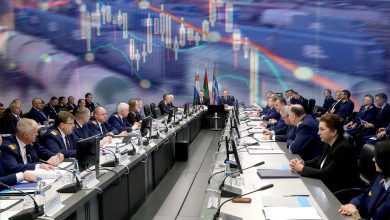
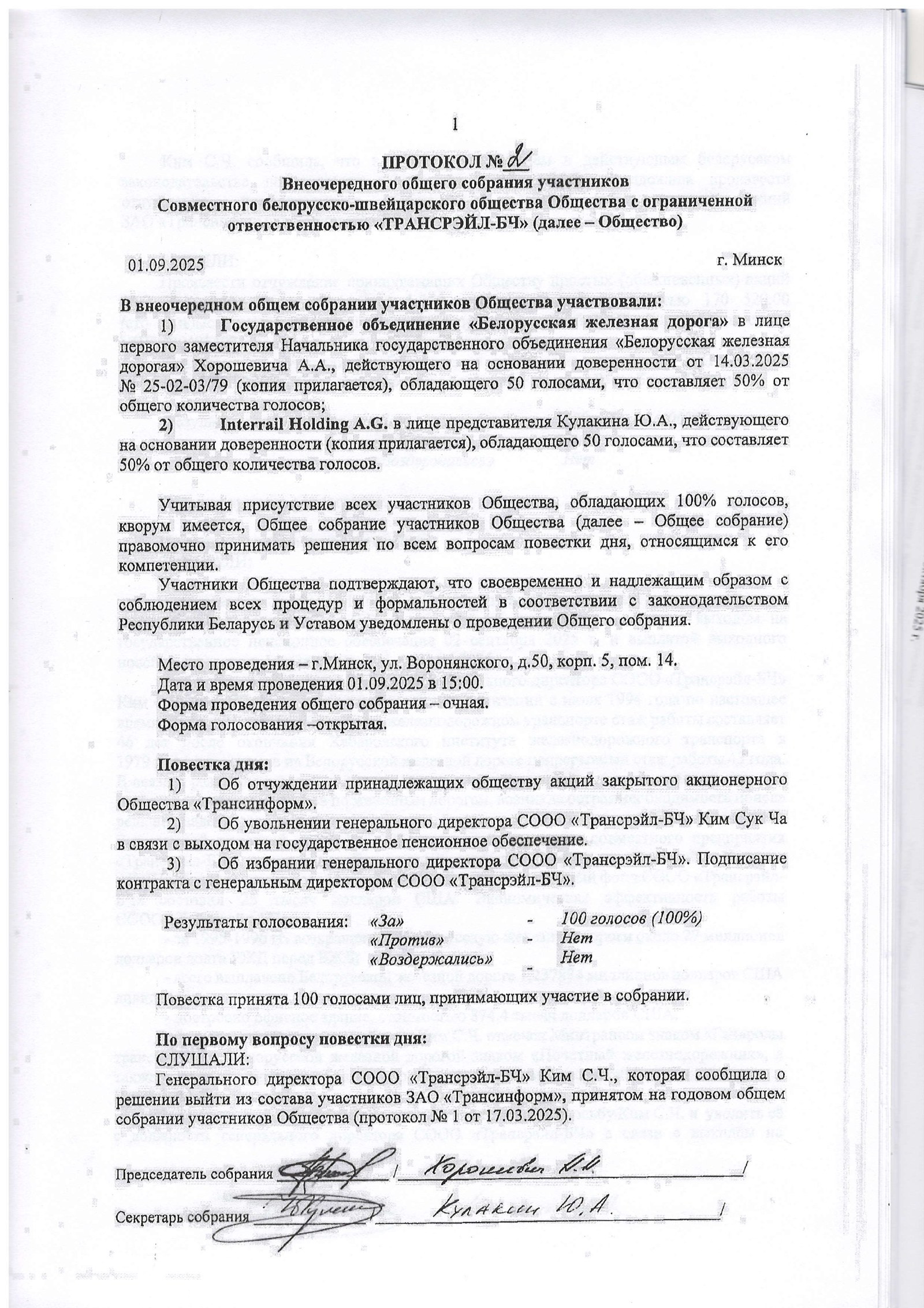
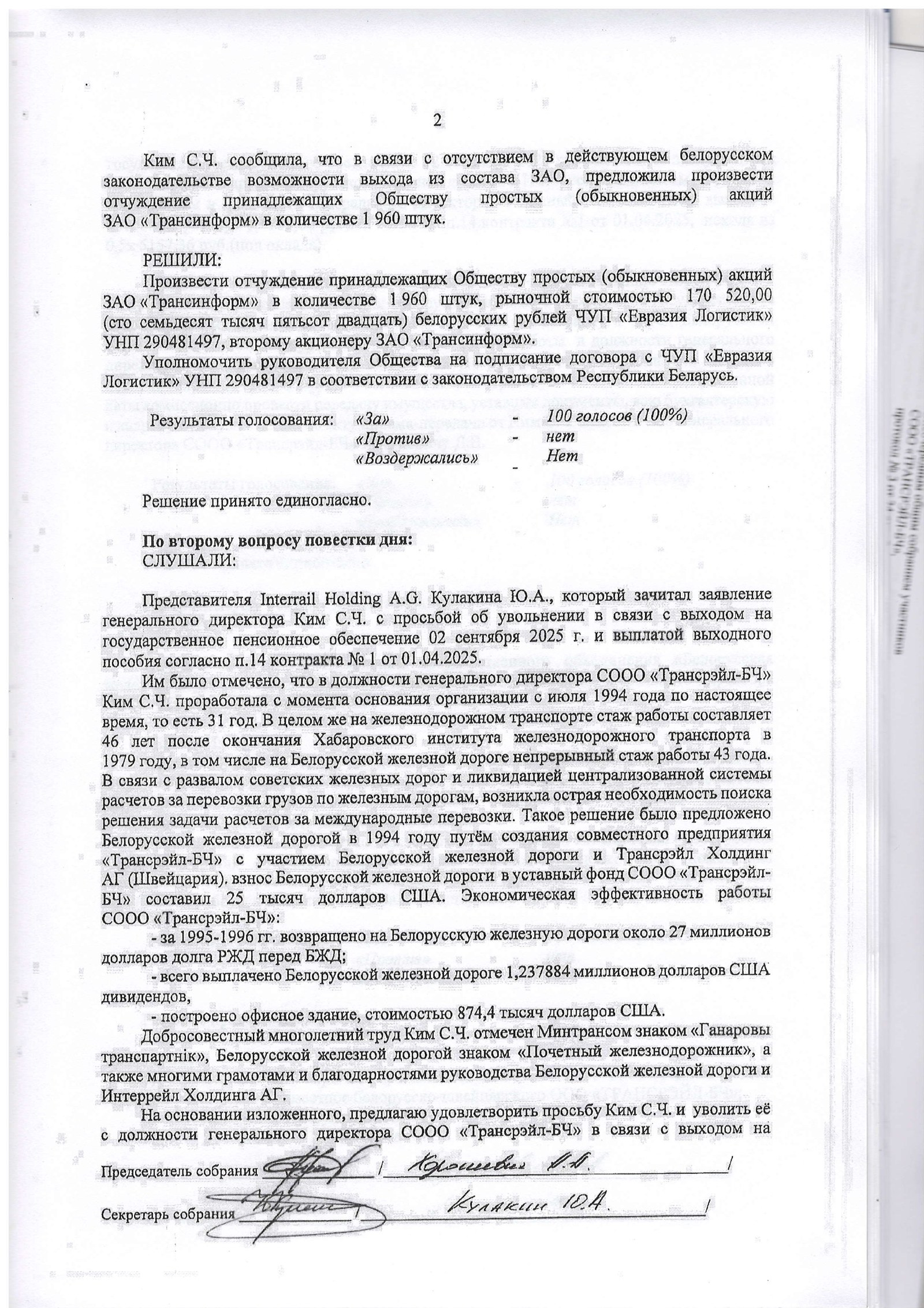
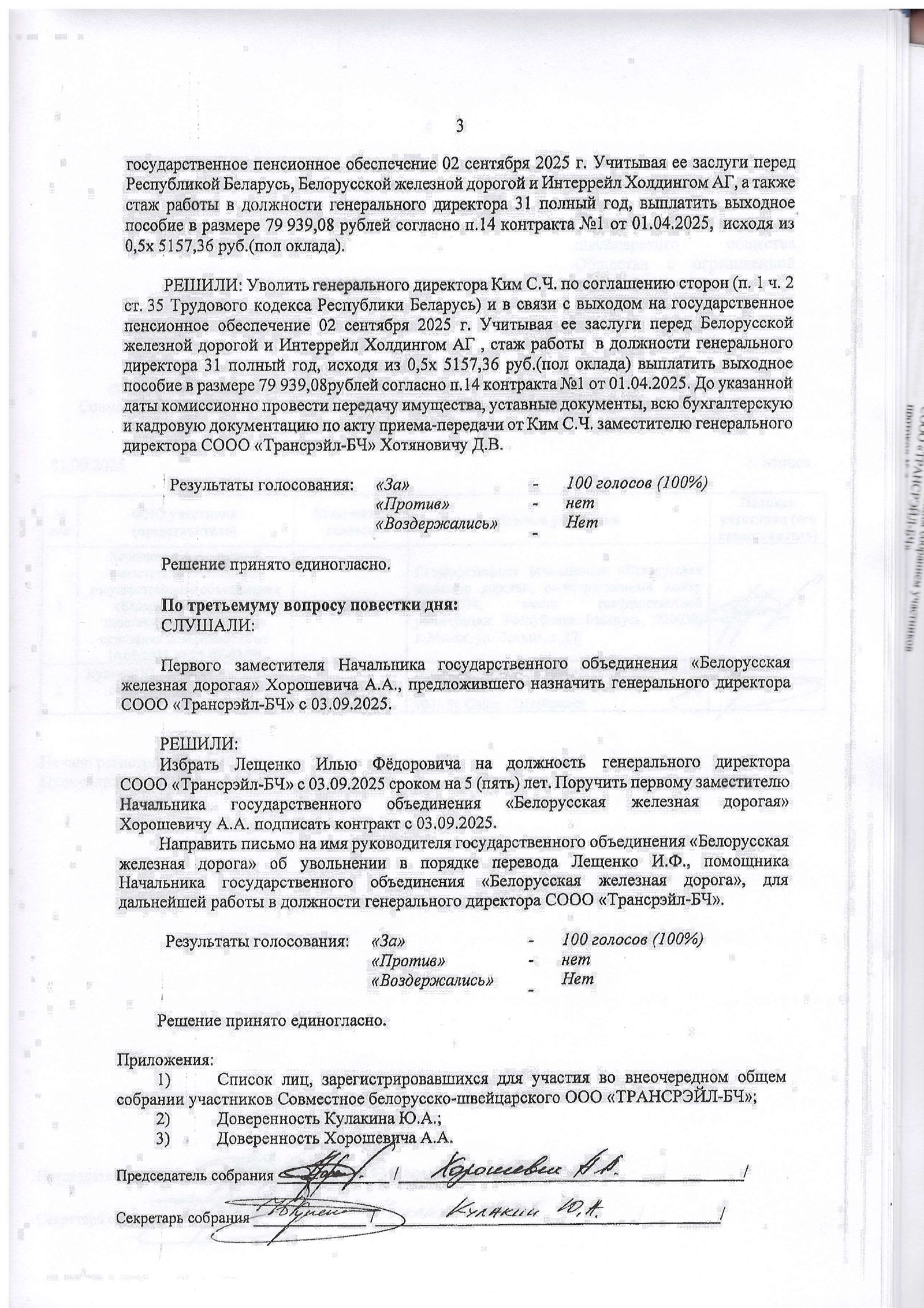
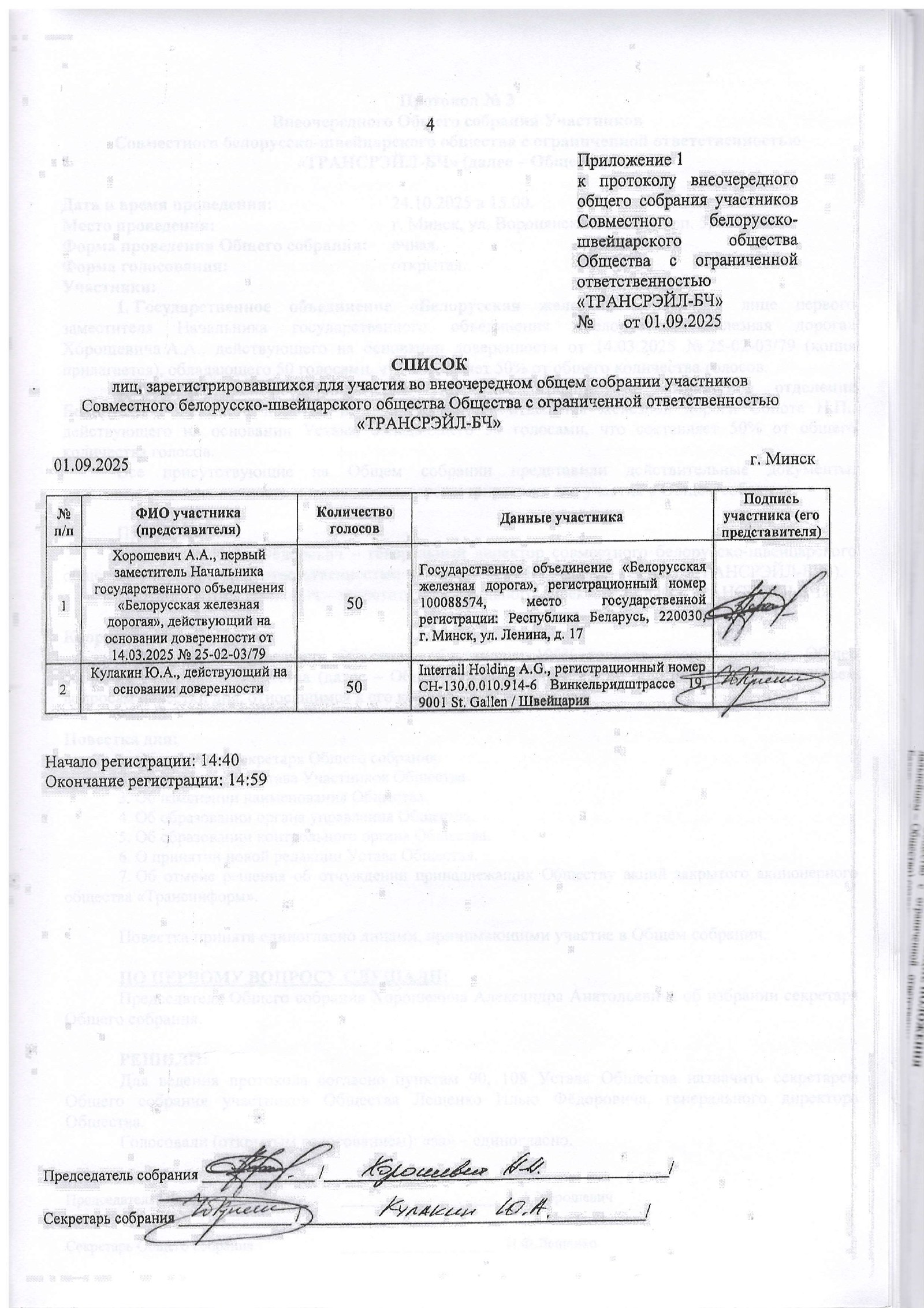
On 1 September 2025, an extraordinary general meeting of members was held at the office of Transrail-BCh JV LLC (hereinafter simply Transrail-BCh, whether as a joint venture or as a plain LLC) on Voronyanskogo Street in Minsk. BCh was represented by its First Deputy Head A. Khoroshevich, and the Swiss company Interrail Holding AG by its representative Yuri Kulakin. Each had 50 votes. All decisions were unanimous.
There were three decisions. The director, who had run the company for 31 years, was retiring, and Ilya Leshchenko, now a former assistant to the head of BCh, was appointed the new director general. The third item on the agenda was the sale of Transrail-BCh’s shares in Transinform CJSC, a Brest company, to its other shareholder, the private transport and forwarding unitary enterprise Eurasia Logistic.

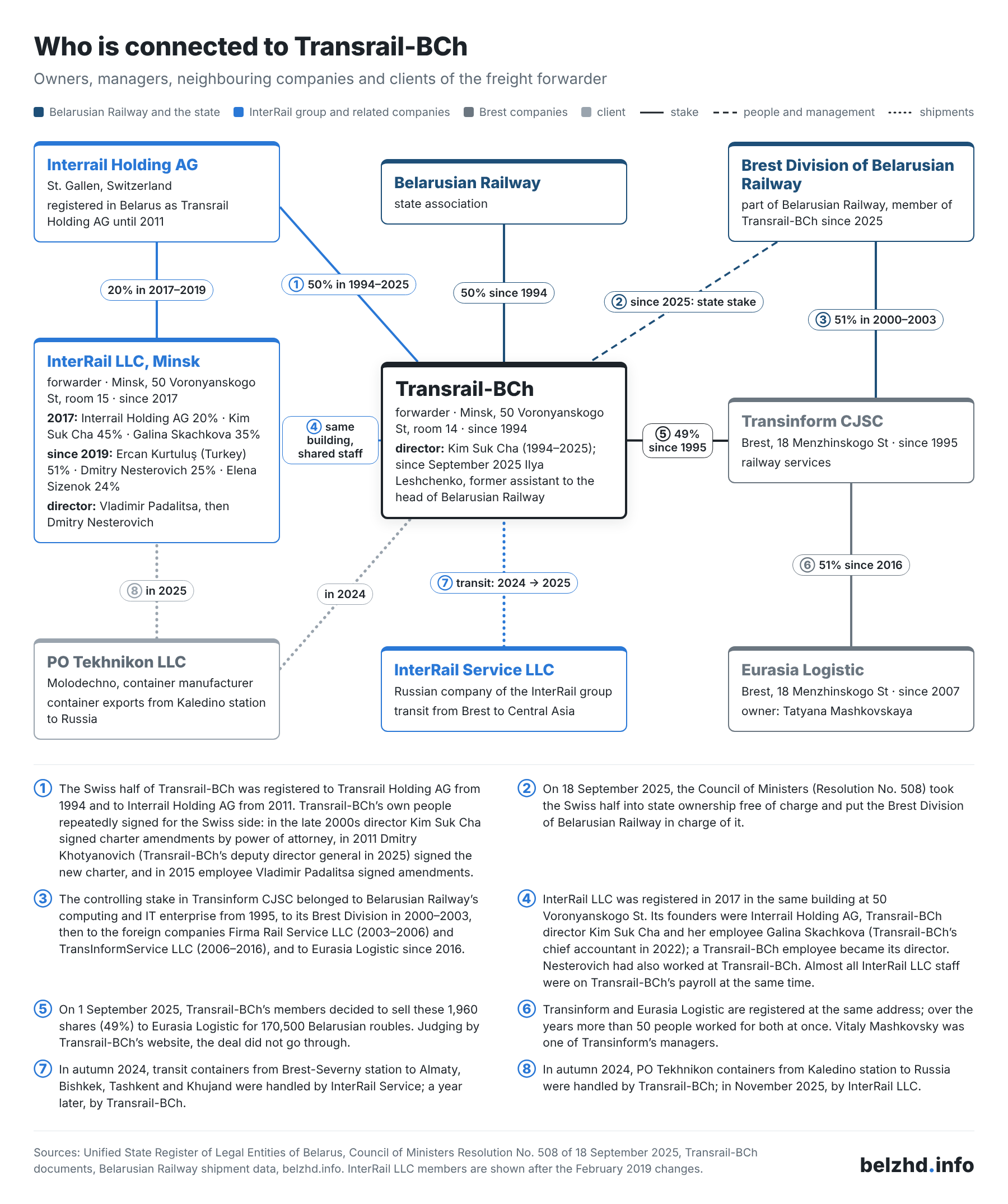
Seventeen days later, on 18 September, the Council of Ministers adopted Resolution No. 508 “On Accepting Property into the Ownership of the Republic of Belarus”. Under it, the Swiss half of Transrail-BCh’s authorised capital (nominal value $25,000) passes to the state free of charge by the end of 2025, and the Brest Division of BCh has been put in charge of managing it. The transfer is made possible by Presidential Decree No. 330 of 19 September 2022 “On the Disposal of Property” (it sets out how stakes and shares are taken into state ownership by government decision).
The company now calls itself Transrail-BCh LLC on its website and lists the state association Belarusian Railway and the republican unitary enterprise Brest Division of Belarusian Railway as its members.
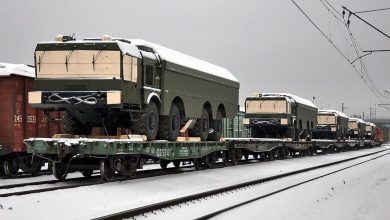
Transrail-BCh has appeared in our reporting more than once, most often in connection with military cargo. It was this company that organised the transport of several such consignments in September 2023: 26 railcars, 14 of them loaded, arrived at Prudok station in BCh’s Vitebsk Division, near a missile and ammunition storage base. In all, between May 2021 and September 2023, it helped bring at least 127 railcars of military cargo into Belarus. They carried new BTR-82A armoured personnel carriers for the 38th Air Assault Brigade, other wheeled and tracked vehicles, air-launched munitions and ammunition.
Transrail-BCh also organised and forwarded another such shipment in December 2023: two railcars of ammunition from the Barnaul Cartridge Plant (around 5 million rounds) were delivered to Golynets station in the Mogilev Division, destined for an armoured equipment storage base.
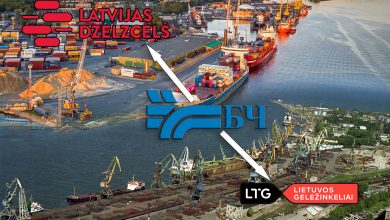
In summer 2024, the company featured in a very different story: it was the forwarder for the BCh leg of luxury car imports from Latvia. From June to mid-July, at least 41 car-carrier railcars arrived at Orsha-Zapadnaya and Kolyadichi from Griva station on Latvian Railway. They carried nearly 200 Lamborghinis, Ferraris, Rolls-Royces, Bentleys and other cars, worth $39 million by our estimate.
On paper, the cars were imported into Belarus, although they were intended for Russian buyers. This circumvented EU sanctions, which had banned luxury car exports to Russia back in 2022. The flow through Griva stopped on 19 July, two weeks after our first report on it. But Transrail-BCh also became the forwarder for the BCh leg on the new route from Iran via Turkmenistan, Kazakhstan and Russia to Orsha-Zapadnaya.
The full story of luxury cars travelling via BCh, in four parts (in Russian):
Part 1 — BCh Serves the “Luxury” Lifestyle of Russia’s “Elite”;
Part 2 — New Evidence of BCh’s Role in Luxury Car Deliveries to Russia;
Part 3 — Luxury Car Shipments to Russia via BCh Halted for Now;
Part 4 — A New “Scheme” for Delivering Premium Cars to Russia via BCh.
Transrail-BCh was registered on 21 June 1994. For almost a year, its address in the Unified State Register was 17 Lenin Street, Minsk, the BCh headquarters building. Its founders were BCh and the Swiss company Transrail Holding AG, which, according to the company itself, was established in 1989 with the participation of the USSR Ministry of Railways. Each contributed $25,000 to the authorised capital, so ownership was split equally from the start.
The joint venture’s tasks were highly relevant at the time. After the collapse of the USSR, the centralised system of settlements between railways disappeared, and arrangements for settling international freight charges had to be rebuilt. That is why business directories still list “settlements with CIS and Baltic railways for freight transport” first in the company’s description. BCh was also in urgent need of foreign currency, and freight forwarding was almost its only reliable source.
Interestingly, in 1992, two years earlier, BCh had established its own forwarder for the same purposes: the transport and forwarding enterprise Belintertrans, now BTLC. Yet by a “strange” coincidence, its own “subsidiary” did not receive the exclusive rights granted to Transrail-BCh. More on that below.
In 2004, the TransRail brand became part of Interrail Holding AG of St Gallen, Switzerland, and from 2011 the Swiss half of Transrail-BCh was registered under Interrail Holding’s name. Both Swiss companies are registered at the same address and are linked to the private TransInvest group. InterRail is a forwarder with direct contracts with all CIS railways; its revenue in 2025 was €157 million.
Transrail-BCh’s business became much more modest over time. In BCh’s non-public ranking of forwarders, its share fluctuated between 2% and 3% in 2019–2022, and freight charges on its shipments totalled $15 million in 2022.
After its establishment, however, the company had special rights. Transrail-BCh was the only forwarder allowed to send telegraphic orders under its own signature through BCh’s internal communications system. Their main purpose was to confirm payment for transport on BCh. This right was quietly withdrawn only some 15–20 years later. By the early 2020s, the company was working with BCh on a prepayment basis and making an annual security deposit.
Even BTLC, a state company wholly owned by BCh, had no such rights. Nor was there any legal basis for them: an outside organisation has no right, and cannot have the right, to issue orders to another organisation’s employees about its operations, especially financial orders. In this case, those employees belonged to BCh.
What is more, there were then no information systems to monitor payments, either online or offline. BCh could determine whether a shipment had been paid for only after the duplicate SMGS consignment note reached and was processed by the Railway Commercial Centre (DKC, now IRC). Documents were sent there by internal mail and arrived a month after the BCh leg had been completed. Under these conditions, real prepayment was out of the question. There was no automated accounting: all consignment notes were processed by hand, so balancing and reconciliation took at least another month. In effect, Transrail-BCh could use what was essentially state money for its own purposes for extended periods. This is a clear indicator of corruption, and it was BCh’s own management that created the conditions for it.
Throughout those years, from July 1994 to 2 September 2025, the company was run by Kim Suk Cha, known in railway circles as Tatyana Nikolayevna Kim. At the meeting, the Swiss representative read out her retirement application and listed her achievements: 46 years in railway transport and the “Honoured Transport Worker” and “Honorary Railway Worker” awards. Her severance was set at half a month’s salary for each year, nearly 80,000 roubles ($27,000 at the National Bank exchange rate on the day of the meeting).
The meeting also reviewed her 31 years at the helm, as seen by the company itself. In 1995–1996, with its help, BCh recovered about $27 million owed to it by Russian railways. Most likely, this refers to settlements between the railways, in other words a simple offset of mutual debts. The company built an office building for $874,000; it now offers office and industrial premises for rent among its services. Over the entire period, BCh received $1.24 million in dividends, an average of $40,000 a year. With ownership split 50–50, the Swiss side apparently received the same amount.
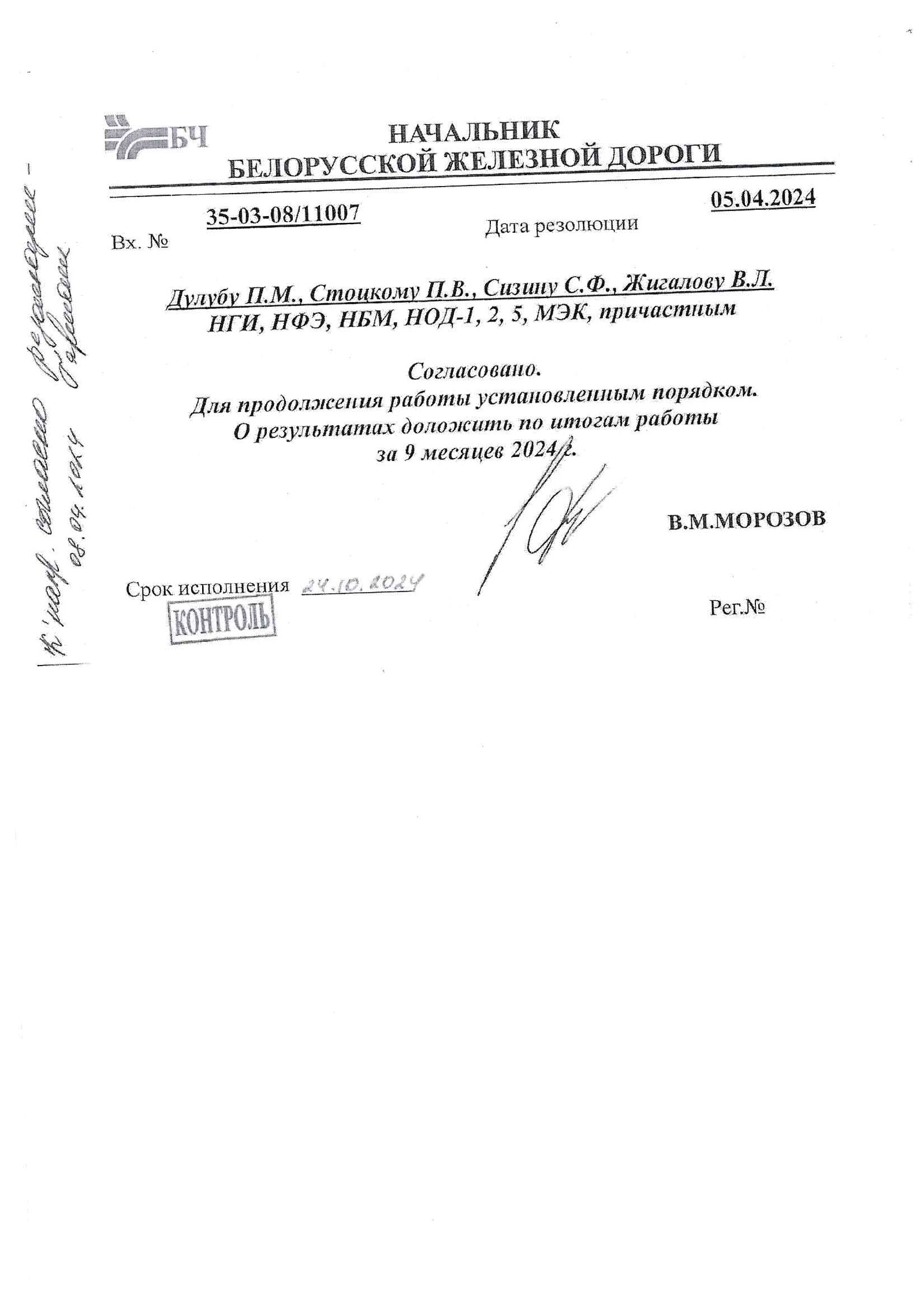
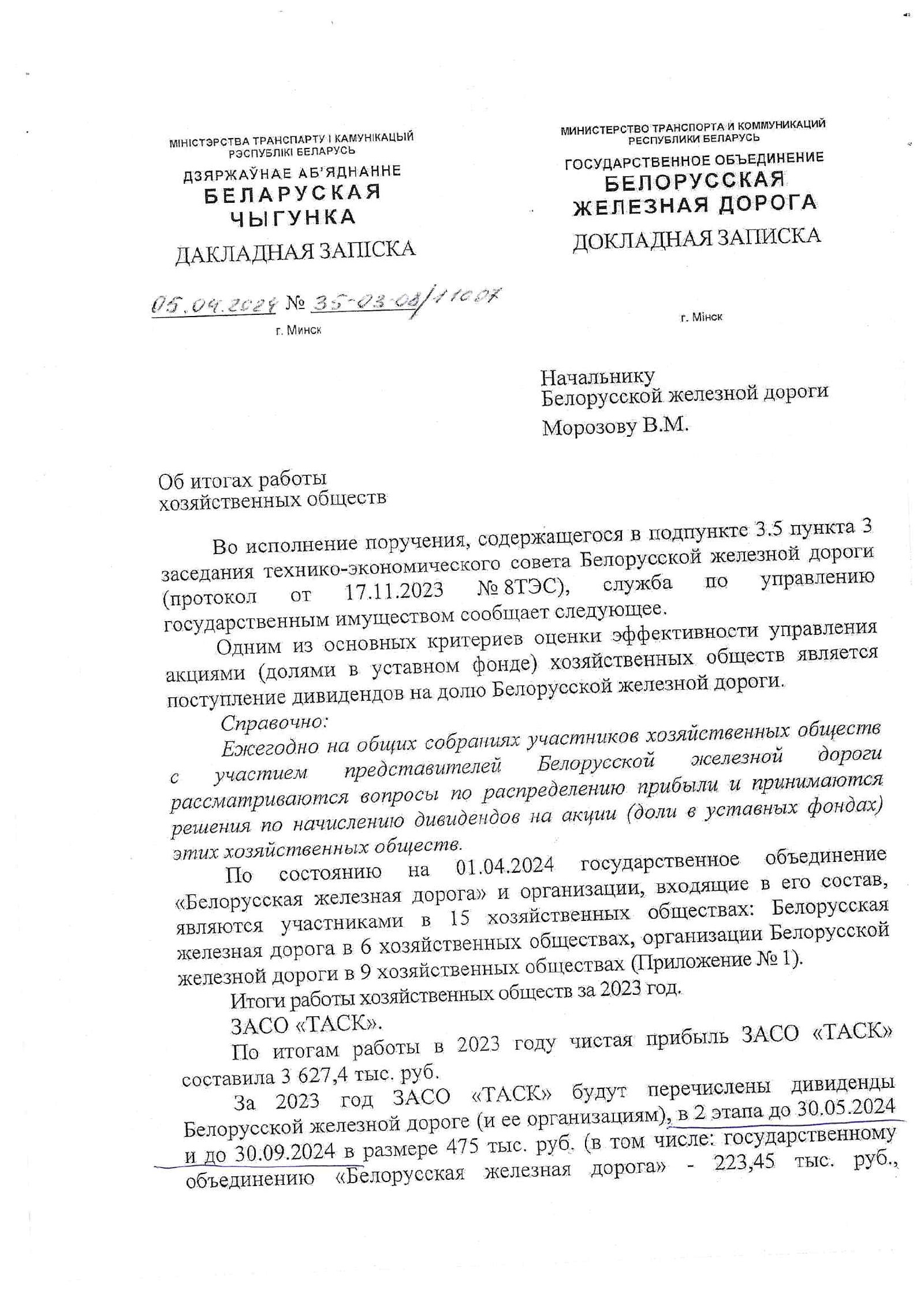
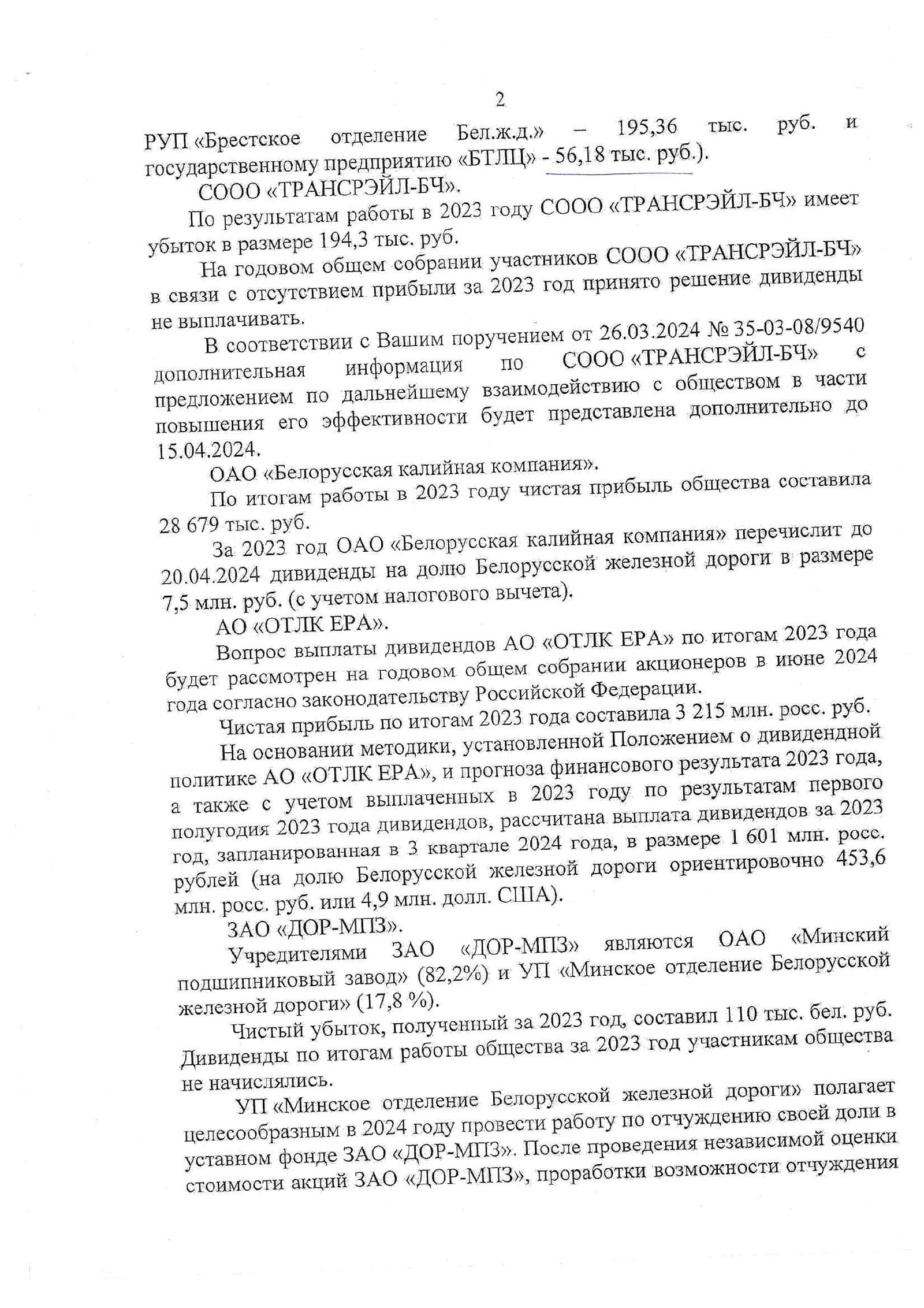
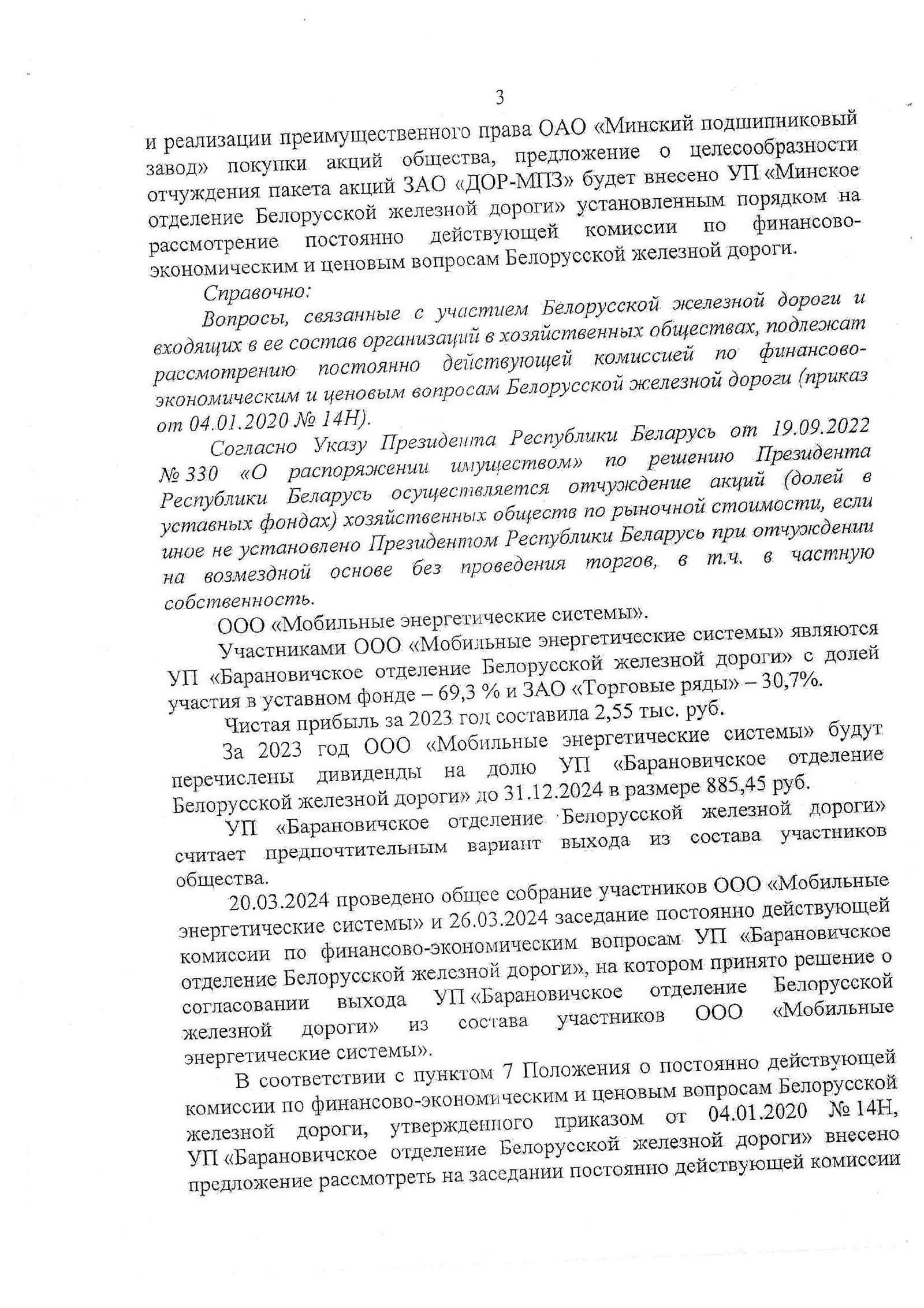
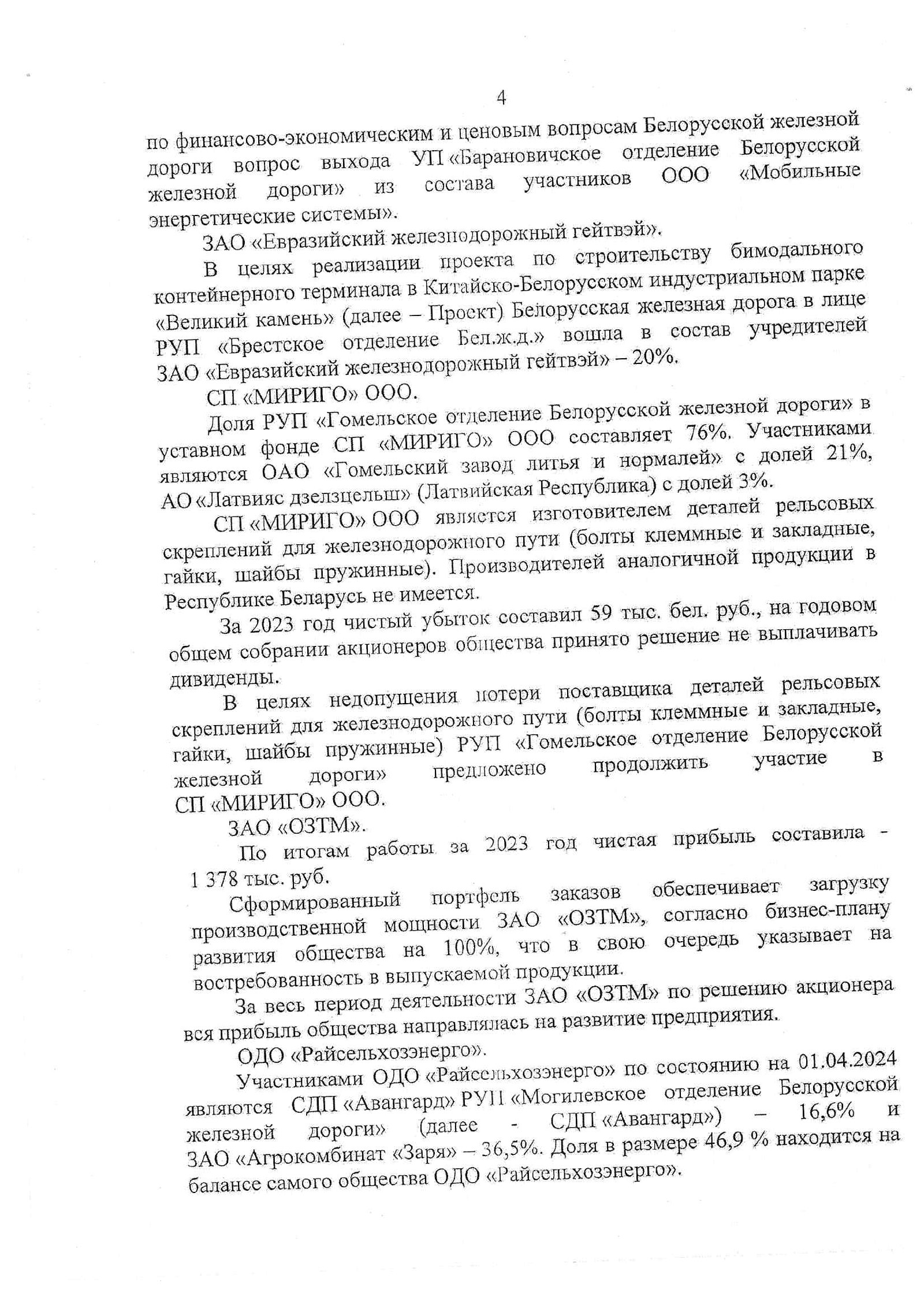
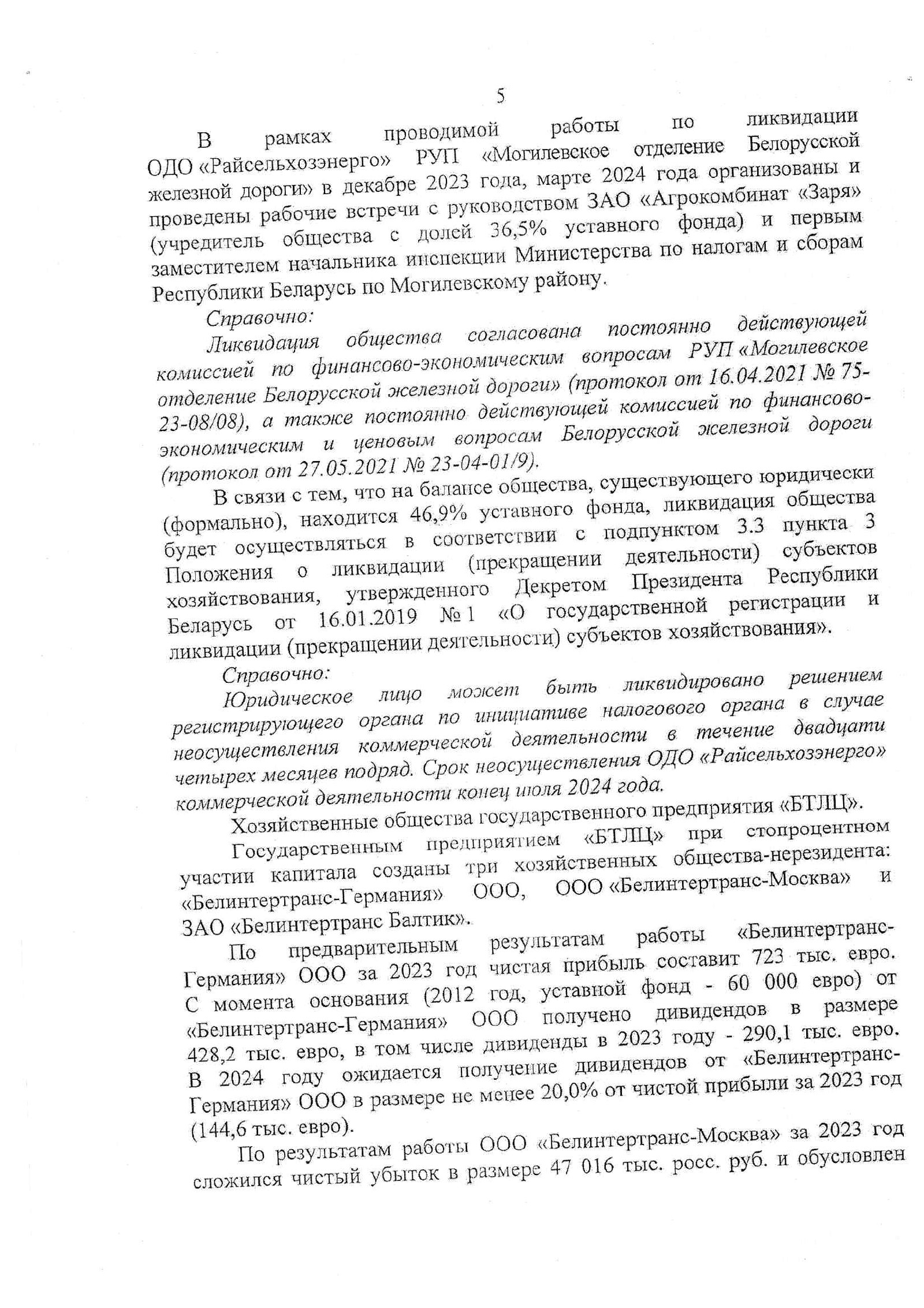
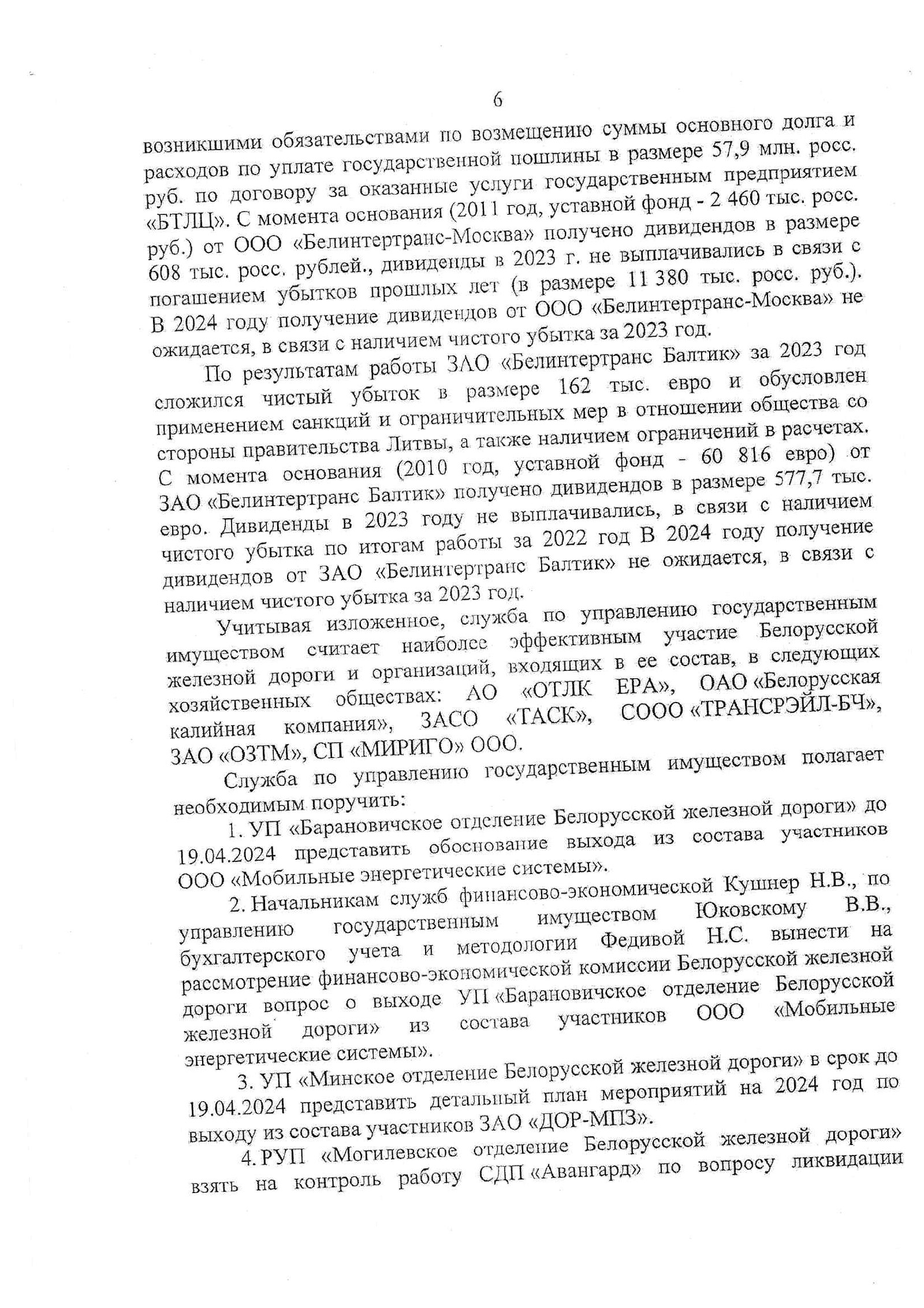
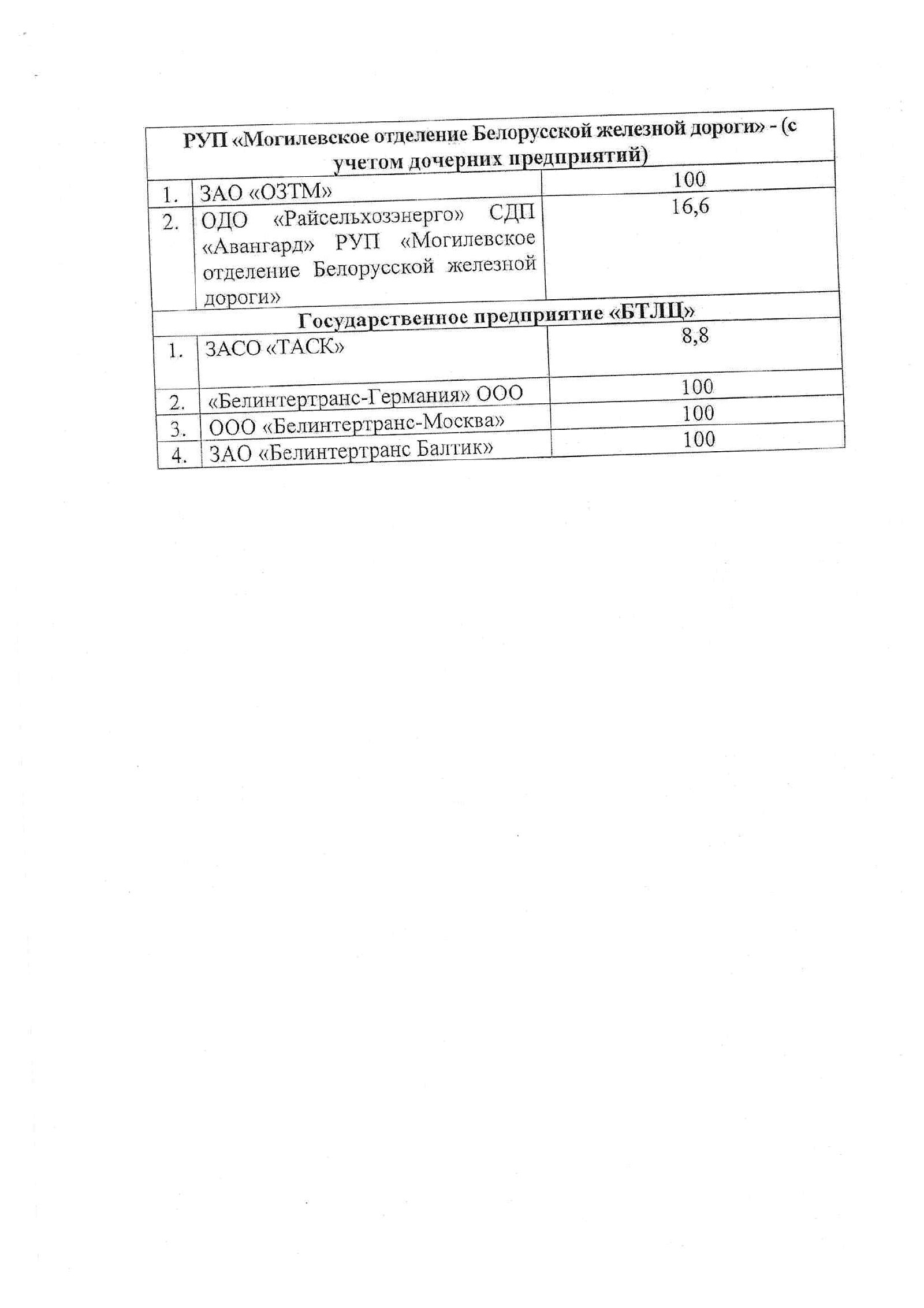
In recent years, the company’s fortunes declined. Transrail-BCh reported a loss of 194,300 roubles for 2023, and its members decided not to pay dividends for that year. In March 2024, BCh head Vladimir Morozov ordered proposals to be prepared “on further cooperation with the company to improve its effectiveness”. Yet in April, when the state property management service reported to him on the performance of companies in which BCh held stakes, it still ranked the stake in Transrail-BCh among the most effective, alongside UTLC ERA and Belarusian Potash Company. It follows that BCh had been preparing changes at the company for at least a year and a half before the meeting.
BCh freight data show what changed in the company’s operations. The decline began before the change of director. By late summer 2025, under Kim Suk Cha, the number of containers handled by the company was more than five times lower than a year earlier, and outbound shipments (exports) had almost disappeared. In October, the first full month under the new director, Transrail-BCh handled 50 twenty-foot equivalent units (TEU), compared with 352 in the same month of 2024; in November, it handled 12 against 370. Outbound and inbound shipments, previously responsible for almost all its business, disappeared entirely. Only transit remained.
Transit itself even grew, from 10 to 50 TEU in October. But the cargo was not originally its own. In autumn 2024, the forwarder InterRail Service LLC, which shares its name with the InterRail group’s Russian company, handled motor oil, tomato paste and consolidated cargo from Brest-Severny station to Almaty, Bishkek, Tashkent and Khujand. A year later, Transrail-BCh was handling almost the same cargo from the same station to Central Asia, while InterRail Service did not handle a single container on BCh in October or November 2025.
Transrail-BCh’s largest flow, meanwhile, went to another forwarder. In autumn 2024, it consisted of shipments from Kaledino station to Russia by PO Tekhnikon LLC, a container manufacturer from Molodechno: 248 TEU in October. In November 2025, containers from the same sender and station, 230 TEU bound for Magnitogorsk and Smolensk, were being handled by InterRail LLC of Minsk, which had not appeared in BCh freight data at all a year earlier.
The company’s name matches the InterRail brand for a reason. According to the Unified State Register, InterRail LLC was registered in December 2017 at the same address as Transrail-BCh, 50 Voronyanskogo Street, though in premises 15 rather than 14. Its founders were Interrail Holding AG with 20%, Transrail-BCh director Kim Suk Cha with 45%, and Galina Skachkova with 35%. Skachkova had worked at Transrail-BCh since at least the early 2000s and was its chief accountant in 2022. Vladimir Padalitsa, another former BCh employee, was appointed director. In 2015, he had signed amendments to Transrail-BCh’s charter on behalf of Interrail Holding.
Transrail-BCh’s own people had represented the Swiss side before. In the late 2000s, Kim Suk Cha herself signed charter amendments on behalf of Transrail Holding under a power of attorney. The new 2011 charter was signed on behalf of Interrail Holding by Dmitry Khotyanovich, who was Transrail-BCh’s deputy director general in 2025. According to our information, almost all InterRail employees, including Padalitsa, were also on Transrail-BCh’s staff in those years. In February 2019, Interrail Holding and both female founders left the company: Turkish citizen Ercan Kurtuluş received 51%, Dmitry Nesterovich, who had previously worked at Transrail-BCh and later headed InterRail, received 25%, and Transrail-BCh employee Elena Sizenok received 24%.
In 2021, the InterRail group wrote about its own offices in Belarus and Ukraine. Belarus is now absent from the list of countries on its website, although Russia is still there. When they parted ways, it appears they also divided the clients: Central Asian transit went to Transrail-BCh, and exports to Russia to InterRail. The result was a sharp fall in Transrail-BCh’s business volumes.
We see it this way: when Kim Suk Cha left, she took the main cargo flows to “her own” company, InterRail, apparently created for just such an eventuality. This is what happens when a kickback scheme is at work: the forwarder is chosen not for competitive terms, but for being willing to arrange “sharing the margin”. Such schemes are commonplace in freight forwarding, with plenty of examples. A company like this always has a few large clients of “its own” and a number of ordinary ones, who operate on transparent terms and generally make little difference to the bottom line. When the person who made the arrangements leaves, the cargo goes too.
Kim’s departure may also have had less to do with retirement age than with a change in BCh’s leadership: in August 2024, Vladimir Morozov was succeeded as head of BCh by Valery Verenich. Neither Kim herself nor those we consider the main beneficiaries of these schemes, the people from Interrail Holding, may have managed to establish a “relationship of trust” with the new leadership. In our view, the departure of all InterRail’s original founders in 2019 changes nothing: people from the “inner circle” remained at the company, while the real beneficiaries simply retreated into the shadows.
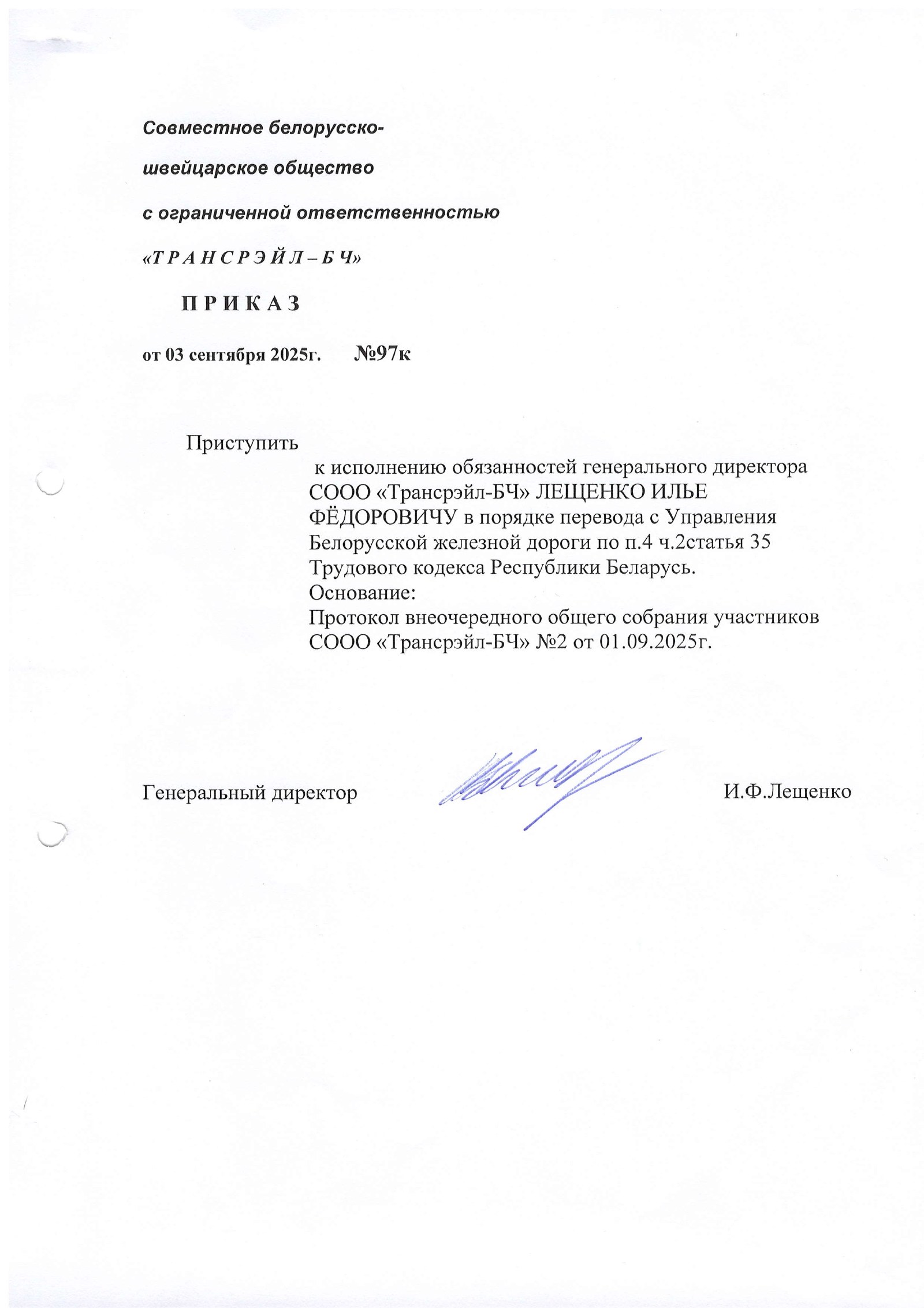
The new director inherited a company with almost no cargo. Ilya Leshchenko joined from the post of assistant to the head of BCh. He was given a five-year contract from 3 September 2025, and BCh’s first deputy head was tasked with signing it. According to our information, Leshchenko started as an engineer at locomotive depots, worked at BCh headquarters from 2010, and later became an assistant to the head of the railway. He had not previously worked at a freight forwarding company. Yet forwarding is one of the most complex fields, like everything connected with freight transport.
Once again, we are left to note the arrival of a new “figurehead”. His experience of running a commercial company is no better, and this became apparent from his very first days: departments at BCh headquarters are “going crazy” over his requests and demands for help, right down to organising the cleaners’ work at Transrail-BCh’s office.
The third decision concerned a share deal. Transrail-BCh owned 1,960 shares in Transinform CJSC, or 49%. This small Brest company has provided railway transport and operational services since 1995; directories list 10 employees. According to the Unified State Register, it was founded by Transrail-BCh and BCh’s Computing and Informatics Enterprise, which received 51%. In 2000, that stake passed to BCh’s Brest Division, the same division that has now become a member of Transrail-BCh. At the end of 2003, it went to the foreign-owned Firma Rail Service LLC, in 2006 to the likewise foreign-owned TransInformService LLC, and since 2016 it has belonged to Eurasia Logistic.
Transrail-BCh’s members had decided to exit Transinform back in March 2025. On 1 September, they resolved to sell the shares to Eurasia Logistic at their market value of 170,500 roubles. Eurasia Logistic was registered in 2007 at the same address as Transinform: 18 Menzhinskogo Street, Brest. According to the Unified State Register, its owner is Tatyana Mashkovskaya, while Transinform CJSC was headed at various times by Vitaly Mashkovsky. According to our information, the two companies share much of their staff: over the years, more than 50 people were registered as employees of both at the same time.
But the deal appears not to have gone through yet. Transrail-BCh’s website still says that the company “owns shares in Transinform CJSC”.
The meeting documents do not say why the Swiss gave up their half for nothing. Most likely, they were seeking to escape sanctions pressure. By then, the sanctions backdrop was already substantial. In November 2022, Canada had added BCh itself to its list (for helping move Russian troops and equipment into Ukraine), along with its head, Vladimir Morozov. In June 2023, Morozov was sanctioned by the EU for supporting the transport of Russian military personnel and equipment, and subsequently by Switzerland, where InterRail is registered.
Formally, the company now belongs entirely to BCh. The state received the Swiss stake for free, a trusted insider is at the helm, and the forwarder that handled military cargo from Russia and luxury cars bound for Russia no longer has a foreign co-owner.
In our view, Transrail-BCh’s main task is to handle corrupt or sensitive cargo flows that the parties do not want to expose through BTLC, such as the military cargo from Russia. But this is also one of many “cushy jobs” for insiders, rather than a professional diversification of BCh’s freight forwarding business. The appointment of the director general makes that clear: he has no forwarding experience, but he is loyal. For all its glaring shortcomings, BCh’s main forwarder, BTLC, has connections, partners and representative offices almost worldwide, and can forward virtually any cargo on most continents. Incidentally, Transrail-BCh is a BTLC client: their freight forwarding agreement has been in force since 2011, and in November 2025 Leshchenko extended it until the end of 2026 (judging by our data, there was very little work under it in 2025).
Another strange detail is the presence of the Brest Division among the company’s members, even though it is already part of BCh. There is perhaps only one explanation: a long-standing desire to create and maintain as many financial chains and structures as possible, making transactions less transparent and harder for both the public and law enforcement to scrutinise.
We will continue to watch whether the new director general manages to establish new schemes for “sharing the margin”. That depends, rather, on those who appointed him. But since Transrail-BCh was not liquidated, such plans apparently remain in place for now.
Related articles:
New Facts on the Import of Russian TNW Components and Military Cargo to Belarus;
Approximately 5 Million Rounds of Ammunition Delivered to Belarus via Belarusian Railway;
BCh Serves the “Luxury” Lifestyle of Russia’s “Elite” (in Russian);
New Evidence of BCh’s Role in Luxury Car Deliveries to Russia (in Russian);
Luxury Car Shipments to Russia via BCh Halted for Now (in Russian);
A New “Scheme” for Delivering Premium Cars to Russia via BCh (in Russian);
Despite EU Restrictions, Sanctioned Cargo Continues to Reach Poland by Rail (in Russian).