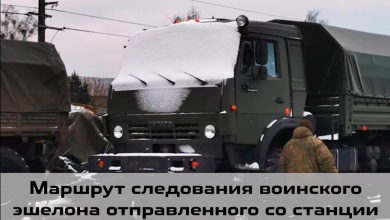
In our previous publication, dedicated to the organization of military transport by the Belarusian Railway at the beginning of the Russian invasion of Ukraine in 2022, we thoroughly examined the specifics of interaction between railway administrations, affiliated companies, and state structures. In particular, we covered issues related to the procedure for calculating fees for transport and related services, as well as the execution and observance of contractual obligations by all participants in the process.
Let us recall that the issue concerned military transport carried out during the initial active phase of the Russian invasion of Ukraine — from January to April 2022. During this period, Russian equipment, weaponry, and personnel of the Armed Forces were supplied to Belarusian Railway stations, particularly to Gomel station (and stations of the Gomel Division of the Belarusian Railway). This involved close interaction between the Russian military and the Belarusian Railway's Transport Management Center, extending to personal monitoring of train dispatchers' work.
At the ‘official level,' the interaction between the Ministry of Defence of Belarus and the Russian Ministry of Defence, as well as the Belarusian Railway, regarding the organization of transport, logistics schemes, document processing, and the collection of freight and other fees, was carried out through the Belarusian Railway's ‘sole and unique' logistics operator — Belintertrans, and specifically, its so-called subsidiary, Belintertrans-Moscow LLC. On the Russian side, the role of ‘provider' was also played by the previously described ‘shell companies' — Promdetal LLC and Pulsar LLC.
As a result of this ‘interaction,' the Ministry of Defence of the Russian Federation incurred a debt to the Belarusian Railway — exclusively for railcar demurrage and the provision of additional services (excluding freight charges). Formally, this did not directly concern the Ministry of Defence or the Belarusian Railway and was framed as a commercial dispute between Belintertrans (represented by Belintertrans-Moscow LLC) and the Russian ‘shell companies' — Promdetal LLC and Pulsar LLC.
The subject of the dispute was 840 thousand US dollars, equivalent in Russian rubles at the exchange rate at that time.
The resolution of this dispute was moved to the courtrooms of the Moscow Arbitrazh Court, where Belintertrans-Moscow LLC filed its claim virtually at the very beginning of 2023.
We expressed doubts that the Belarusian side would manage to receive the money it claimed for railcar demurrage and other related expenses.
However, as of the publication of this material, Promdetal LLC, according to the court decision, has settled its outstanding debt to Belintertrans-Moscow LLC, and the latter, in turn, has settled with the parent company. But, admittedly, it took almost 26 months.
The official date of the positive first-instance court decision in favor of Belintertrans-Moscow LLC is June 25, 2024 (case No. A40-1143/2023). Promdetal LLC attempted to appeal the verdict: on October 16, 2024, the Ninth Arbitrazh Appellate Court upheld the decision, and on February 13, 2025, the Arbitrazh Court of the Moscow District, in cassation proceedings, confirmed the findings of the previous instances, definitively denying the complaints.
As a result, Promdetal LLC paid the amount of the debt, penalties, and accrued late fees, which consisted of unjust enrichment in the amount of 57,888,390.86 RUB, a fine of 5,788,839.08 RUB, and late fees for the period from February 1 to June 1, 2023 in the amount of 7,004,495.29 RUB, which in dollar equivalent in mid-2023 amounted to 872.7 thousand dollars. The court approved a monthly repayment schedule for this amount, with the last payment made in late April – early May 2025, after which the debt was considered finally closed.
Incidentally, currently, Promdetal LLC, which has already been renamed PromStroyMash LLC, is involved in litigation with the Ministry of Defence of the Russian Federation itself and Russian Railways LLC, attempting to recover the money that, by court decision, they were obliged to reimburse Belintertrans-Moscow LLC.
The written explanations of the third party — Belintertrans — presented below further reveal the involvement of the Belarusian Railway, its organizations and enterprises (represented by management) in participating in and facilitating Russia's invasion of Ukraine, as well as attempts to profit from it.
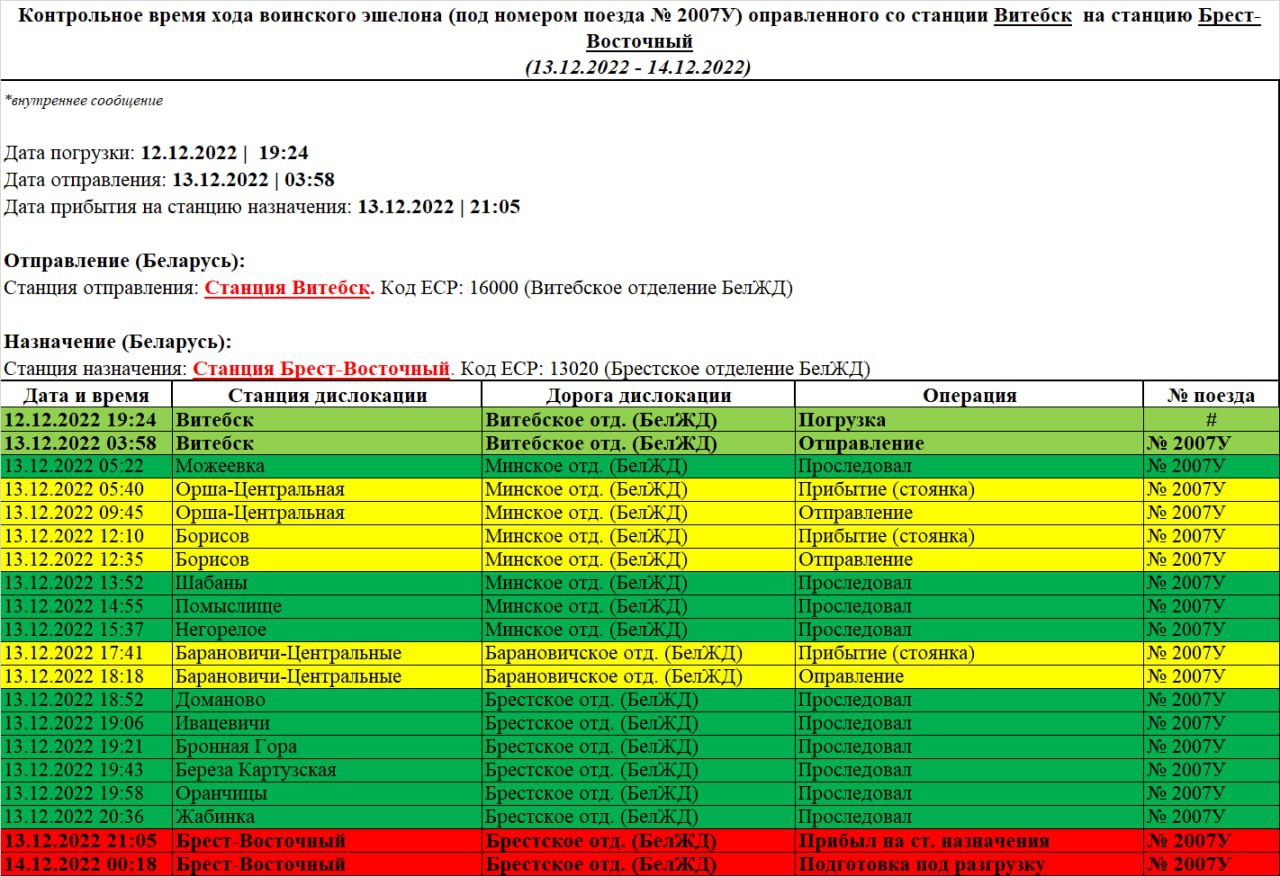
The document cited above once again confirms the involvement of the Belarusian Railway in general and its management in particular in the invasion of Ukraine by Russian troops. Let us reiterate that from January to April 2022 alone, 11,889 railcars with military cargo totaling over 229 thousand tonnes, including 730 railcars with personnel, were transported through Belarus. These figures attest to the scale of the Republic of Belarus's railway infrastructure utilization for Russia's military purposes.
The explanations provided by Belintertrans for case No. A40-1143/2023, heard in the Arbitrazh Court of the Moscow District, clearly show how the Ministry of Defence of the Russian Federation fully controlled the logistics and direct implementation of supplies using the Belarusian Railway's infrastructure for weaponry, ammunition, personnel, and other related cargo through Belarus for further deployment in the war against Ukraine.
It is noted that representatives of the Russian Armed Forces were directly present at the Ministry of Defence of the Republic of Belarus, were part of a joint group for organizing transport, and effectively fully controlled the entire process of planning and managing military railway transport in Belarus.
These transports were carried out based on a so-called ‘Coordination Procedure,' approved between the two military departments with the direct participation of the Belarusian Railway, within which railcars were sent from the Russian Federation to Belarus. Such mechanisms were accompanied by the formation of train consists in strict accordance with military plans. This mechanism, in essence, represented a unified military logistics corridor, managed from Moscow with the full cooperation of the Belarusian side.
As a result of this interaction, a situation arose where a huge number of railcars accumulated at Gomel station (and stations of the Gomel Division of the Belarusian Railway), requiring processing, formation into trains, and reverse dispatch not in accordance with the station's operational technology, but according to military plans. This circumstance further exacerbated the situation and significantly slowed down the work not only of the station and railway hub but also of the entire region. These ‘inconveniences,' in accordance with the letter of current laws, required additional payments from the customers.
Despite the de facto recognition of the transport and services rendered, including for April–May 2022 (the active phase of the Russian Federation's invasion of Ukraine), the defendant (Promdetal LLC) and its partner Pulsar LLC attempted to avoid payment by petitioning the Ministry of Defence of the Russian Federation for ‘pressure' on the Belarusian side to exclude the calculation of service costs, thereby demonstrating the dependence of Belarusian logistics on Russia's political-military decision.
In turn, the Belarusian side repeatedly emphasizes that all consignment notes for sending railcars were issued by the Russian side, and the Belarusian Railway and Belintertrans were not the initiators of the transport, but merely followed instructions, acting within the logic of allied obligations and military cooperation.
In reality, the Belarusian Railway (BCh) and its logistics operator Belintertrans played a key role in ensuring Russian military logistics at the initial stage of the invasion of Ukraine. Despite the formally commercial nature of the transport, the litigation for the recovery of debt for railcar demurrage and additional services clearly demonstrated the deep dependence of the Belarusian transport system on Moscow's political-military decisions and the scale of centralized cooperation between the two countries in the interests of war.