Military transportationNews

Invasion Logistics: Who Delivered the “War” and How

“We cannot publish everything immediately, maintaining a moratorium for the safety of our sources. We constantly write about this and, to avoid annoying readers with this necessary but unchanging phrase given the lawlessness in the country, we consistently place it in a note” — our readers can see such footnotes in almost every text (including this one). This is extremely justified. Some materials we cannot publish for months or even years. The protection and safety of sources in conditions of lawlessness and repression in Belarus and Russia is paramount.

But moments come when it becomes possible. And today we offer a look at some details of the organization of military transport of Russian armed forces during the preparation for and invasion of Ukraine.

Recall that in 2022, Russian and Belarusian authorities conducted the so-called joint “Belarusian-Russian exercises of the armed forces of both countries ‘Allied Resolve – 2022',” under cover of which Russian troops were brought into Belarus by troop trains for subsequent invasion of Ukraine. This occurred during the period from January 17 to April 11, 2022.

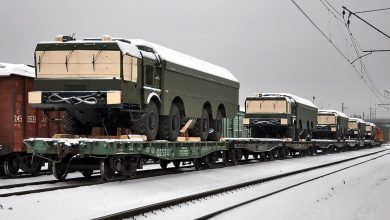
Belarusian Railway then became the main transport channel for delivering “death” to Ukraine, transporting Russian armed forces to its various stations in 11,889 railcars with military cargo totaling 229,843,421 kg, including 730 railcars with personnel.

Among the personnel (contingent) of Russian troops, the following units were delivered:

  • Eastern Military District (EMD): 5th Combined Arms Army, 29th Combined Arms Army, 35th Combined Arms Army, 36th Combined Arms Army;
  • Central Military District (CMD): 2nd Guards Tank Army, 41st Combined Arms Army;
  • Western Military District (WMD): 1st Guards Tank Army, 6th Combined Arms Army, 20th Guards Combined Arms Army;
  • Airborne Forces (VDV): 76th Guards Air Assault Division, 98th Guards Airborne Division, 106th Guards Airborne Division, 31st Guards Separate Air Assault Brigade;
  • Special units of the Main Directorate of the General Staff of the Armed Forces of the Russian Federation (Main Directorate of the General Staff of the Armed Forces of Russia) and Special Forces of Rosgvardia.

Everything was brought to 27 Belarusian Railway stations, of which the largest cargo arrivals were:

  • Khoyniki — 1,483 railcars with 21.2 thousand tonnes,
  • Osipovichi-I — 1,362 railcars with 22.8 thousand tonnes,
  • Yelsk — 1,320 railcars with 21.1 thousand tonnes,
  • Brest-Vostochny — 1,061 railcars with 15.9 thousand tonnes,
  • Rechitsa — 1,003 railcars with 17.9 thousand tonnes,
  • Novobelitskaya — 780 railcars with 10.3 thousand tonnes,
  • Pukhovichi — 596 railcars with 8.9 thousand tonnes,
  • Luninets — 539 railcars with 8.2 thousand tonnes,
  • Dobrush — 514 railcars with 10.6 thousand tonnes.

Main cargo:

  • military equipment — 8,002 railcars with 124.7 thousand tonnes,
  • ammunition — 1,300 railcars with 35.1 thousand tonnes,
  • fuel — 946 railcars with 56.9 thousand tonnes, including 693 railcars with 41.5 thousand tonnes of aviation fuel.

Recipients of military cargo in Belarus were:

More detailed information about the list and volumes of military cargo imported into Belarus from January to April 2022 can be found under the spoiler
  1. The recipient of military cargo is the Ministry of Defence of Belarus:

In total, 5,229 railcars were sent to the MO RB in January 2022, with a total cargo weight of 77,925,723 kg, including 122 railcars with ammunition, with a total cargo weight of 2,239,081 kg.

In total, 3,292 railcars were sent to the MO RB in February 2022, with a total cargo weight of 48,728,334 kg, including 54 railcars with ammunition, with a total cargo weight of 1,298,034 kg.

In total, 356 railcars were sent to the MO RB in March 2022, with a total cargo weight of 5,921,229 kg, including 91 railcars with ammunition, with a total cargo weight of 2,307,696 kg.

In total, 6 railcars were sent to the MO RB in April 2022, with a total cargo weight of 210,000 kg.

  1. The recipient of military cargo is the 474th Separate Radio-Technical Early Warning Center (military unit 03522 of the Ministry of Defence of Russia (MO RF):

In total, 110 railcars were sent to military unit 03522 in January 2022, with a total cargo weight of 2,320,508 kg, including 91 railcars with ammunition, with a total cargo weight of 1,561,780 kg.

In total, 1,034 railcars were sent to military unit 03522 in February 2022, with a total cargo weight of 34,210,511 kg, including 540 boxcars with ammunition, with a total cargo weight of 16,082,588 kg, and 168 tank cars with aviation fuel, with a total cargo weight of 10,186,770 kg.

In total, 1,766 railcars were sent to military unit 03522 in March 2022, with a total cargo weight of 55,829,534 kg, including 402 boxcars with ammunition, with a total cargo weight of 11,622,287 kg, and 461 tank cars with aviation fuel, with a total cargo weight of 27,480,530 kg.

In total, 96 railcars were sent to military unit 03522 in April 2022, with a total cargo weight of 4,697,582 kg, including 64 tank cars with aviation fuel, with a total cargo weight of 3,807,432 kg.

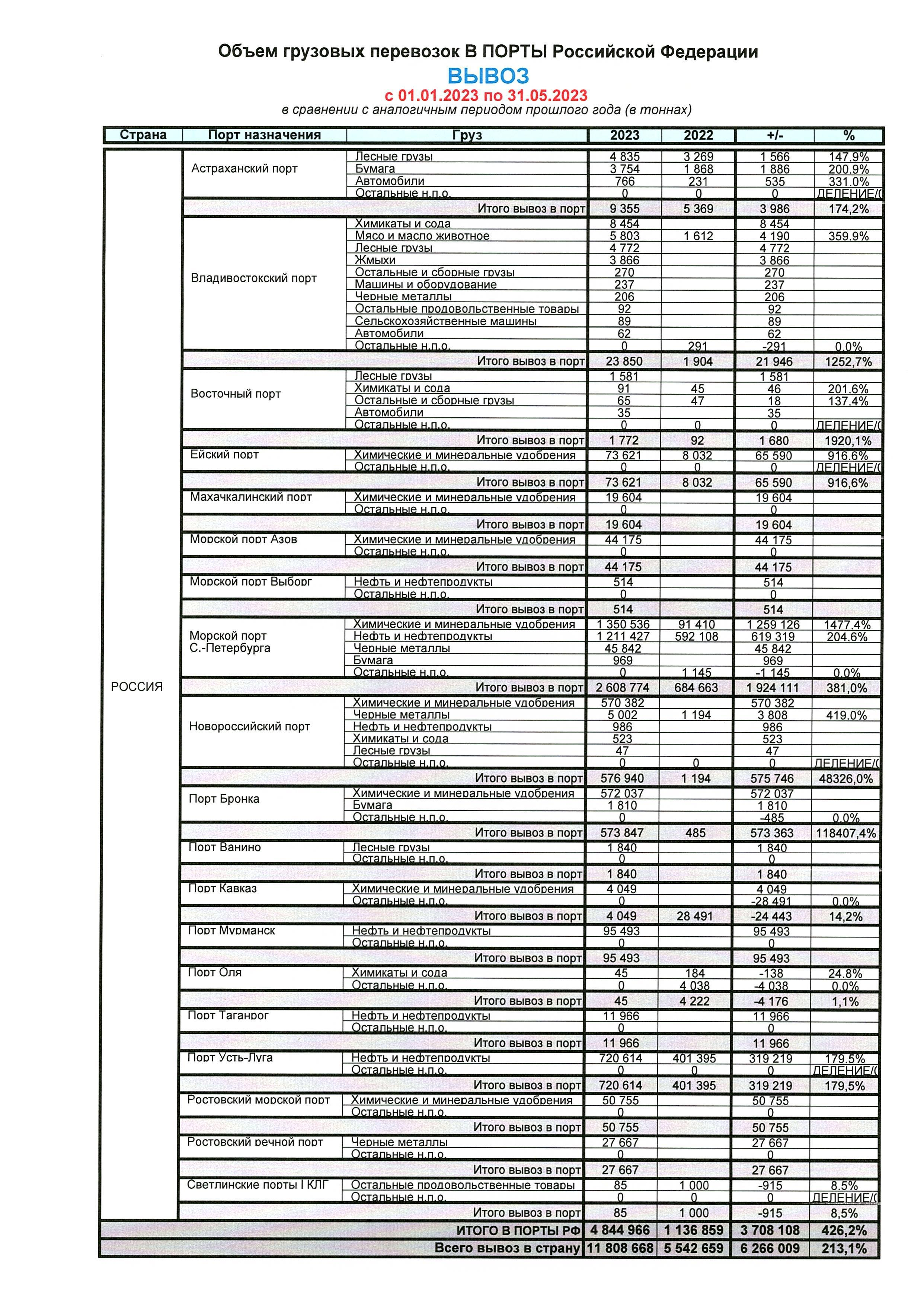
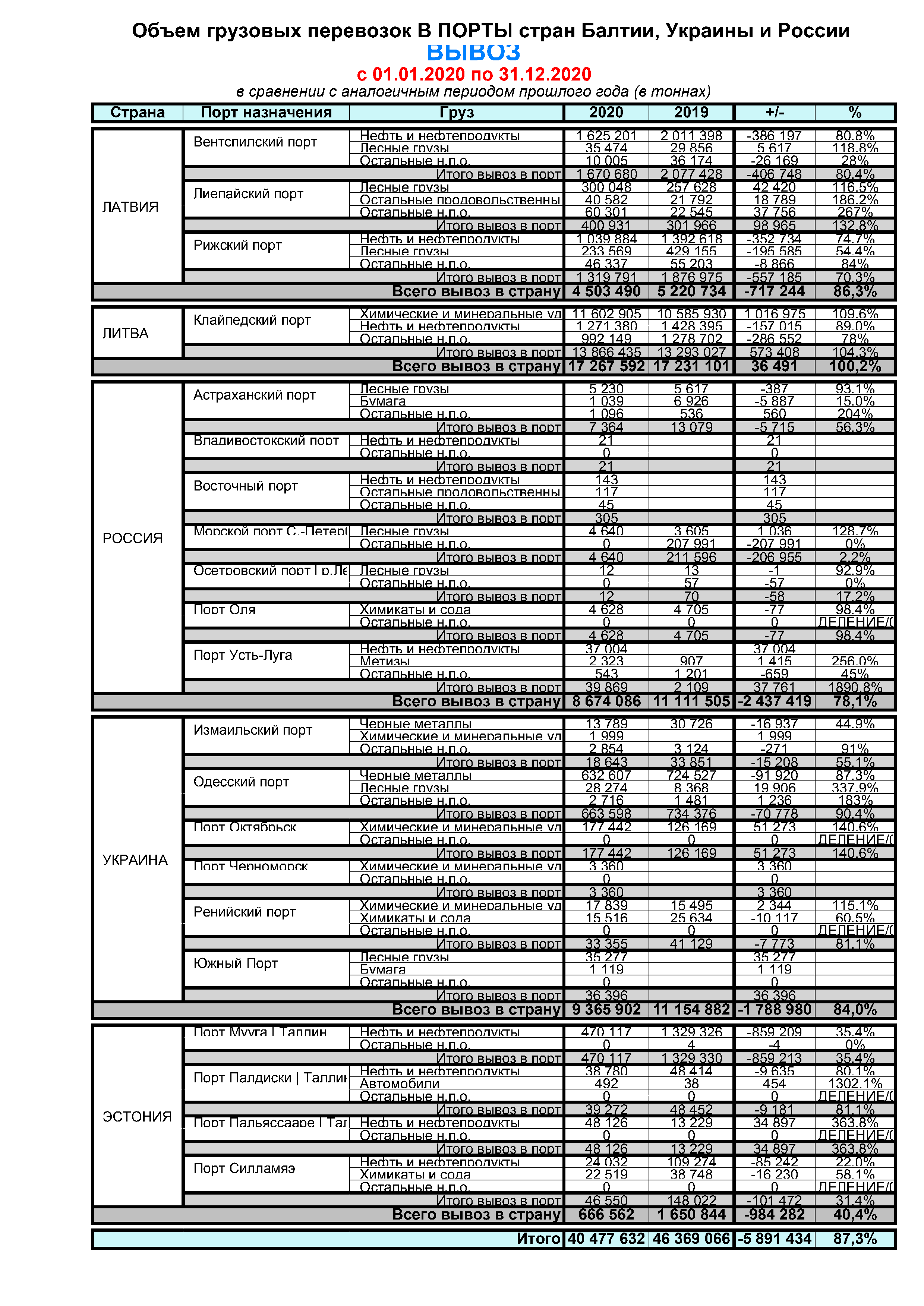
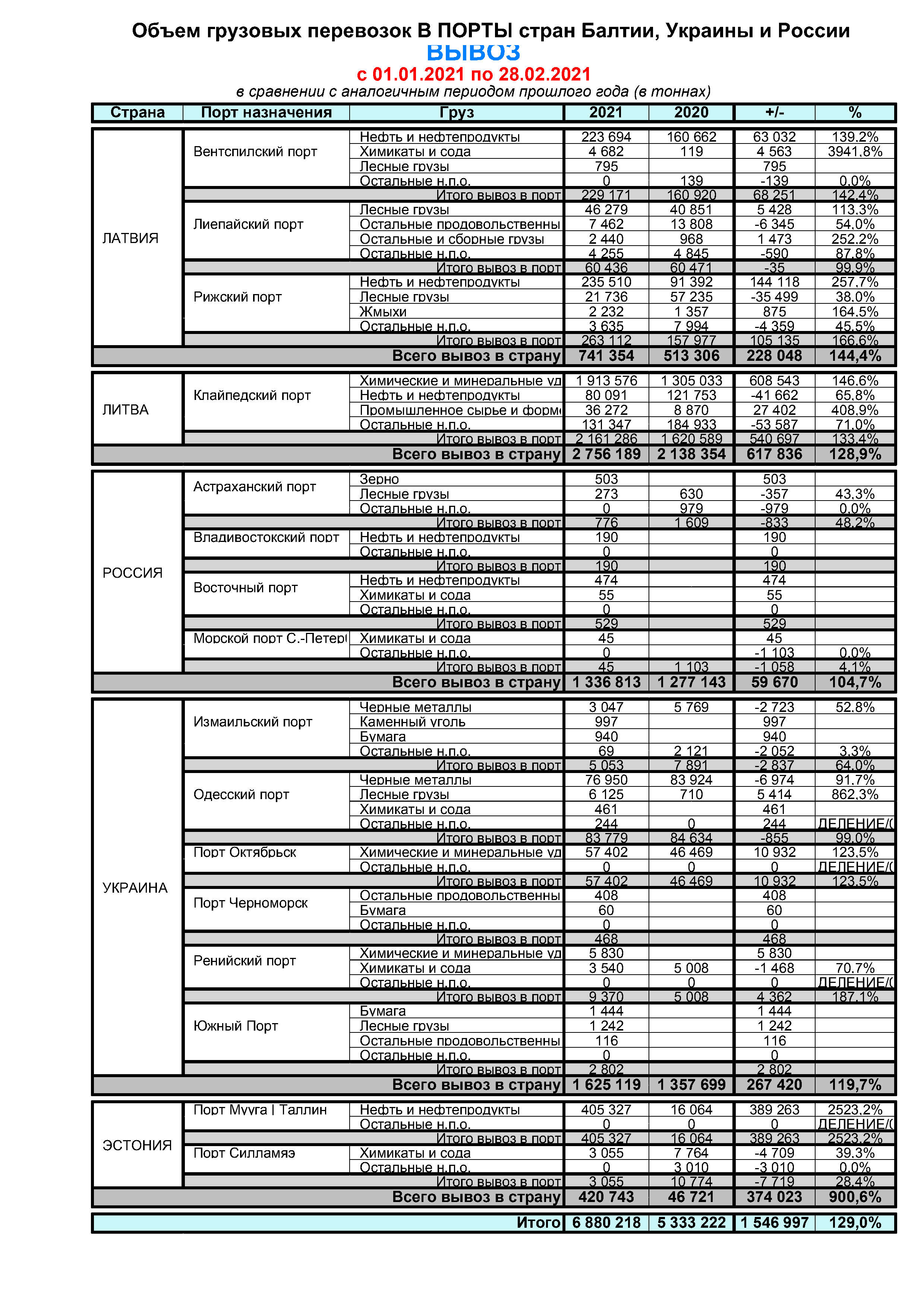
Summary of military cargo and their volumes imported by rail into Belarus during the period from January to April 2022:

In addition, in April 2022, for the withdrawal of Russian troops from Belarus, an additional 4,101 empty cars were sent from Russia, including 250 passenger cars. These railcars were destined for Gomel station (addressed to the station chief). The railcars were in poor technical condition and required appropriate repairs.

But while Belarusian Railway participated in the aggression mainly as a technical means of delivery, there were also commercial organizations and their managers who personally organized the delivery of this “death.”

Let us begin with the direct executor and organizer of military transport logistics in Belarus. This is the Republican Transport and Forwarding Unitary Enterprise “BELINTERTRANS — Transport and Logistics Center” of the Belarusian Railway (BTLC) and its General Director Andrei Sladkevich.

We have repeatedly published materials about what kind of organization this is, how it conducts its activities and “achieves success” through unfair dominance in the logistics market through the administrative resources of Belarusian Railway, brazenly violating established rules and laws (here, here, and here for more details). As well as about its participation in military transport, including components of Russian tactical nuclear weapons (TNW) and much more (links at the bottom of the article and in the thematic section of the site Military Transport).

And it is BTLC with its Russian subsidiary LLC “Belintertrans-Moscow” (BTLC-Moscow) and its director Yuri Kabakov (more details at the end of the article) who are among the main Belarusian commercial organizations, accomplices and organizers of the import and export to/from Belarus of Russian military cargo.

Let us clarify for understanding the essence of the subsequent material. Despite the priority of military transport over others, both in Belarus and in Russia, almost all military equipment, weapons, and personnel are transported in ordinary railcars (the exception is a small number of specialized railcars, such as for transporting nuclear ammunition). Ordinary railcars are withdrawn from commercial use and provided to the armed forces (ministries of defence and military units). But if in Belarus almost all railcars belong to the state and are transferred to Belarusian Railway for its possession and use, then in Russia, on the contrary, the owners and holders are mainly private companies (sometimes conditionally, since controlling stakes or even all shares of their authorized capital may also belong to the state). In our case, these are mainly Russian operators and railcar owners: Joint Stock Company “Federal Freight Company” (JSC “FGC”) and Joint Stock Company “First Freight Company” (JSC “PGC”).

Therefore, the military needs the services of logistics and operating companies that undertake to comprehensively provide transport with the necessary number of railcars, paying for their provision, equipment, and forwarding (tariffs and services of railway carriers along the entire route with the execution of railway documents) to the locations and loading points of military units and the subsequent return of these railcars to owners (holders) or other operating companies under contracts for the corresponding fee.

In practice, all these operations are undertaken by one logistics company — a service aggregator for ministries of defence. Thus, the military only needs to place an order and pay for the services of one logistics aggregator, without delving into the specifics of railway logistics.

Such a Belarusian logistics aggregator and, accordingly, payer to Belarusian Railway, as always and in particular, to facilitate the transfer of Russian military formations and their support during the invasion of Ukraine, as well as their return to Russia in 2022, became BTLC with its “subsidiary” BTLC-Moscow.

And everything would be fine from the point of view of “such business.” There is a guaranteed large order. The volumes and forecasts of work and financing are clear. Payment for declared services is guaranteed by budgetary funds. Competitors and private business can only envy such a “portfolio.” But there are no competitors in Belarus — everything is distributed by mutual agreements between the Military Transport Directorate (VOSO) of the MO RB, Belarusian Railway, and BTLC. On the Russian side, partners “appointed for the job” are Russian companies from Moscow — LLC “Pulsar” and LLC “Promdetal” (both companies have signs of being exclusively intermediaries who, if necessary, can easily carry out their own bankruptcy procedure).

Information about Promdetal LLC and Pulsar LLC from open sources

LLC “Promdetal” (125212, Russia, Moscow, internal territory of Voykovsky municipal district, Leningradskoye Highway, building 43A, office 312, room 1, OGRN: 1217700246433, INN: 7743361715) was registered in 2021.

The sole owner, who is also the general director, is Russian citizen Tsukanov Maxim Yuryevich, simultaneously co-owner and general director of LLC “Promstroymash” (registered in 2020).

Main activity — supplier of equipment and spare parts to railway industry enterprises located throughout Russia and CIS countries, as well as a number of far and near abroad countries. The company also offers a full range of services for the repair of rolling stock and parts at specialized enterprises. The company also works as a railcar operator: providing for use, rental, or purchase and sale of railcars and cargo transportation.

Authorized capital — 100 thousand Russian rubles.

Staff, year/persons: 2022 — 10, 2023 — 21, 2024 — 21.

Amount of claims against the company in 2024: as defendant — 57.9 million Russian rubles, as plaintiff — 60.5 million Russian rubles.

Company revenue: 2022 — 2,860.9 million Russian rubles ($41.86 million at the average annual Central Bank of Russia exchange rate), 2023 — 1,655.4 million Russian rubles ($19.41 million).

The main share of revenue was obtained as a result of activities for providing services for the provision of rolling stock in organizing international transport within the framework of co-execution of a state contract with the Ministry of Defence of Russia. The main counterparty is LLC “Promstroymash.”

According to the mandatory audit (as of December 31, 2022), the company's property:

  • coffee machine;
  • six parking spaces at the address: Smolnaya St., building 49, acquired in 2022 with the aim of their further resale or rental.

Other property, including railway rolling stock, is leased.

Interesting facts:

  • the company's office is located in the same office building as its main counterparty — LLC “Promstroymash”;
  • the company also has one automobile under lease, but the lessor is hidden with the note “in accordance with the requirements of Resolution of the Government of the Russian Federation dated January 12, 2018, No. 5”;
  • numerous counterparties of the company went through bankruptcy procedures after cooperating with it.

LLC “Pulsar” (129090, Moscow, Kalanchevskaya Street, building 16, structure 1, floor 4, room 1A3, OGRN: 1157746940405, INN: 7720318618) was registered in 2015.

The sole owner, who is also the general director, is Russian citizen Matushevsky Vyacheslav Anatolyevich. His dividends for 2019 amounted to 200 million Russian rubles ($2.77 million at the average annual Central Bank of Russia exchange rate).

Main activity — supplier of material assets from state storage across all federal districts of Russia: ferrous and non-ferrous rolled metal, spare parts for rolling stock, tools for various purposes, special automotive equipment, and more.

Authorized capital — 1,000 thousand Russian rubles.

Amount of claims by the company in 2024: as plaintiff — 75.1 million Russian rubles.

Staff 2022–2023: seven persons.

Company revenue: 2022 — 2,689.8 million Russian rubles ($39.4 million at the average annual Central Bank of Russia exchange rate), 2023 — 5,131.2 million Russian rubles ($59.8 million at the average annual Central Bank of Russia exchange rate).

Interesting facts:

  • the company holds a license from the FSB of Russia to conduct work related to the use of information constituting state secrets;
  • the company is a supplier to correctional colonies of the Federal Penitentiary Service of Russia;
  • the structure and content of the company's website are empty, sections are inactive, which indicates the “fakeness” of this resource.

However, reality made its adjustments and they did not manage “in three days”…

Therefore, railcars after delivering the military were massively and for a long time delayed awaiting subsequent loading back. And when the time came for their return with or without cargo, it turned out that many of them were brought to terrible technical condition (stripped, damaged) and required various types of repairs. According to eyewitnesses, sometimes it seemed that the wooden parts of the railcars “went for firewood.”

However, BTLC actively earned not only on logistics with Russian railcars, but also on providing its own railcars for internal redeployment of Russian troops in Belarus after joint military exercises, as well as on equipping and preparing railcars for loading Russian troops, developing the necessary standards and performing this work through its TLC Minsk terminals (Kolyadichi and Stepyanka).

The indicated delays of railcars and repairs entailed additional costs and penalties both from Belarusian Railway (occupation of public tracks by idle railcars) and from rolling stock owners.

That is, here the fault of the recipient/sender (Russian military) is obvious, however Belarusian Railway presents the bill to the payer specified in the corresponding contract — BTLC, and it to BTLC-Moscow.

But compensation for such additional expenses under budgetary financing is always an extremely problematic task. Especially for Belarusian companies, when the initial customer and manager of all these transports is the MO RF, and the MO RB is only one of the links in the organizational scheme.

As a result, BTLC-Moscow accumulated overdue debt to BTLC (the ultimate beneficiary is Belarusian Railway) and after claim correspondence with the debtor in January 2023, the company filed a lawsuit against the aforementioned LLC “Promdetal” in the Moscow Arbitrazh Court for recovery of funds in the amount of 57.9 million Russian rubles (more than $840 thousand at that time).

Such is the amount of costs from “effective” activities under the contract with the military, although in this amount of negative effect it would be correct to also account for the size of payments or penalties from railcar owners for untimely return of railcars provided by them, but this is a separate issue.

In the indicated court proceedings, Belarusian Railway, BTLC, MO RF, MO RB, and LLC “Pulsar” additionally participated. Moreover, at the request of the MO RF, the proceedings were made closed.

In the end, nevertheless, in July 2024, BTLC-Moscow's lawsuit was fully satisfied by the court. However, we very much doubt that the debt will be repaid, since a counterclaim against BTLC-Moscow filed by LLC “Promdetal” in May 2023 “for recovery of unjust enrichment in the amount of 57,888,390 rubles 86 kopecks, a penalty in the amount of 5,788,839 rubles 08 kopecks, penalties for the period from February 1, 2023 to June 1, 2023 in the amount of 7,004,495 rubles 29 kopecks”* has not yet been considered. That is, exactly the entire amount of BTLC-Moscow's lawsuit satisfied by the court.

It is also noteworthy that the Russian participants in this “business” are also “fighting” among themselves. In October 2023, LLC “Promdetal” applied to the Moscow Arbitrazh Court with a lawsuit against LLC “Pulsar.” However, this is rather an inevitable recourse claim, the ultimate defendant of which, in essence, is the MO RF.

According to information from our sources, former First Deputy Head of Belarusian Railway P. Dulub also “had a hand” in this railcar matter for the MO RF: by his unofficial order (however, this is impossible without the consent of the Head of Belarusian Railway), BTLC's debt from BTLC-Moscow to Belarusian Railway is “postponed” and does not affect BTLC's work.

The point is that in the presence of a debtor to Belarusian Railway, as a state organization, it is obliged to refuse it further services until the debt is repaid. However, BTLC, as a “subsidiary” of Belarusian Railway, continues its activities as if nothing had happened. This is a violation of the country's antimonopoly legislation, since other participants in the railway transport market are deprived of the opportunity to work with Belarusian Railway without prepayment, let alone with debts. We have written about similar and related corruption schemes, but Belarusian so-called “law enforcement” and involved officials (primarily MART and the Ministry of Transport) still do not respond.

In general, we believe that Belarusian Railway will not receive its funds close to a million US dollars. Perhaps the first BTLC-Moscow lawsuit was “allowed” to be won to give the appearance of justice. But with a counterclaim, the same amount can be “returned full circle.” This is Russian “justice” and officials decide, not the principles of normal jurisprudence.

But it is more likely and simpler to deliberately bankrupt one of the intermediaries (most likely LLC “Promdetal”) than to ultimately “shake out” the claim amount from the MO RF. This is almost impossible — budgetary norms do not allow unplanned and inefficient expenses, which include the claimed amount. And why pay if everything has already been “divided” and the company can be bankrupted without property?…

After all, such companies — intermediaries — are created for intermediary functions, initially one of which is “convenient” bankruptcy.

We shall see…

And let us return to the promised details about BTLC-Moscow and its director.

LLC “Belintertrans-Moscow” was created in 2010 and is headed by permanent director Kabakov Yuri Anatolyevich, who is also the son-in-law of an associate of the Belarusian usurper and former Head of Belarusian Railway Volodko Yevgeny Ivanovich.** To a certain extent, thanks to whom in 1995 the power of the so-called president was retained.

BTLC-Moscow and its production activities without the support of BTLC and Belarusian Railway are of no interest. It works almost exclusively on administrative resources, albeit with a small staff of six people (2019–2023). It is difficult to dismiss “such” a director for inactivity in the “Lukashenko” system…

The company's financial indicators speak for themselves: according to information from open sources, according to the results of 2023, the company's loss amounted to $665 thousand.

An unsightly picture in previous years as well: 2021 — profit of $1 thousand, 2020 — loss of $161 thousand. In earlier periods, the company approximately balanced on the verge of break-even.

And only thanks to participation in Russian aggression (we analyzed the “order portfolio”) in 2022 BTLC-Moscow managed to obtain a profit of $162 thousand.

We will also provide several examples from our information sources***.

From the BTLC-Moscow report to the General Director of BTLC dated October 28, 2022 No. 41-14/22-248 for nine months of 2022, it is also evident that only by facilitating Russia's aggression in 2022 did the Moscow “subsidiary” improve its reporting and financial indicators. Export of services increased more than 10 times! And profit was twice the loss that arose according to the results of nine months of 2021. However, according to information from open sources (see above), 2021 was completed with minimal reported profit.

Or let us look at another internal BTLC document: memorandum dated October 4, 2022 No. 60-09-03-08/527, where it is evident that the amount of BTLC-Moscow's debt exceeds the above-mentioned debt for military transport from the lawsuit against LLC “Promdetal” by more than $190 thousand.

However, according to the results of 2022, the amount of all debts of the company, according to accounting data as of December 31, 2022, already amounted to more than $1,386 thousand (above the amount of the mentioned lawsuit by $571 thousand, taking into account changes in currency exchange rates).

But this is not the main thing. BTLC-Moscow does not actually play a significant role in cargo logistics. It is only an “intermediary” for the “parent” BTLC to fulfill the “export of services” indicator.

Let us explain. If the MO RF (as the initial customer of all the described military transport) concludes a contract for the organization of transport with a resident of Russia (in our case with LLC “Pulsar,” working through LLC “Promdetal,” which has a contract with BTLC-Moscow), then no foreign trade operations arise. This may have some significance for the MO RF, but that is not the point.

The main thing for BTLC is the payment of the MO RF order for Belarusian Railway services through the BTLC-Moscow contract, the amounts under which are credited to BTLC as export of services. And the government of Belarus “demands” strictly and personally for ensuring this indicator.

By the logic of expediency, the MO RF could have a direct contract with BTLC. But in such a scheme, without Russian intermediaries, the MO RF loses influence and becomes dependent on a Belarusian company, not to mention the loss of opportunities to receive “kickbacks” through “their” companies. And BTLC will not receive the required number of railcars from Russian railcar operators on “necessary” terms. Also, Russian LLC “Pulsar” or LLC “Promdetal” could have a direct contract with BTLC without BTLC-Moscow. But this is too transparent, and BTLC will have to bear possible risks itself. Such as, for example, unpaid amounts for railcar delays…

Or in reverse order. If, for example, the MO RB concludes a contract for the organization of transport with BTLC, then the latter provides services to a resident of Belarus, from which, paying for the involvement of Russian operator railcars or the railway tariff for Russian Railways, it will only receive import of services. But if the MO RB concludes a contract with BTLC-Moscow, and it closes the entire scheme on BTLC, then export of services by BTLC to the foreign company BTLC-Moscow arises.

Therefore, based on the described logic, almost all earnings of BTLC-Moscow are based precisely on the given scheme and the principle of ensuring export of services by BTLC. At the same time, the maintenance of BTLC-Moscow is justified, which we see in the letter dated September 29, 2022 No. 41-14/22-219 according to a similar scheme, but for another cargo — coal.

This “export” role of BTLC-Moscow is also clearly visible from the previously cited report dated October 28, 2022 No. 41-14/22-248, where the first line states “Export of services attracted for SE ‘BTLC'.”

And in general, alas, in all organizations of the “Lukashenko” system, everything is approximately the same. It is not about the efficiency or expediency of normal business. Even in commercial structures, loyal and submissive, unenterprising and mediocre hypocrites occupy leadership positions, and their effectiveness directly depends on nepotism and corrupt connections.

But for the authorities, all this is more than justified by the readiness of such leaders, like BTLC and BTLC-Moscow, to fulfill any criminal wishes and demands of their “suzerains.”

In any case, when evaluating everything described, the folk wisdom is more relevant than ever: “one man's war is another man's profit…”

* In the text of the article, quotations are highlighted in italics in “as is” format without any corrections, including possible spelling errors
** Thanks to the support of E. Volodko (respected in the railway community as a professional figure) and the dispatch of Belarusian Railway train drivers to replace the striking Minsk Metro train drivers on August 17–21, 1995, the strike was broken. About 50 strike participants were dismissed. The political situation in the country at that time was unstable, the strike began to be supported by other transport workers (in Gomel — strike of trolleybus depot drivers, in Minsk — drivers of trolleybus depot No. 1). There was also “fraternal support from Moscow” — E. Volodko also brought train drivers from the Moscow Metro to help.
How important the support of the usurper was to him at that moment is well evidenced by such a rare fact as the subsequent posthumous honors to E. Volodko. One of the streets of Minsk was renamed in his honor (formerly Magistralnaya Street) and a monument was erected at the Eastern Cemetery in Minsk (“places only for the chosen ones”)
*** We cannot publish everything immediately, maintaining a moratorium for the safety of sources. We constantly write about this and, to avoid annoying readers with this necessary but unchanging phrase given the lawlessness in the country, we place it in a note

Related Articles

Subscribe
Notify of
0 комментариев
Oldest
Newest Most Voted
Back to top button
0
Would love your thoughts, please comment.x
()
x
Send this to a friend