Despite the pressure being exerted and the increasingly severe repressive measures from the state and the leadership of the Belarusian Railway, they have failed to extinguish the spirit of protest among railway workers.
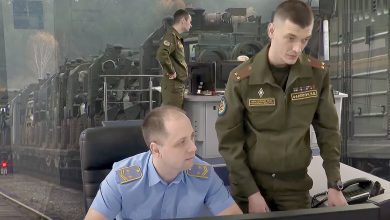
It has become routine for HR and IT department staff, accompanied by “unknown” individuals, to inspect work offices and personal computers, rummage through personal belongings and smartphone contents of Belarusian Railway employees. Inspections of offices and computers are also conducted without the presence of those who work there—they are simply shown the door. And refusing to show the contents of one's smartphone, including the Telegram messenger, threatens removal to an unknown location. We are well aware that all these “unknown” individuals are KGB officers; however, they do not bother explaining this to staff, violating procedural regulations as well as citizens' rights and freedoms. It is also no secret that both at Belarusian Railway headquarters and at regional divisions, deputy chiefs for security have recently appeared. Seven overseers for repression, with some of the highest salaries at the Belarusian Railway.
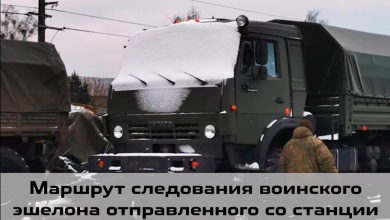
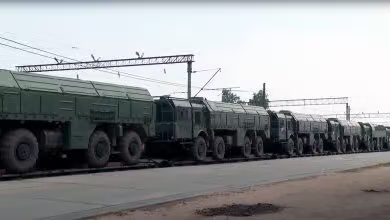
The latest outcries on pro-government Telegram channels about “spies” and “traitors” at the Belarusian Railway “leaking information about troop train movements” are encouraging! With remarkable consistency, these hysterics appear on various platforms with questions to the head of the Belarusian Railway and the Minister of Transport about their competence or suitability for their positions, criticizing the “warm offices and soft chairs” in which these officials work and other grievances 😄.

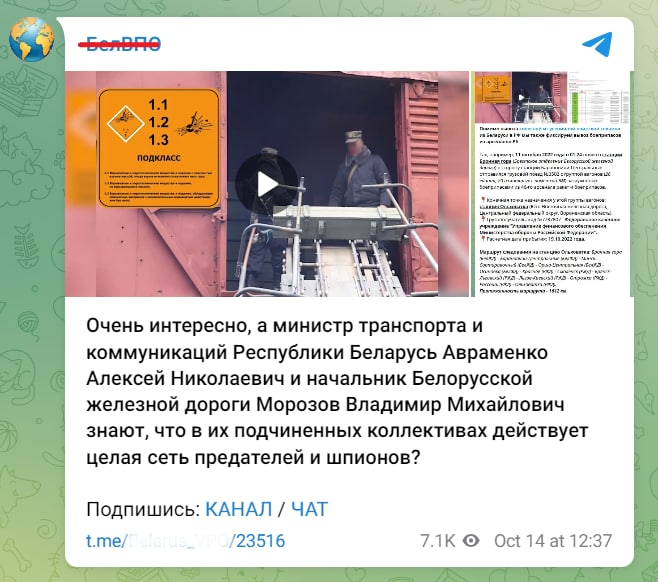
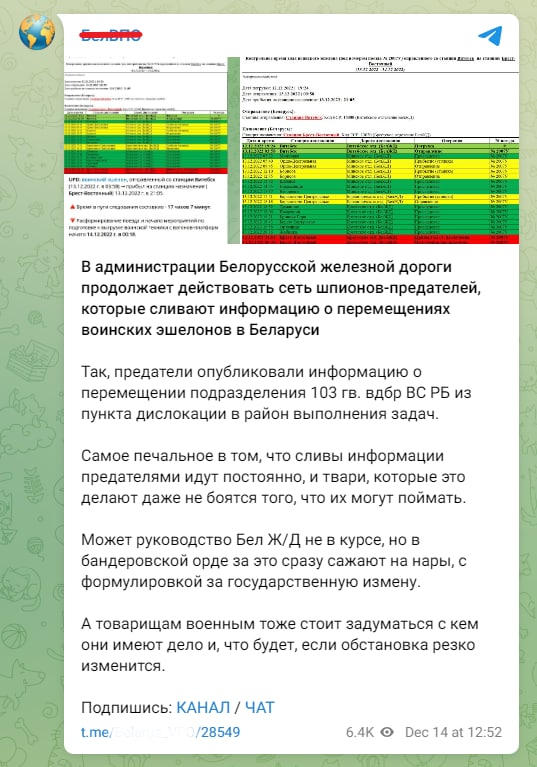
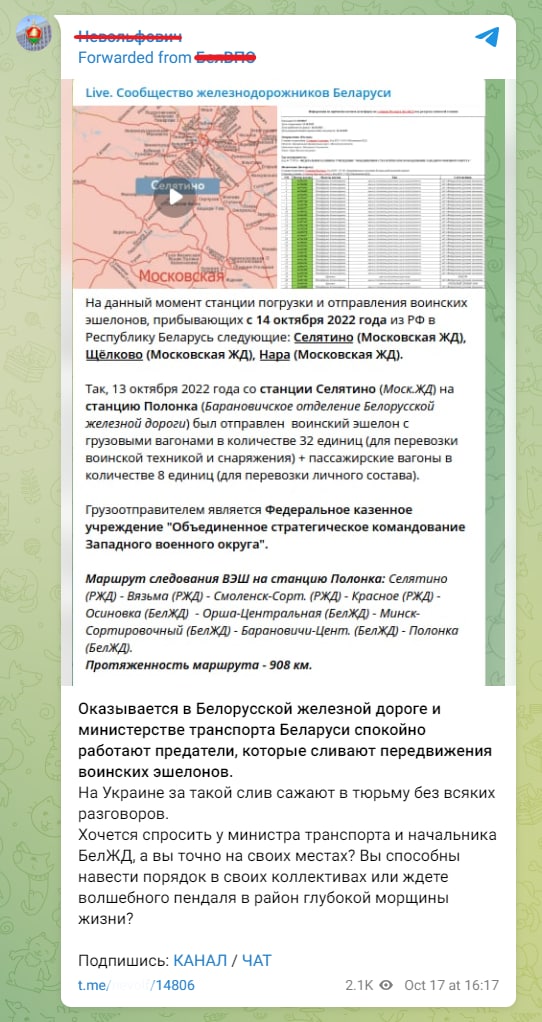
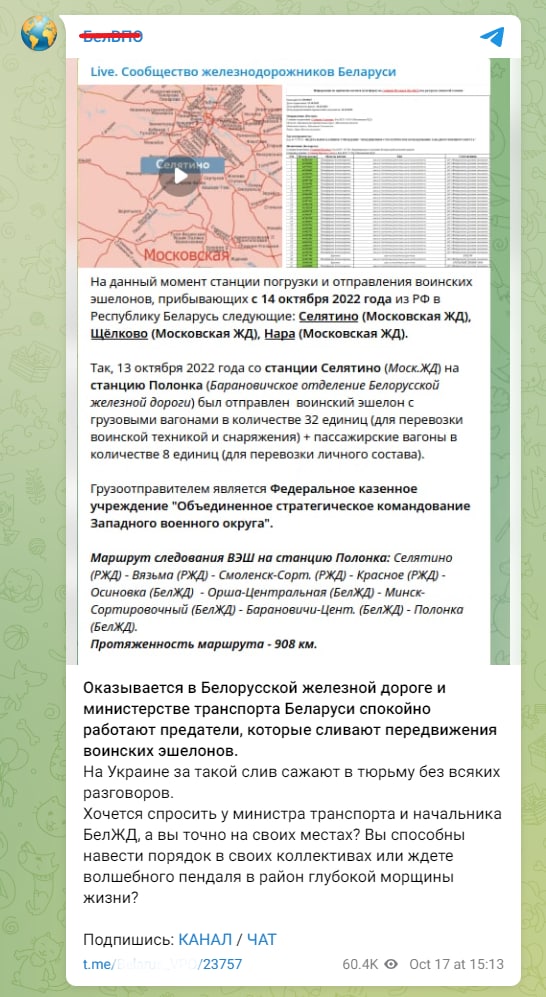
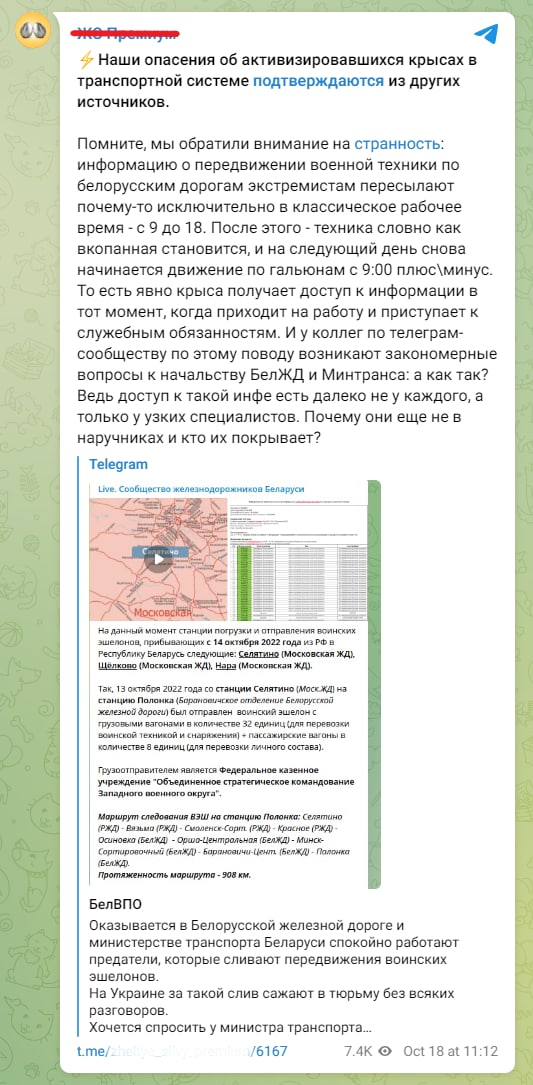
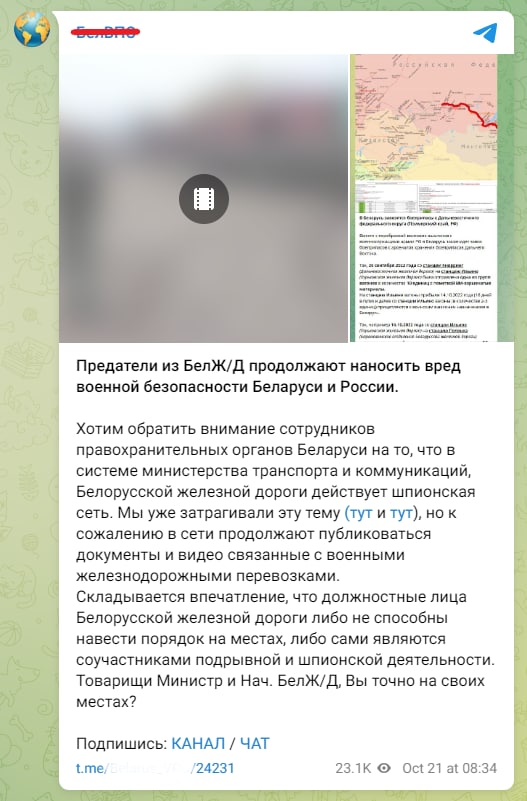
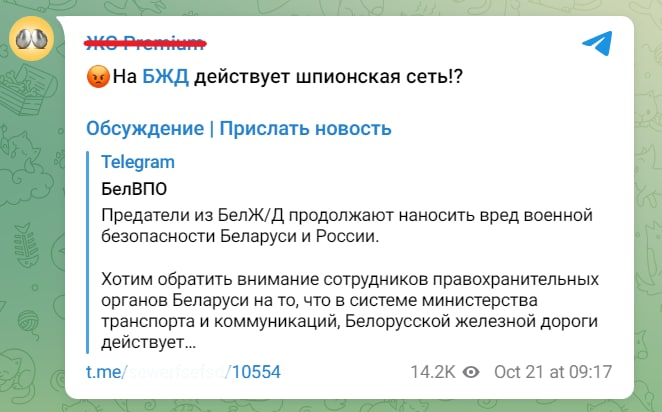
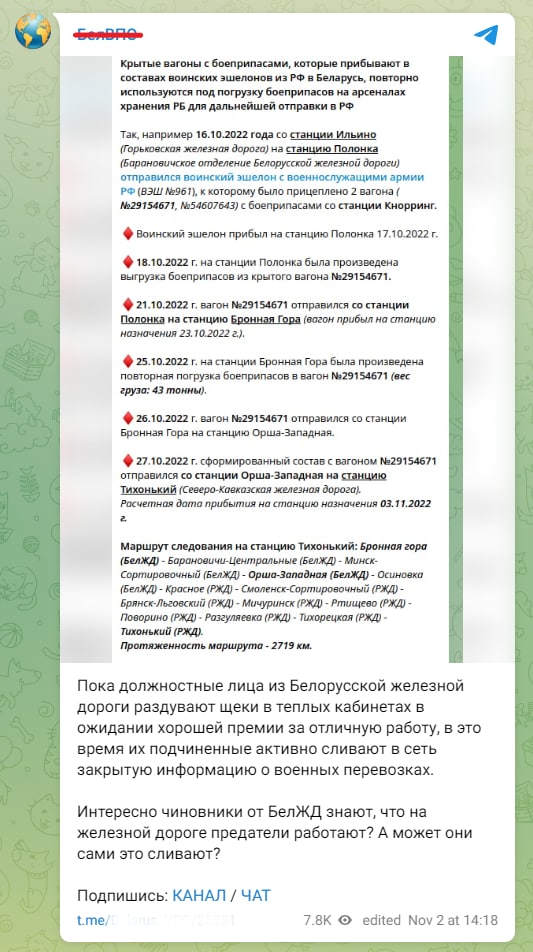
This means that in addition to the practical benefit of monitoring occupying forces' troop movements, there are other positive effects that prevent these criminals from sleeping peacefully and quietly carrying out their nonsense. It is clear that this is unlikely to result in the dismissal of the criticized leaders anytime soon, but it certainly diverts the resources of pro-government figures and security agencies.