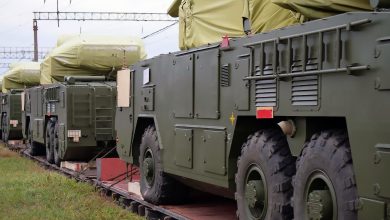
In the current circumstances in Belarus, the participation of the authorities and the assistance of the Belarusian Railway in Russia's aggression against Ukraine are particularly pressing issues concerning the entire global community.
The importance of railway transport in military transport is determined by the fact that the railway allows for the transportation of large masses of people and goods at a relatively high speed, practically regardless of climatic conditions and terrain. In other words, it is the rapid transfer of military units and logistical support over long distances.

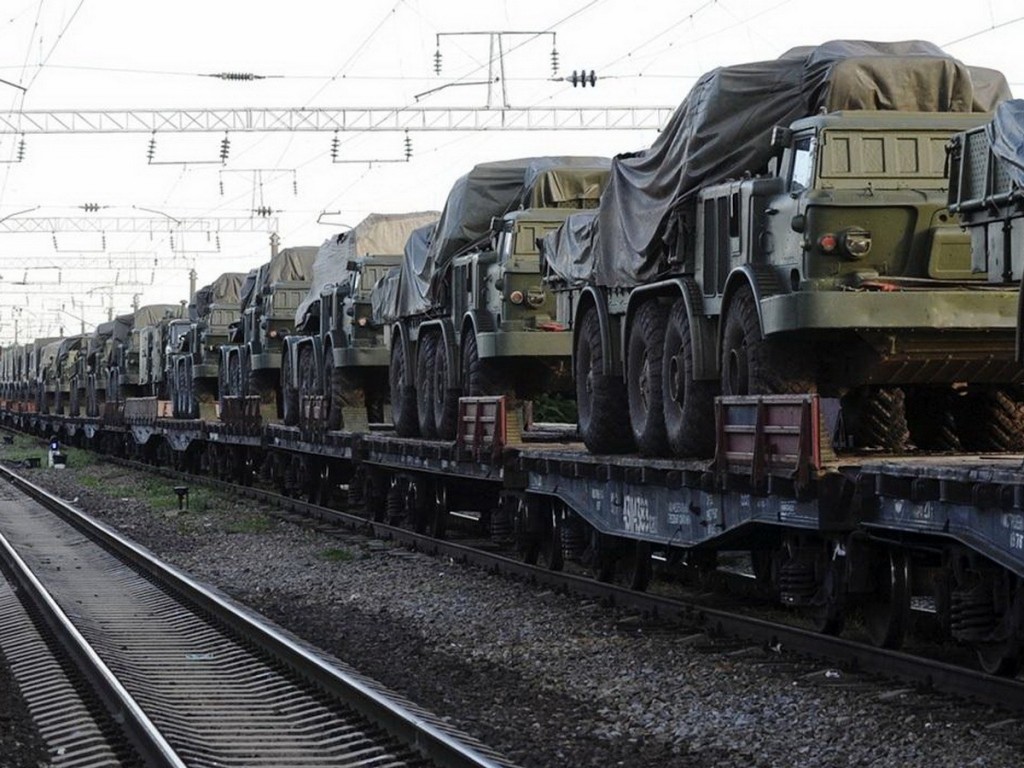
Furthermore, the movement of military equipment by railway transport significantly conserves resources. The train weight for a freight train on the Belarusian Railway is set according to schedule standards. It depends on the section (profile of the section) the train is traversing and the series of locomotive(s) used. For example, the maximum permitted train weight for a VL80s electric locomotive on the Orsha – Brest section is 4,700 tonnes. If locomotives are operated under multiple-unit control, the maximum permitted train weight increases proportionally, but not exceeding 8,200 tonnes, and is limited by the capabilities of the braking systems. The transfer of equipment by road transport or under its own power, compared to the railway, is extremely costly and inefficient.
And particularly important for aggressors – transfer by railway is less noticeable and does not particularly “catch the eye”, avoiding unnecessary questions and increased tension among the country's population.
Incidentally, these transports in Belarus are regulated by a separate document – the Charter of Military Railway Transport, approved by the Council of Ministers.
To ensure interaction with Belarusian Railway organizations, the Ministry of Defence has its representations within railway transport – military transportation agencies (VOSO):
- military transportation department – at Belarusian Railway headquarters;
- military transportation commandants' offices for railway sections, stations, and airports – at the headquarters of Belarusian Railway divisions.
All main Belarusian Railway lines are double-track, equipped with automatic block signaling. Electrification has been significantly expanded. The railway infrastructure is in good technical condition, allowing troop trains to travel at maximum permissible speeds and enabling prompt loading or unloading of military equipment, weapons, and ammunition. Barring force majeure circumstances, delays in transit are minimal. Loading and unloading ramps are equipped in strategically important locations. Most rail sidings to military bases and training grounds are maintained in acceptable condition.
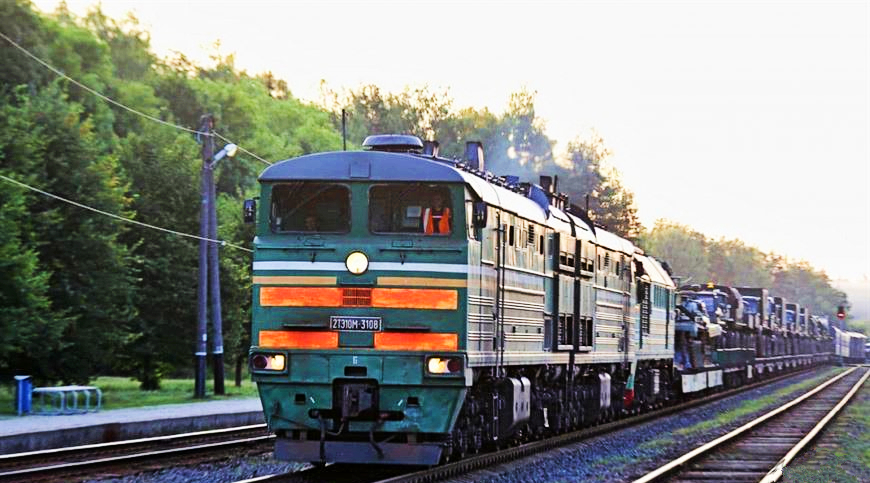
Thus, in Russia's war against Ukraine, the Belarusian Railway, considering Belarus's geographical position and political regime, played a significant role, becoming a route for delivering Russian troop trains to the border with Ukraine.
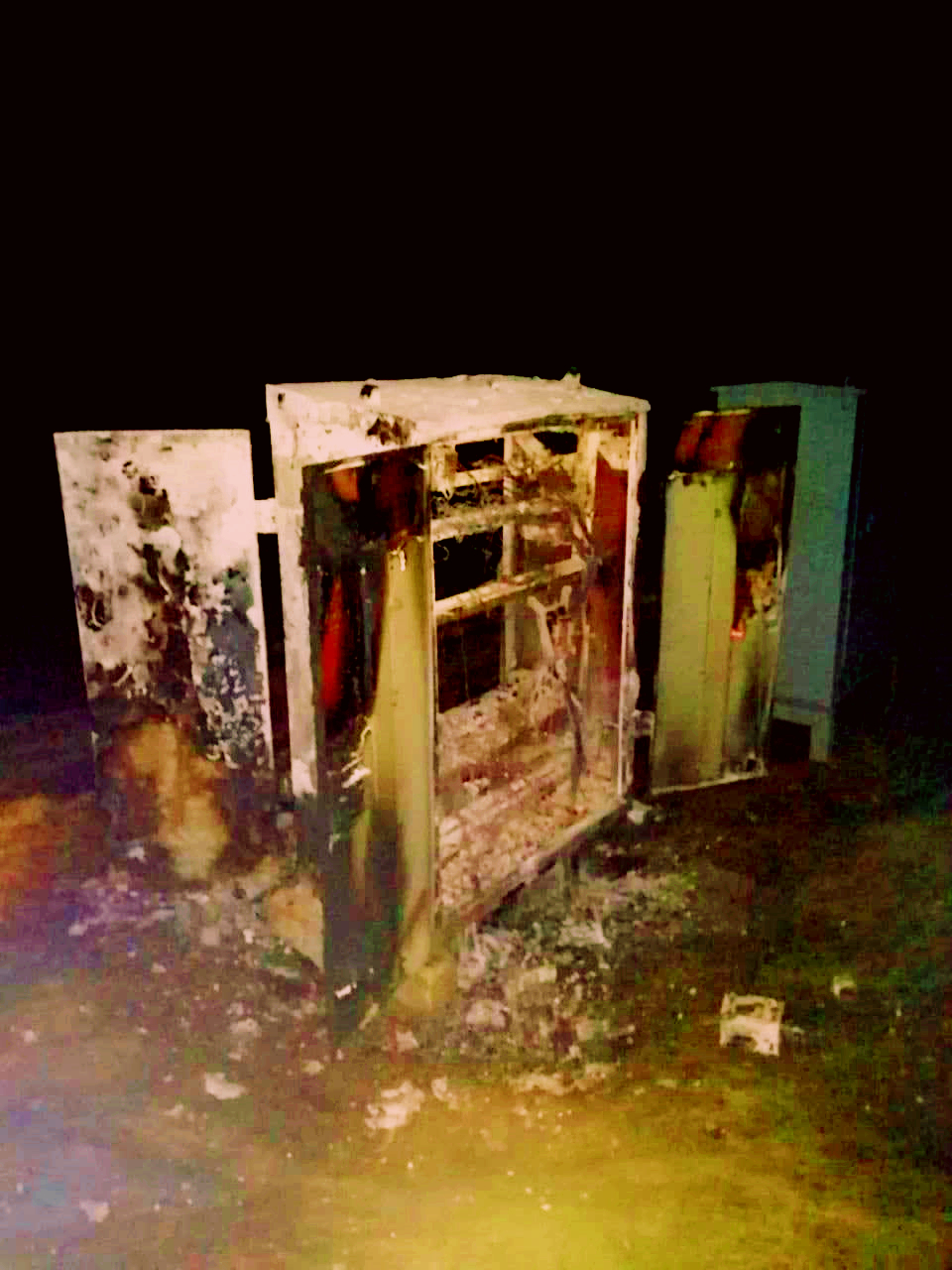
It should be noted that against the backdrop of the activities of “rail partisans,” the authorities and loyal Belarusian Railway management have significantly strengthened measures to protect the movement of troop trains. An unprecedented number of human and material resources from the Ministries of Defense and Internal Affairs, and the KGB, are allocated for guarding level crossings and patrolling block sections. Rolling stock undergoes additional checks, the escort of troop trains is intensified, and their passage is monitored by KGB officers directly in the train dispatcher halls, as well as at station interlocking posts alongside the station duty officers. For this, there are secret regulations and instructions for the passage of so-called “lettered” trains.
For reference:
Military transport in peacetime and wartime is divided into operational, supply, mobilization, personnel, and evacuation.
Operational transport – movement of military units (formations and larger formations) to theaters of military operations, redeployment to new combat areas; in peacetime – transport to new deployment locations, to camps, training centers, for exercises, maneuvers, etc.
Supply transport is carried out to deliver material resources (military cargo) necessary to support the daily life and combat activities of troops.
Mobilization transport – movement of people, military equipment, and other material resources for manning and supplying military units and institutions during mobilization and the deployment of armed forces.
Personnel transport in wartime is necessary for personnel reinforcements of active units, and in peacetime – for delivering conscripts, military personnel discharged to the reserve, and their family members, military personnel traveling on business trips, for studies, on leave, for medical treatment, etc.
Evacuation transport is carried out from combat zones to accommodate wounded and sick military personnel for treatment, to remove disabled weapons and other material resources, as well as to evacuate military personnel's families and military property from areas of anticipated combat operations.
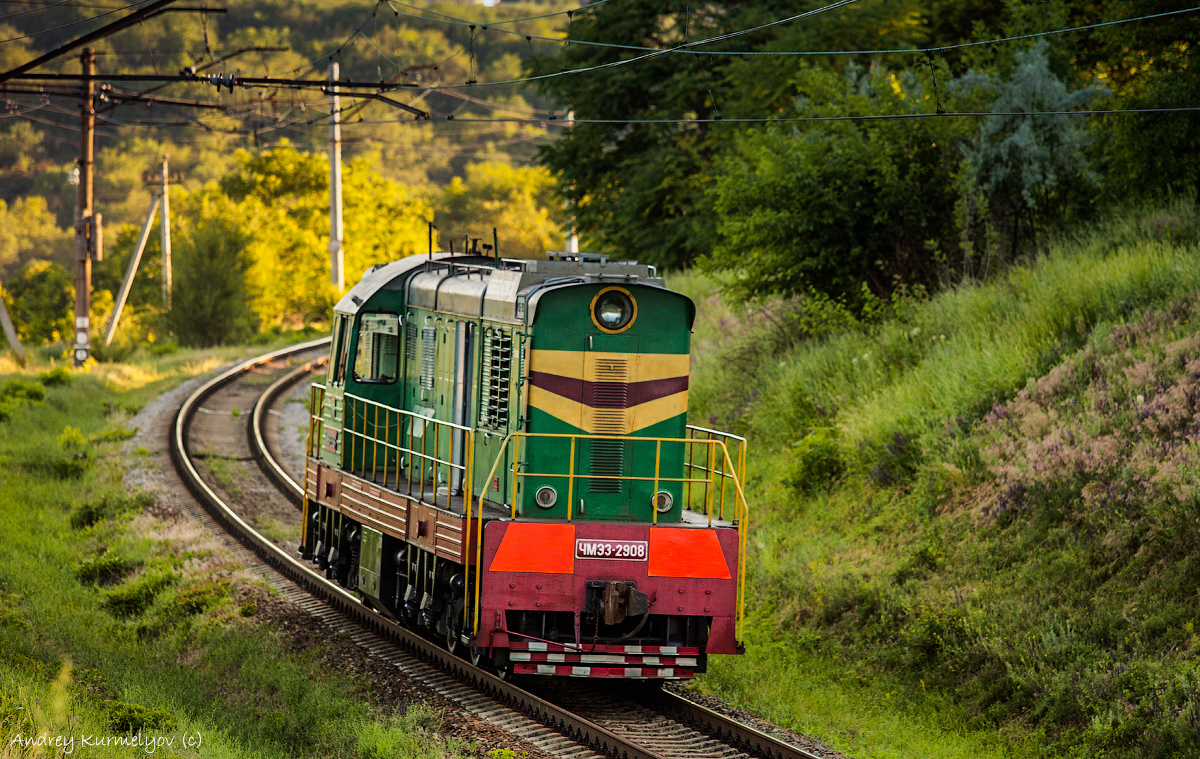
Military transport in peacetime does not differ significantly from that in wartime. Naturally, in wartime, priorities change, and military transport becomes the most important, as does passenger evacuation transport. The role of locomotives independent of the highly vulnerable power supply network (diesel locomotives, steam locomotives, etc.) significantly increases.
Centralized management of special and military railway transport is carried out with due regard for ensuring traffic safety, as well as protecting state secrets. There are specific features in the organization of train movement, which are detailed in the Instruction on Train Movement and Shunting Operations.
A troop train is considered a train having 20 or more railcars (in two-axle equivalent) occupied by military units, teams, or military cargo. A troop train is formed in such a way that boxcars with personnel and field kitchens are located in the middle part of the train, and flatcars and gondola cars with combat and other equipment are in the head and tail parts.
To reduce the time required for organizing transport, units (subunits) keep alternative transport plans ready, which must be updated as the situation changes. Initial data for such calculations include: combat and numerical composition of transported troops, weight of equipment and cargo; norms for accommodating personnel, equipment, and cargo on rolling stock; permissible length and train weight of the troop train.
When planning the troop train, a mandatory condition is the preservation of constant combat readiness and organizational integrity of the transported units, their ability to independently carry out loading and unloading, perform marches, and, if necessary, conduct combat operations after unloading. Based on these requirements, units are assigned to the troop train in their standard organizational structure.
Waiting and assembly areas, based on terrain conditions, are usually designated 3-5 kilometers from the loading and unloading point, with possible deployment of air defense units in that area. Time spent in the waiting area is used for preparation for loading and subsequent actions (transferring combat vehicles to transport position, preparing fastening materials, studying safety measures and functional duties of crews during loading, etc.). A waiting area may not be designated if the unit's location is less than 10 kilometers from the loading point.
For observation of airborne adversaries and the surrounding terrain, an observation post is set up within the troop train, which also includes an observer for radiation, chemical, and biological (RCB) conditions.
During transit, the head of the troop train receives data on airborne and RCB conditions from military commandants of railway sections. To cover troop trains, anti-aircraft gunners are deployed on flatcars, ready to open fire.
Alerts about airborne adversaries and RCB contamination are carried out using signals established by the head of the troop train.
Upon receiving an airborne adversary alert signal, the train usually continues moving, and anti-aircraft gunners are put on readiness level 1.
Wired communication is organized for unit control within the troop train, including the locomotive crew.
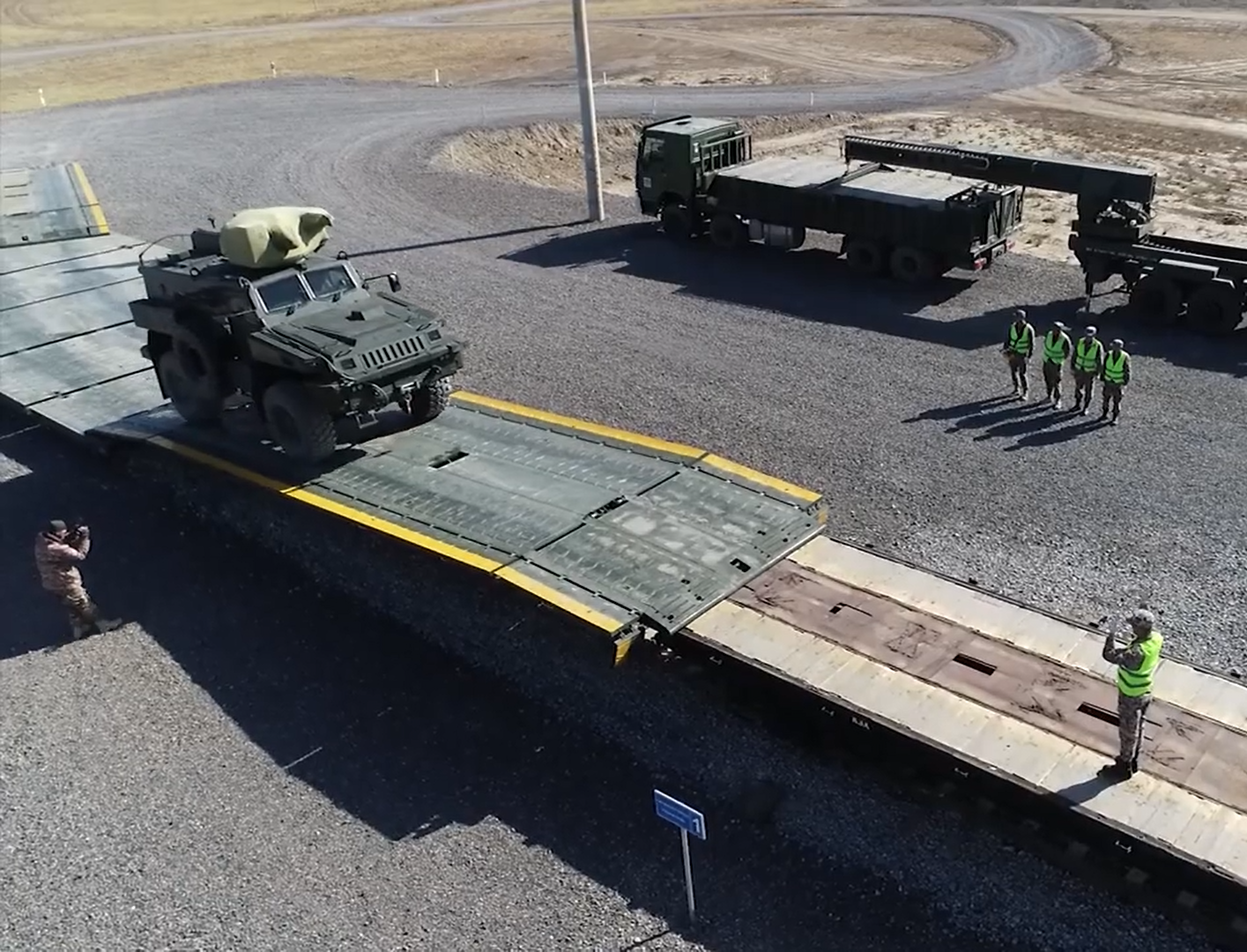
During transit, the unit must always be ready for unloading at an unprepared location and marching to the destination. Upon arrival at the station, units quickly unload and proceed to the assembly area or designated position.
In cases of emergencies caused by enemy attacks on troop trains and infrastructure, railway emergency recovery assets (recovery train) are deployed.